January is one of the months when Morocco asks you to plan for several climates in a single trip. A sunny afternoon in Marrakech can feel pleasantly mild, while a dawn departure in the Sahara or an evening in the mountains can be genuinely cold. If you are considering Morocco in January, the key is not to ask whether the country is simply “warm” or “cold,” but which regions you will visit and what you want to do there. Winter can be an excellent time for medinas, desert scenery, Atlantic cities, and lower-temperature sightseeing, but it also brings shorter days, more changeable weather in the north, and snow or difficult conditions at altitude. This guide explains Morocco weather in January, the destinations that work best for different travel styles, what to wear, and how to build a winter itinerary without packing for four seasons twice over.
Morocco Weather in January: Think Region by Region
Morocco’s national climate data is useful mainly as a warning against overgeneralizing. The General Directorate of Meteorology’s 2024 State of Climate report lists the 1991-2020 national normal for January mean temperature at 12.1°C. That is a countrywide figure, not a forecast for Marrakech, Fez, Agadir, or the Sahara, and local conditions can be very different.
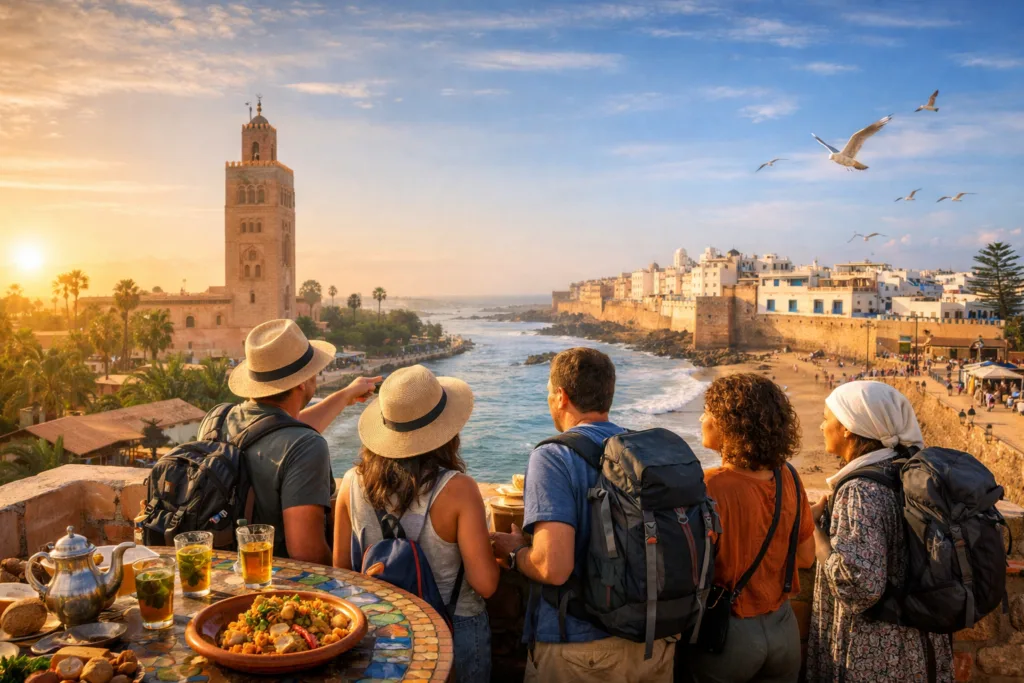
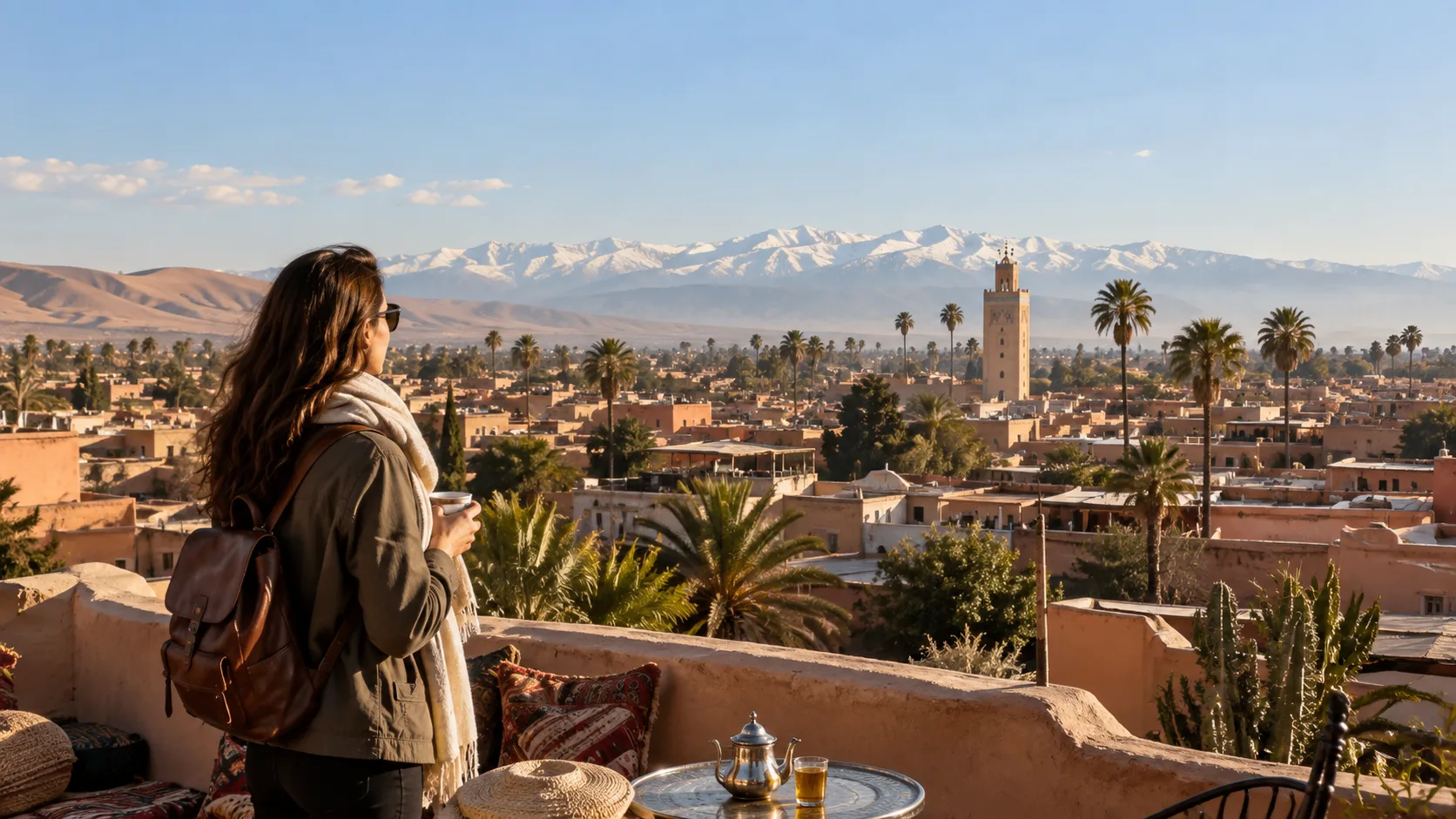
Atlantic destinations such as Agadir and Essaouira tend to have milder winter days than inland cities, while Marrakech often combines comfortable daytime sightseeing with much cooler nights. Fez and Chefchaouen can feel colder and wetter, especially after sunset. In the High Atlas, winter is a true mountain season: snow, ice, and road conditions can affect hiking or transfers. The Sahara is usually dry, but desert nights can be sharply cold even after a sunny afternoon.
For seasonal context, compare January with our guide to Morocco in December. The practical lesson is simple: check a reliable forecast for every stop a few days before departure, then check again before any mountain or long-distance road day.
Best Places to Visit in Morocco in January
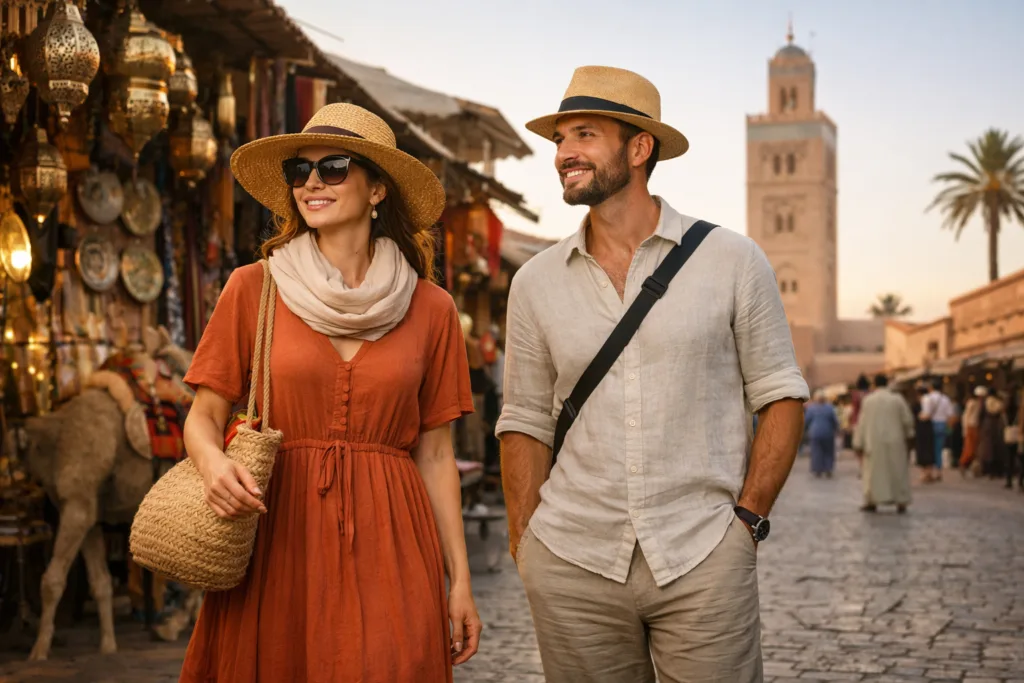
For most first-time winter visitors, Marrakech is a strong base because you can spend cool mornings in the medina, take long sightseeing breaks without summer heat, and add a day trip if the weather cooperates. If you want a milder coastal pause, Agadir is the easier beach-resort choice, while Essaouira offers a more compact historic atmosphere with Atlantic wind as part of the experience.
The desert is another good January idea if you are prepared for cold nights. Merzouga gives you the larger Erg Chebbi dune experience, while shorter southern routes can work when your itinerary is tight. Before choosing a desert transfer, read the practical route considerations in our guide to reaching Erg Chebbi.
Fez and Chefchaouen remain rewarding in winter, but pack for damp or chilly days and do not build a schedule that depends on perfect blue skies. If your priority is mountains rather than cities, treat January as a specialist winter trip and review the best time for the Atlas Mountains before committing to high-altitude hikes.
What to Wear in Morocco in January
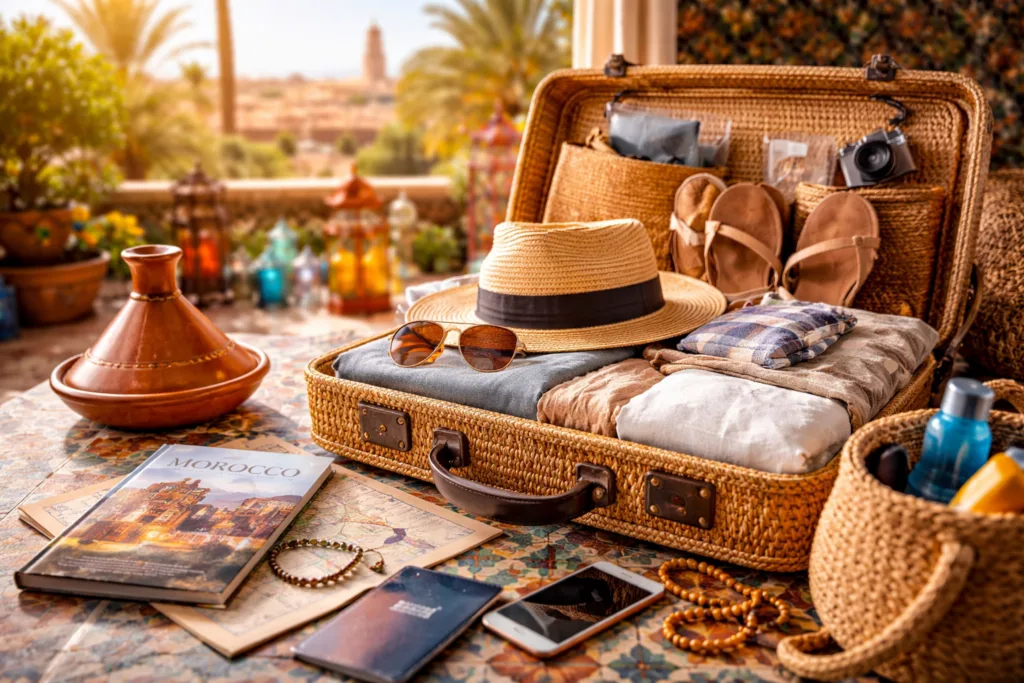
The most efficient January wardrobe is a layering system rather than one heavy coat. Start with comfortable base layers, add a sweater or fleece, and carry a wind-resistant or light waterproof outer layer. A compact warm jacket is valuable for desert dawns, mountain areas, and late evenings. Closed walking shoes are more useful than sandals for most itineraries, especially in wet medina streets or on rough desert ground.
You will still want sun protection: sunglasses, sunscreen, and a hat can be useful even in winter. A scarf is versatile for warmth, wind, and culturally respectful coverage when needed. If you are unsure about everyday clothing norms, our broader guide on how to dress in Morocco explains practical choices without treating one dress code as universal.
Pack less by choosing pieces that work across settings. The checklist in our Morocco packing guide can help you avoid duplicating toiletries, electronics, and travel essentials while you reserve suitcase space for one proper warm layer.
How to Build a January Itinerary That Stays Flexible
A winter itinerary works best when the most weather-sensitive segment is not placed immediately before an international flight. If you plan a desert or mountain excursion, leave some margin before your final departure city. Road delays are not the norm, but mountain weather is one reason not to construct a chain of non-refundable, minute-by-minute transfers.
A practical first trip might combine Marrakech with the Sahara and Fez, or Marrakech with Essaouira and a relaxed Atlantic finish. If you have only a week, focus on fewer regions rather than turning every day into a transfer. Our 7-day Morocco itinerary shows how to prioritize major stops; in January, you can adapt it by adding more buffer around long road days.
Travelers with more time can build a slower route and stay two nights in places where weather could change the day’s plan. That gives you room for a museum, hammam, cooking activity, or medina day instead of treating rain as a lost day.
January Planning Mistakes to Avoid
The first mistake is packing for the midday temperature only. The second is assuming the Sahara stays warm after sunset. The third is booking a high-altitude excursion without checking winter access and the operator’s cancellation policy. A fourth is treating weather averages as a promise; January can deliver bright, calm days and unsettled periods in the same trip.
Families should be especially realistic about early departures and cold desert nights. Our guide to Morocco with kids can help you decide whether a long-distance winter route suits your children’s ages and travel rhythm.
Finally, protect the basics: hydration still matters in cool weather, and sudden changes in temperature can make travel tiring. Review our advice on staying healthy while traveling in Morocco, keep a small daypack with layers, and verify mountain or desert conditions close to the travel date rather than months in advance.
Is January a Good Time to Visit Morocco?
Yes, January can be a very good time to visit Morocco if you want cooler sightseeing, winter light, fewer heat-related limitations, and a trip that can mix cities, coast, and desert. The trade-off is that you must plan for colder nights, variable northern weather, and genuine winter conditions in the Atlas. Choose destinations by region rather than by a single national temperature, build a little flexibility into long road days, and pack layers that you can add or remove easily. For most first-time visitors, that approach makes January feel comfortable rather than unpredictable.
For more seasonal planning ideas, destination guides, and practical Morocco travel advice, subscribe using the MoroccoJourneying newsletter field at the bottom of the page.