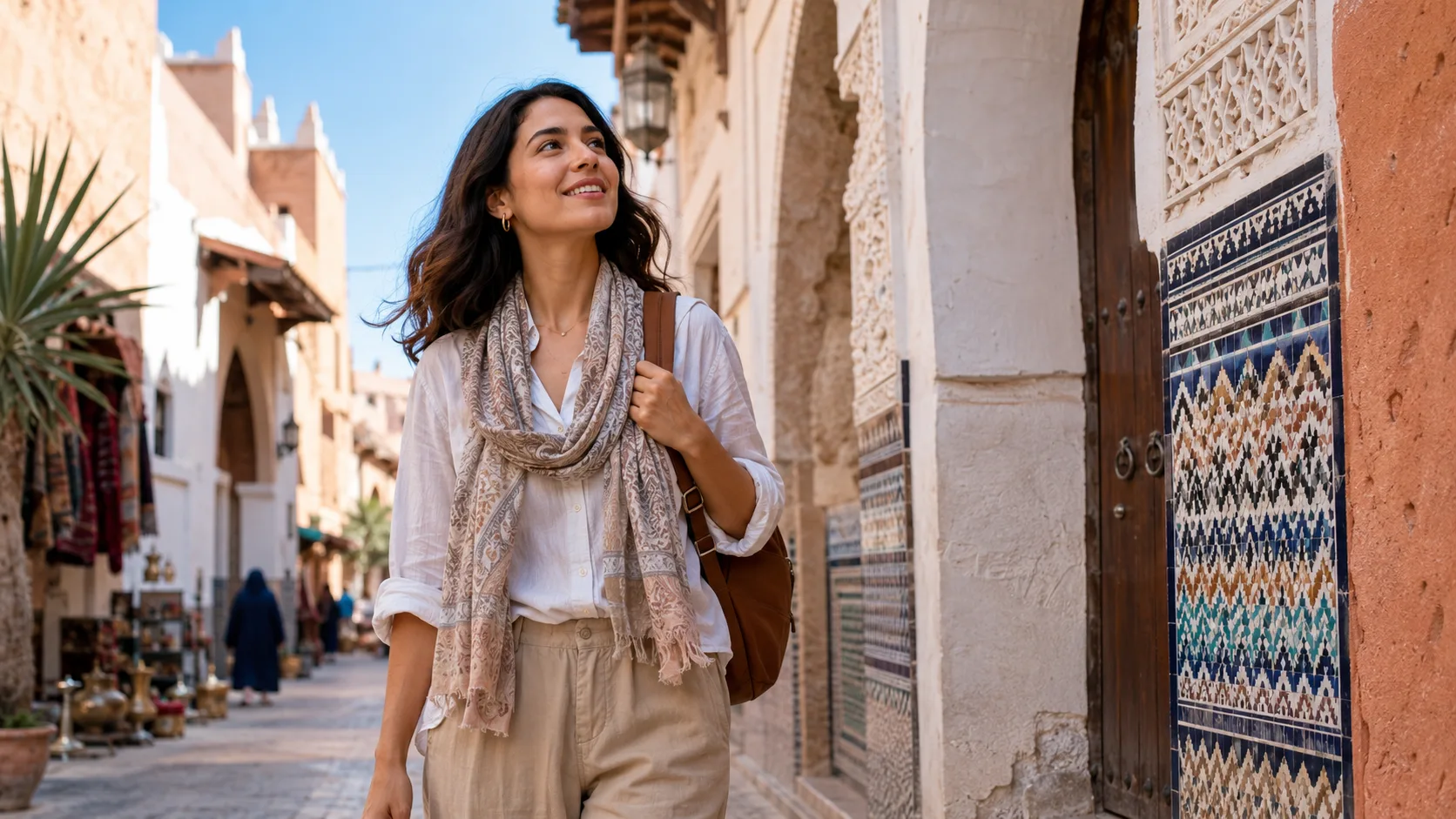
Solo female travel in Morocco is possible and rewarding, but it benefits from deliberate planning. Major tourist cities have extensive accommodation, transport, and guiding services, while medinas, busy stations, late-night arrivals, and remote routes can create situations where a solo visitor needs clearer boundaries and stronger logistics. Women may receive unwanted comments or attention, and official travel advisories recommend ordinary security precautions, modest clothing in many settings, and extra care in isolated places. This does not mean every interaction is threatening or that women share one experience. Location, time of day, language, confidence, and travel style all matter. This guide examines whether Morocco is safe for solo female travelers, the best cities and routes, getting around Morocco alone as a woman, accommodation choices, and practical ways to handle unwanted attention without turning cultural differences into stereotypes.
Is Morocco Safe for Solo Female Travelers?
No destination can be guaranteed safe. Morocco receives many independent women travelers, yet official advice notes risks including petty theft, scams, terrorism, and unwanted attention. The practical response is preparation rather than fear: follow current government advice, buy suitable insurance, share your itinerary, and avoid isolated areas after dark.
The site’s regularly updated overview of Morocco travel safety considerations provides broader context. Use it alongside the advisory issued by your own government, because warnings and entry information can change.
Trust discomfort early. Leave a shop, taxi, street, or social situation without debating your instinct. Keep accommodation contact details offline, and arrange the first arrival transfer when landing late. Most daily interactions are ordinary, but confident logistics reduce opportunities for confusion or pressure.
Best Cities and Routes for Solo Women
Rabat is a strong starting point: it has a manageable medina, broad avenues, coastal areas, and rail connections. The guide to walking safely in Rabat explains local considerations. Essaouira is compact and easy to orient around, though quiet lanes and the beach still require normal awareness after dark.
Marrakech offers abundant tours, riads, and transport, but the medina can feel intense. Fes is fascinating and easier with a licensed guide on the first day. Chefchaouen is visually accessible but steep, and transport connections require planning. Agadir provides a resort-oriented option with a modern layout.
A good first solo route is Rabat-Fes-Marrakech by train, or Marrakech-Essaouira with a prebooked bus. Choose daytime departures when possible and save the next accommodation address in both Latin and Arabic script if the property provides it. Tell reception your expected arrival time, particularly in a medina where the final lane may not appear clearly on a map. Avoid building a first trip around a sequence of late arrivals and one-night stays. Familiarity with each place is a safety asset.
Getting Around Morocco Alone as a Woman
Trains are practical between major cities. Buy tickets through official ONCF channels, confirm the station, and keep bags where you can monitor them. For buses, choose established operators and arrive with time to identify the correct platform. In cities, use licensed taxis, agree the fare when a meter is not used, and avoid entering an unofficial vehicle offered by a stranger.
Tangier illustrates the importance of planning the last mile from station or port; review the guide to getting around Tangier if the city is on your route. For airport arrivals after dark, a transfer arranged by the accommodation can reduce stress.
Share the vehicle details or live location with a trusted contact when practical. Sit where you feel comfortable and end a ride if the driver’s behavior becomes inappropriate. A clear ‘no, thank you’ is enough; you do not owe a long explanation.
Clothing and Handling Unwanted Attention
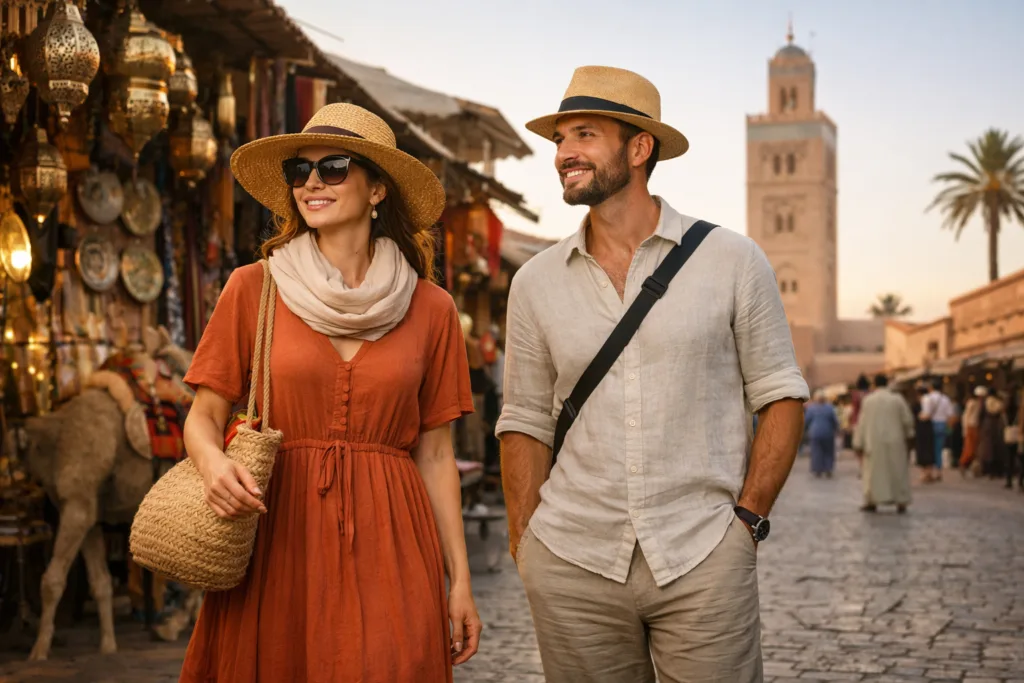
Moroccan clothing varies widely, especially between large cities, resorts, villages, and conservative neighborhoods. Visitors are not required to copy local dress, but loose clothing that covers the shoulders, chest, and knees can reduce unwanted attention and is suitable for many religious or traditional settings. The complete guide to what to wear in Morocco offers seasonal and cultural detail.
Verbal attention can range from greetings and sales pitches to comments that feel intrusive. Do not stop for every caller. Walk with purpose, avoid prolonged eye contact when you do not want engagement, and use a firm ‘la, shukran’ – no, thank you. Enter a hotel, café, pharmacy, or busy shop if someone follows you.
Do not let advice about clothing shift responsibility away from the person behaving badly. Dress is one planning tool, not a guarantee. Seek help from police, accommodation staff, or trusted local women when a situation feels unsafe.
Accommodation, Boundaries, and Emergency Planning
Choose accommodation with many recent reviews from solo women, clear directions, reliable reception, and a safe arrival process. A central location can be more valuable than a beautiful but isolated property. Ask whether staff are present at night and how taxis reach the entrance. The guide to Marrakech areas and accommodation choices helps compare neighborhoods.
Set boundaries with guides, hosts, and new acquaintances. Meet in public, keep control of your transport, and avoid disclosing your room number or detailed itinerary casually. Save emergency contacts, insurance information, passport copies, and the address of your country’s diplomatic mission offline.
If you become ill or need medical help, the site’s guide to staying healthy in Morocco covers practical preparation. Carry a charged phone and a small power bank, and tell a trusted person when you begin a remote excursion. If a guide or driver changes the agreed plan, ask for a clear explanation before continuing. Report serious harassment, threats, theft, or assault to local authorities and contact your insurer or consulate as appropriate.
Plan for Confidence, Not Perfection
Solo female travel in Morocco works best with a simple route, dependable accommodation, daytime arrivals, and clear personal boundaries. Rabat, Essaouira, Marrakech, Fes, Agadir, and Tangier can all be part of a rewarding trip, but each requires different navigation and transport choices. Follow current official advice, arrange difficult transfers, dress in a way that feels comfortable and context-aware, and respond early when attention becomes unwelcome. Preparation cannot remove every risk, but it gives you more control and more space to enjoy Morocco’s cities, landscapes, food, and conversations on your own terms. Enter your email in the newsletter field below to receive future Morocco solo-travel guidance and practical destination updates.