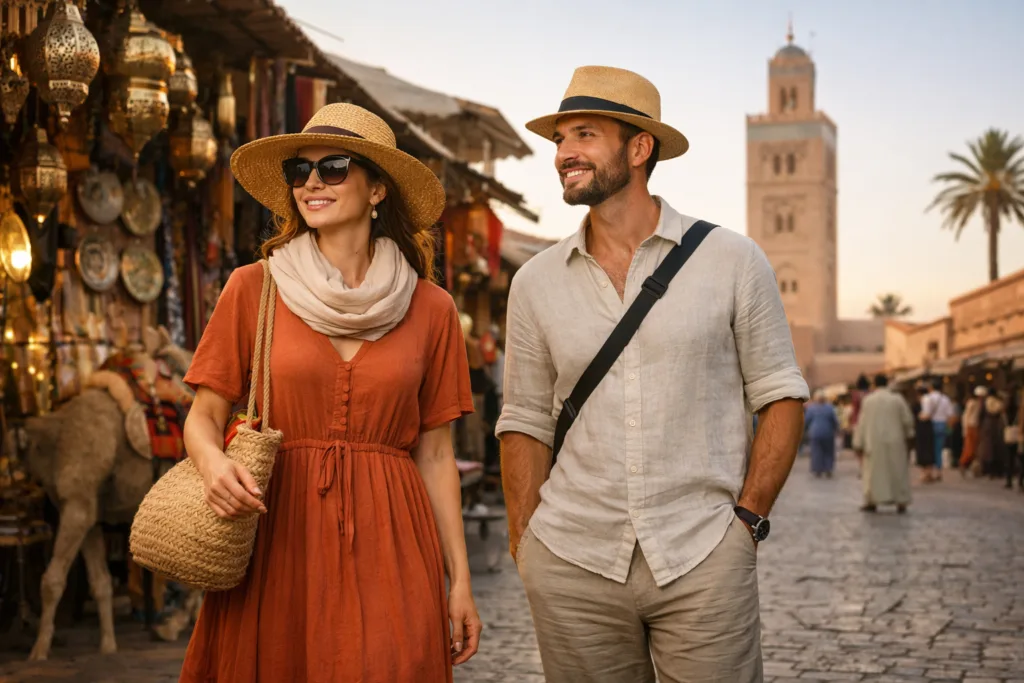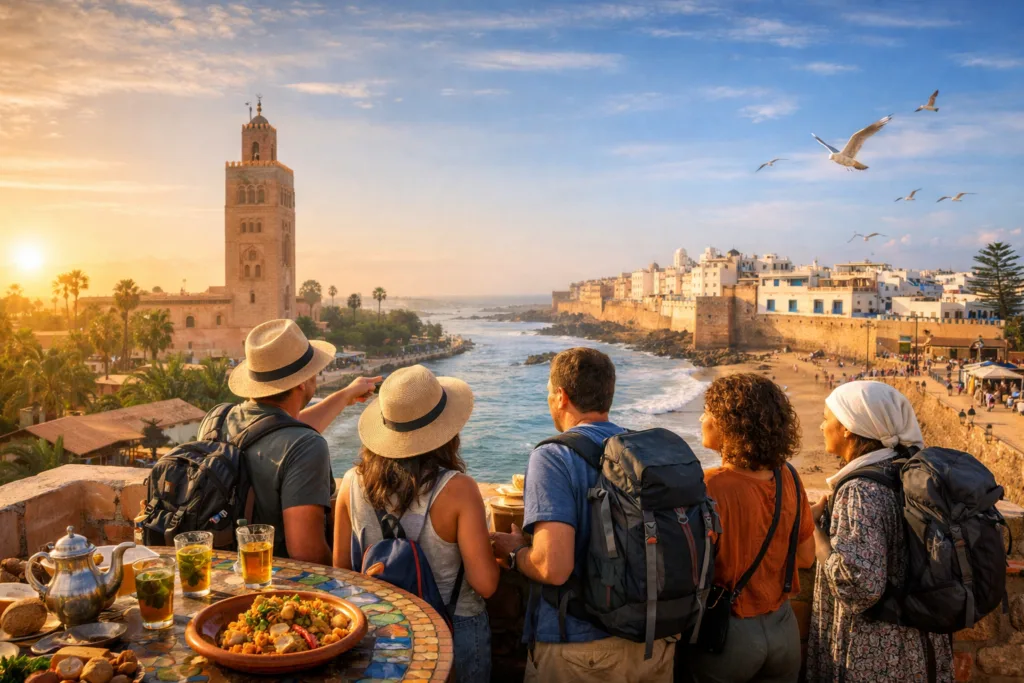
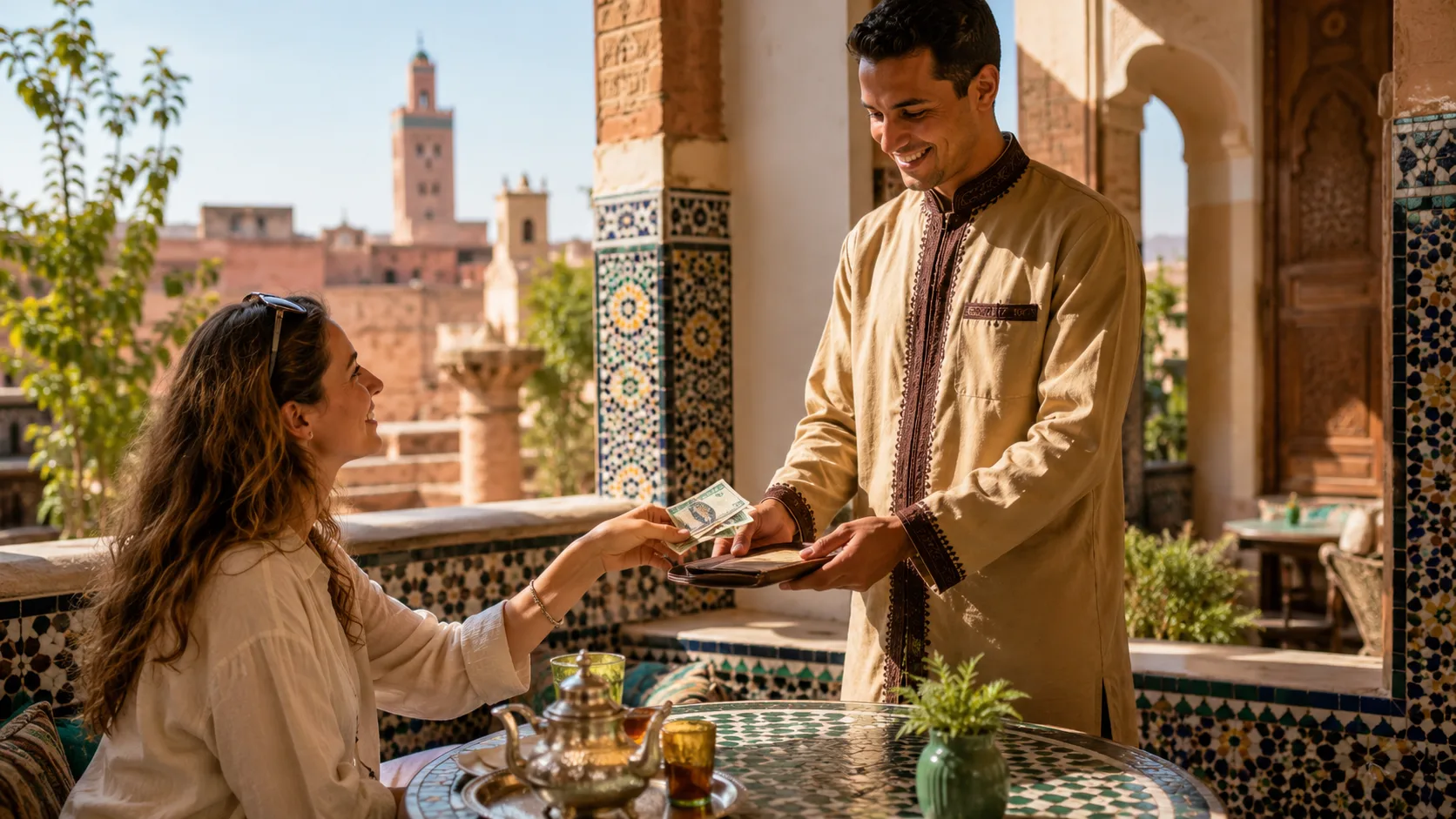
Tipping in Morocco is customary in many tourism and service situations, but it is not governed by one national percentage. Small cafés, formal restaurants, taxis, riads, private drivers, licensed guides, and multi-day tours all operate differently. A tip should reward helpful service, not replace a clearly agreed price or respond to pressure. Travelers are often most comfortable when they carry small Moroccan-dirham notes, check whether service is included, and decide amounts according to the bill, group size, and quality of help. This guide explains how much to tip in Morocco at restaurants, riads, hotels, taxis, and tours. The figures are practical ranges reported by recent travel operators and local tourism businesses, not legal rules or guaranteed expectations. Prices and norms can vary by city and service level, so use the guidance as a flexible reference rather than a mandatory tariff.
How Tipping Culture Works in Morocco
A small gratuity is commonly appreciated for personal service, especially in tourism. It is also acceptable to reduce or skip a tip when service is poor, a charge is already included, or someone demands money for help you did not request. Agree the price of taxis, guides, and services before they begin so that payment and appreciation remain separate.
Polite communication helps. Learning a few basic phrases, including ‘shukran’ for thank you, can make the exchange feel natural; the guide to Moroccan greetings and their meanings provides a useful introduction.
Tip discreetly and directly when possible. If a riad uses a shared gratuity box, ask how it is distributed. For organized tours, check pre-departure notes because some companies operate a group tipping fund while others leave every tip to the traveler.
Tipping at Restaurants and Cafés
At a neighborhood café, rounding up the bill or leaving a few dirhams is a common gesture. In a casual or mid-range restaurant, roughly 5 to 10 percent can be appropriate when service is not included and you are satisfied. At a higher-end restaurant, around 10 percent is a practical reference, but always inspect the bill for a service charge.
For very small purchases, a percentage creates an awkward amount, so rounding is simpler. Hand the tip to the server or leave it with the payment according to local practice. The guide to Morocco’s popular dishes and food culture can help you understand menus before dining.
Street-food vendors and takeaway counters do not generally require the same tipping pattern as table service, although spare change may be welcomed. Do not feel obligated to follow a card terminal’s suggested percentage if it does not match the service.
Tipping at Riads and Hotels
For porters, around 10 to 20 Moroccan dirhams per bag is a common traveler reference when someone carries luggage a meaningful distance or up several flights. For housekeeping, travelers often leave approximately 20 to 50 dirhams for a short stay or per room after several nights, adjusting for service level and property type. Larger group villas may handle staff gratuities differently.
Ask whether the riad pools tips among the team. Reception staff do not need a routine tip for normal check-in, but a gratuity can recognize substantial help with a difficult reservation, emergency, or detailed itinerary. When choosing accommodation, the guide to Marrakech neighborhoods and places to stay provides useful context.
Leave housekeeping tips with a short note or give them directly so they are not mistaken for forgotten cash. At luxury properties, check whether a service fee has already been added.
Tipping Tour Guides and Drivers in Morocco
For a licensed guide, recent local guidance commonly suggests about 50 to 100 dirhams per person for a good full-day group experience, with private groups sometimes giving a higher combined amount. For a private driver on a full day, a group tip in the range of 50 to 150 dirhams may be reasonable, depending on distance, assistance, and whether guiding is included.
These are not fixed prices. A multi-day tour operator may recommend a different amount based on crew size and inclusions. Review the site’s guide to historical tours in Morocco when deciding whether you need a licensed specialist or a general escort.
Give the tip at the end of the service and separate it from unpaid expenses. If a driver pays parking or tolls on your behalf, reimburse those costs first. For group trips, agree on a shared amount so staff are not tipped repeatedly or inconsistently.
Taxis, Hammams, and Practical Money Tips
For a metered petit taxi, rounding up to the next convenient amount or adding around 5 to 10 dirhams for helpful service is usually sufficient. Tipping is less important than ensuring the meter is used where applicable or agreeing the fare before an unmetered journey. Airport transfers and private taxis are different services; tip according to assistance and duration.
At a hammam or spa, check whether gratuity is included and consider roughly 10 percent for good personal service. For small practical help – carrying bags, parking assistance, or room delivery – 5 to 20 dirhams may be suitable depending on the task. Carry small notes and coins; the guide to cash use and money access in Casablanca explains why this matters.
Tip in Moroccan dirhams when possible. Foreign coins are difficult to exchange, and large foreign notes are inconvenient for small gratuities. Ask for smaller notes when exchanging money or paying at a supermarket, and keep them separate from larger bills for easy access. When service is shared by several people, ask whether a communal box is genuinely distributed among the team. Build a modest tipping allowance into the Morocco travel budget rather than treating each interaction as a surprise.
Tip With Clarity, Not Anxiety
Tipping in Morocco is best understood as flexible appreciation. Round up at cafés, consider about 5 to 10 percent in restaurants when service is not included, carry small dirham notes for porters and practical help, and reward good guides or drivers at the end of their service. Confirm tour-company guidance, separate tips from agreed prices and reimbursable costs, and never feel forced to pay for unsolicited assistance. The exact amount matters less than being fair, discreet, and consistent with the service received. Subscribe through the newsletter field at the bottom of the page for more Morocco etiquette guidance and practical travel advice.