Renting a car in Morocco can unlock Atlantic villages, mountain valleys, desert approaches, and flexible day trips, but it is not necessary for every itinerary. Trains and taxis are often easier for a route centered on Tangier, Rabat, Casablanca, Fes, and Marrakech. A rental becomes more valuable when you want to stop between cities, reach rural accommodation, or travel through regions with limited public transport. The practical questions are not only ‘Is it safe to drive in Morocco?’ and ‘What is the daily price?’ You also need to understand Morocco car rental requirements, deposit and fuel policies, insurance exclusions, road conditions, parking, and whether an international driving permit for Morocco is requested by the rental company. This guide explains how to make that decision, what to verify in writing, and how to avoid a cheap headline rate becoming an expensive or stressful experience.
When Renting a Car in Morocco Makes Sense
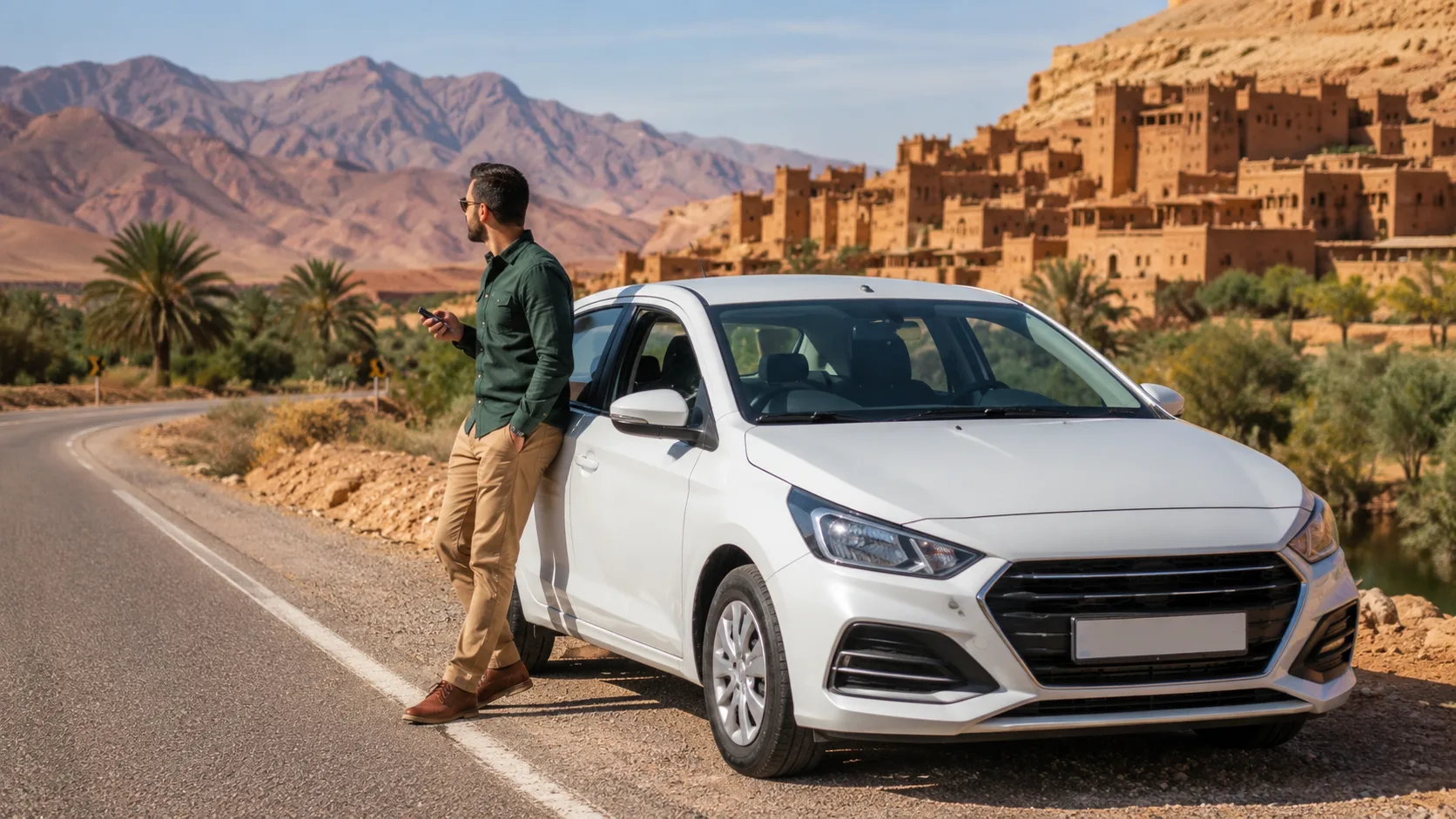
A car is useful for an Atlantic road trip, a loop through the Dades and Todra valleys, rural Atlas accommodation, or a flexible journey toward Merzouga. It gives control over stops and departure times. The guide to driving to Merzouga and planning the desert road shows the kind of route where that freedom matters.
A car is less useful inside old medinas, where streets may be pedestrian-only and parking can be distant. In major cities, traffic, one-way systems, and informal parking arrangements add pressure. If your trip is mainly rail-connected, rent only for the specific days that require it.
Decide based on route, confidence, group size, luggage, and total cost. A private transfer may be better for a family that does not want to drive, while a solo traveler may find train-plus-taxi travel cheaper and calmer.
Morocco Car Rental Requirements
Rental companies typically require the main driver’s original license, passport or accepted identification, and a payment card or deposit method in the driver’s name. Minimum age, license-holding period, vehicle category, and young-driver fees vary by company. Some firms accept licenses printed in Latin characters without an International Driving Permit, while others require or recommend an IDP for particular nationalities.
The safest approach is to ask the exact rental desk in writing before travel. An IDP is a translation aid, not a replacement for the original license, so carry both if one is required. When comparing a car with an organized transfer, the article on choosing a Morocco travel package helps identify which services may already be included.
At pickup, confirm that every authorized driver appears on the contract. Keep the rental agreement, insurance papers, and vehicle documents in the car, and save the roadside-assistance number offline.
Cost of Renting a Car in Morocco
The final cost depends on season, city, airport fees, transmission, vehicle size, driver age, mileage, one-way drop-off, deposit, and insurance. Holiday weeks and automatic vehicles can cost more. Avoid relying on a single average daily price, because the lowest advertisement may exclude taxes, full insurance, or a realistic deposit.
Compare the total payable amount and the amount temporarily blocked on your card. Ask about fuel policy, cleaning charges, late return, additional drivers, cross-border restrictions, and whether driving on unpaved roads is excluded. Check the currency used for the deposit and whether your bank charges foreign-transaction or dynamic-conversion fees. A slightly higher transparent rate can be cheaper than a low rate with unclear extras. Add fuel, tolls, parking, and accommodation with secure parking to the overall Morocco travel budget.
Photograph every side of the vehicle, wheels, windshield, roof, interior, fuel level, and odometer at pickup and return. Ensure existing damage is marked on the inspection form before you leave.
Car Rental Insurance and Safe Driving
Basic coverage may leave a substantial excess, while upgraded products can reduce it. Read exclusions carefully: tires, glass, underbody, roof, lost keys, incorrect fuel, and off-road use may be treated separately. Third-party insurance sold by a booking platform may reimburse you later rather than removing the rental company’s deposit.
Driving styles can feel assertive in cities. Expect scooters, pedestrians, bicycles, animals, road works, and vehicles entering unpredictably. Do not imitate risky behavior. Follow posted limits, use seat belts, avoid night driving on unfamiliar rural roads, and never drive when tired. The wider guide to current travel safety in Morocco adds context for road trips and city arrivals.
Police checks are normal. Be courteous, keep documents accessible, and follow official instructions. In an incident, contact the rental company and local authorities according to the contract; do not privately settle a serious collision without proper documentation.
Road Trips, Parking, and Returning the Car
Plan shorter daily distances than a map suggests, especially in the mountains. Scenic stops, traffic, fuel, and meals extend the day. For an easy coastal trial, a Marrakech-to-Essaouira drive is more manageable than an immediate multi-day desert crossing; the guide to planning an Essaouira day trip from Marrakech helps compare self-driving with an excursion.
Use official parking lots where possible and ask accommodation about access before entering a medina district. Informal attendants may request a small payment; confirm the amount when parking. Remove visible valuables and keep luggage out of sight.
Return with the agreed fuel level and enough time for inspection. Photograph the car in the return area, obtain a signed or electronic closure record, and monitor the deposit release. Keep fuel receipts and the final condition report until the deposit has been released. Check your card statement afterward and challenge unexplained charges promptly with supporting photographs and documents. If the desk is closed, follow the written after-hours procedure exactly and record where the keys and vehicle were left. For an airport return, allow buffer for fuel, traffic, shuttle time, and paperwork.
Drive Only When It Improves the Journey
Renting a car in Morocco is worthwhile for flexible rural, coastal, mountain, and desert routes, but it can complicate a city-centered trip. Verify license and IDP requirements with the exact company, compare the full price and deposit, understand insurance exclusions, and document the vehicle carefully. Drive conservatively, avoid unfamiliar roads after dark, and plan realistic distances. A good rental is not simply the cheapest car; it is a clear contract, suitable vehicle, reliable support, and route where the freedom genuinely adds value.
Use the newsletter field below to subscribe for future Morocco road-trip guides, regional route ideas, and practical transport updates.