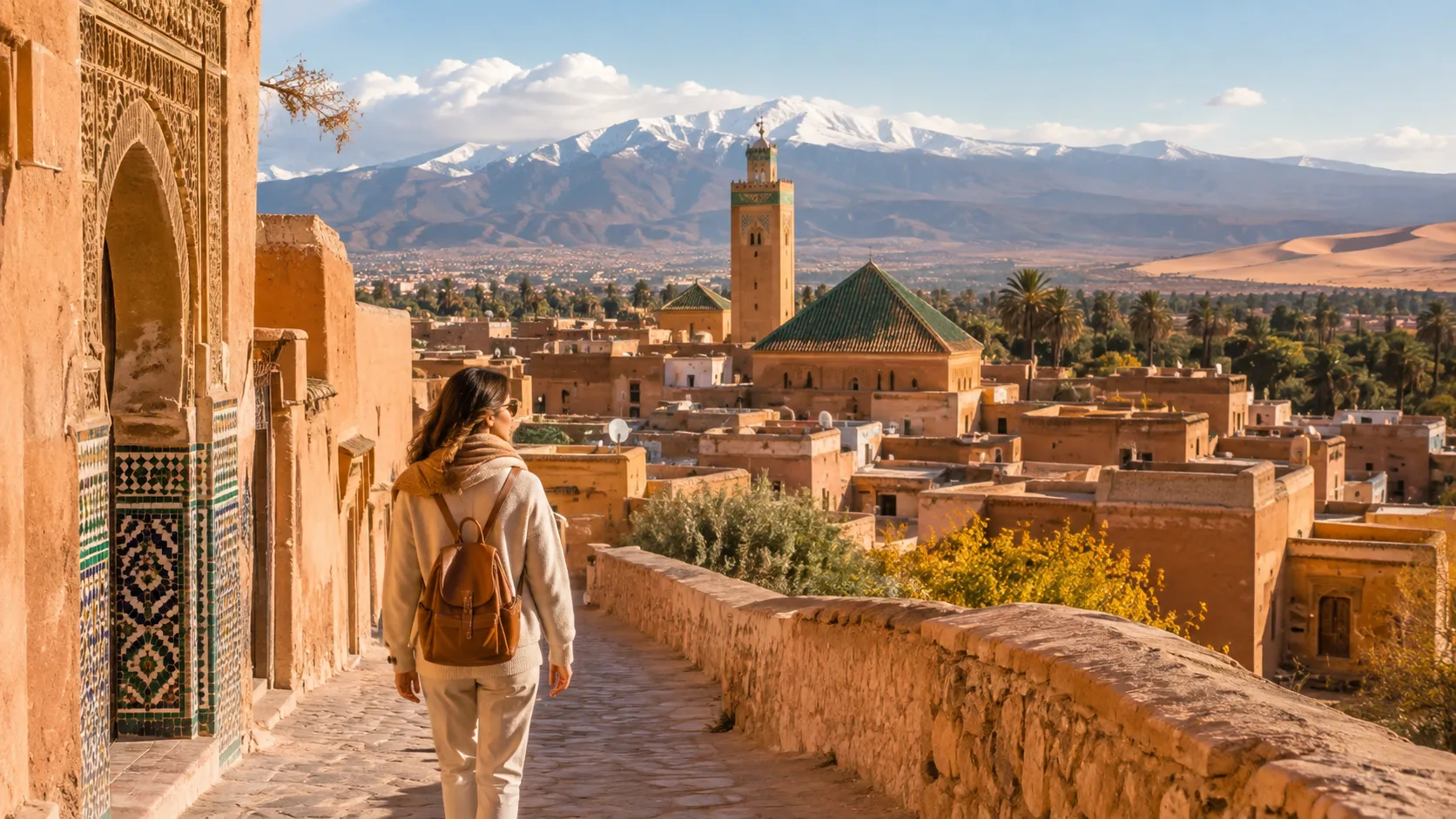
Morocco in December can feel like several trips packed into one country. Coastal cities are often mild, the imperial cities bring crisp mornings and comfortable sightseeing days, the Atlas Mountains may be wintry, and desert nights can become genuinely cold. That variety is exactly why December works so well for travelers who plan by region rather than expecting one national forecast. The month also brings shorter daylight hours, holiday-season demand in popular places, and a need for warmer layers after sunset. This guide explains Morocco weather in December, the destinations that suit different travel styles, what crowds may look like, and how to build a realistic Morocco itinerary for December. You will leave with a clearer sense of whether December is a good time to visit Morocco and how to prepare for city walks, Atlantic breezes, mountain conditions, and the dramatic temperature changes of a Sahara stay.
What Morocco Weather in December Actually Feels Like
December is part of Morocco’s cooler season, but conditions depend strongly on altitude and distance from the ocean. On the Atlantic coast, Casablanca, Rabat, Essaouira, and Agadir generally have milder daytime conditions than inland cities. Marrakech and Fes can be pleasant in the sun, yet mornings and evenings often feel much colder than visitors expect. Rain is possible, especially in northern and coastal areas, although it rarely follows a perfectly predictable pattern.
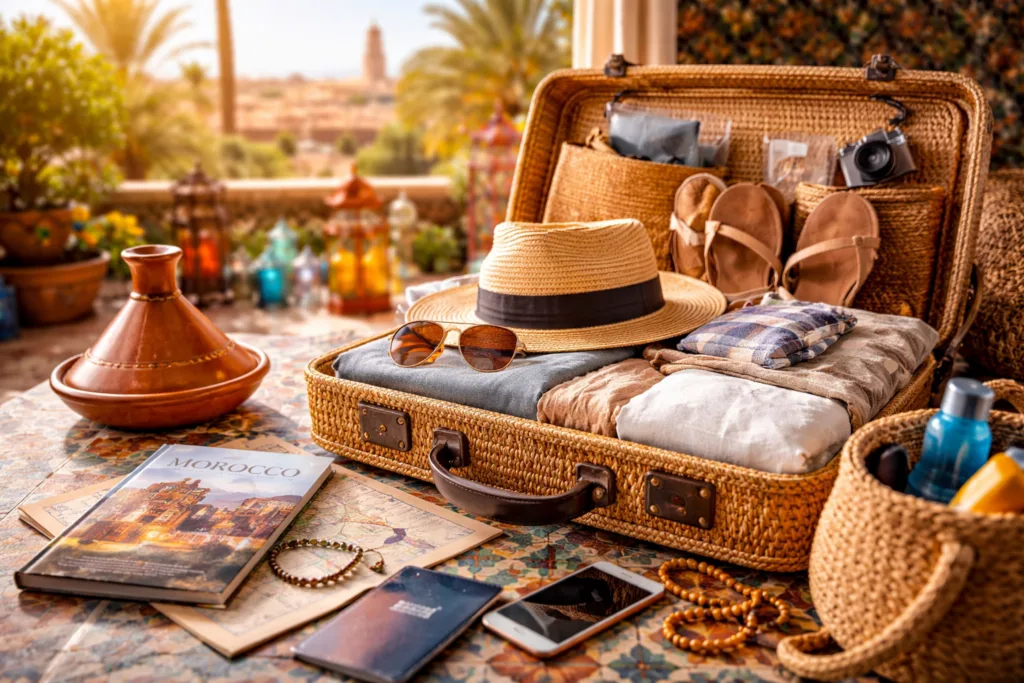
The most useful packing strategy is layering: a breathable base, a sweater or fleece, and a wind- or rain-resistant outer layer. Comfortable closed shoes matter more than summer sandals for long medina walks. The complete Morocco packing list helps you prepare for varied climates without overloading your luggage.
Mountain weather deserves separate attention. Snow and icy conditions may affect high passes and hiking plans, while lower valleys can still be accessible. Check the Moroccan weather service and local road information shortly before departure, because a seasonal average cannot tell you what a specific mountain route will be like on your travel day.
The Best Places to Visit in Morocco in December
For gentle winter sun, Agadir is one of the easiest choices. Its broad seafront, resort infrastructure, and generally mild coastal setting suit travelers who want a relaxed base rather than a tightly scheduled cultural circuit. Read the guide to deciding whether Agadir is worth visiting before choosing between a beach-focused stay and a multi-city route.
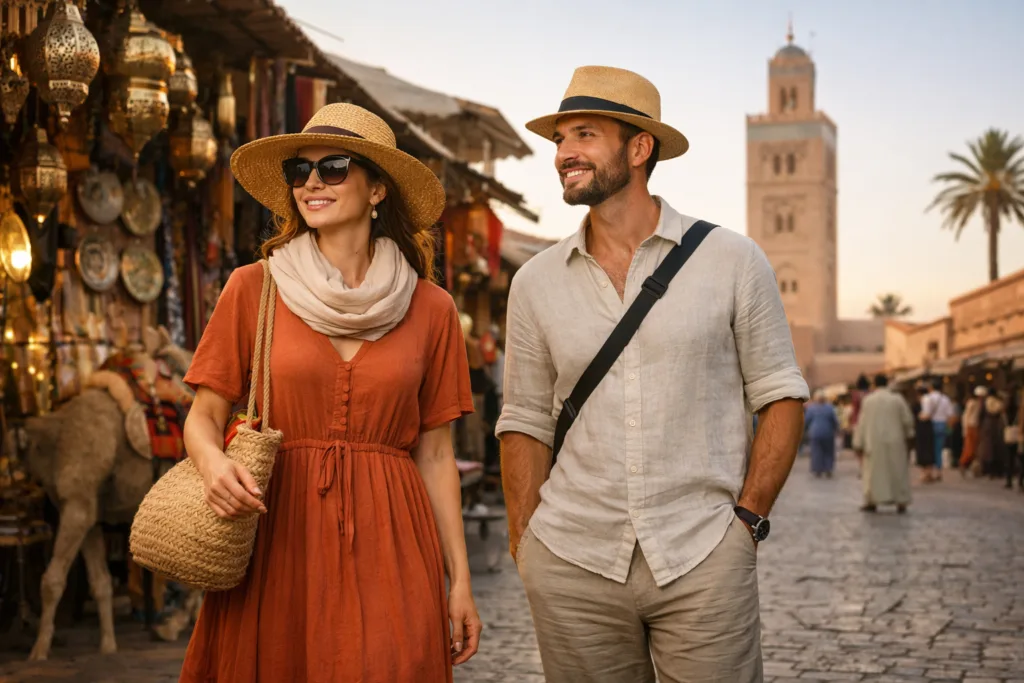
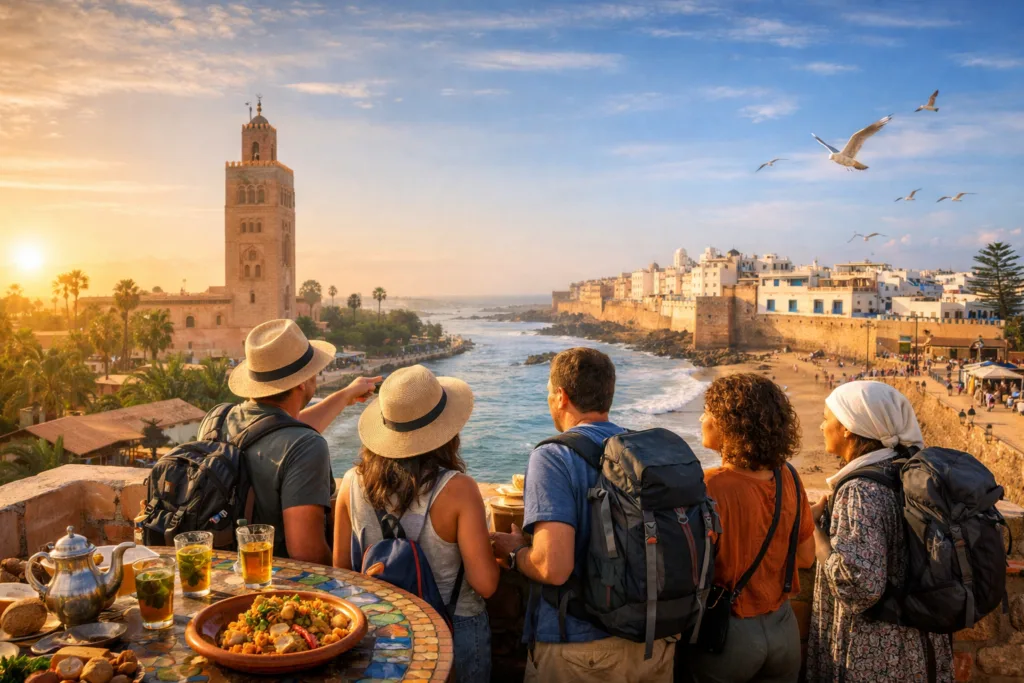
Marrakech is strong for first-time visitors because gardens, palaces, food experiences, and day trips remain available in winter. Fes offers deeper medina immersion, but its narrow lanes and traditional buildings may feel colder after dark. Essaouira is atmospheric and walkable, though the Atlantic wind can make the air feel cooler than the temperature suggests.
Chefchaouen photographs beautifully in soft winter light and may feel calmer than in peak months. However, rain can change walking conditions in the steep blue lanes. December is therefore best for travelers who value culture, food, architecture, and varied scenery more than guaranteed beach weather.
Morocco Desert Temperatures in December
A Sahara trip is possible in December and can be rewarding because daytime excursions are often more comfortable than in extreme heat. The important trade-off is the sharp drop after sunset. Camps vary widely in insulation, bedding, heating, bathroom facilities, and wind protection, so the phrase ‘luxury camp’ does not guarantee the same winter comfort everywhere.
Bring thermal sleepwear, warm socks, a hat, gloves, and an insulating jacket. Ask the camp or tour operator exactly what bedding is supplied and whether private tents have any safe heating system. For route planning, the guide to driving to Merzouga and preparing for the desert road explains the long distances and road-trip considerations that are easy to underestimate.
Winter daylight is shorter, which affects scenic stops between Marrakech and Merzouga. Avoid designing a schedule that requires unfamiliar driving after dark. If weather affects the High Atlas passes, be prepared to adjust timing or route. Desert travel is less about chasing a perfect temperature and more about matching your clothing, transport, and accommodation to cold nights.
Crowds, Prices, and Holiday-Season Demand
Early December can be relatively calm in many destinations, while the period around Christmas and New Year often brings stronger international demand. Marrakech, desert camps, well-reviewed riads, and popular guided circuits may book earlier than travelers expect. This does not mean every street is crowded; demand is concentrated around famous accommodations, transport times, and headline attractions.
Costs vary by city, comfort level, booking date, and the exact holiday week. Compare refundable options and read cancellation conditions rather than selecting only the lowest visible price. The site’s guide to building a realistic Morocco travel budget provides broader cost-planning context without assuming that one daily figure fits every traveler.
Reserve scarce elements first: special accommodation, a reputable desert transfer, and any essential intercity journey. Leave ordinary meals and flexible city walks for later. When checking opening hours, use the attraction’s official page or contact your accommodation, because winter schedules and holiday arrangements can change.
A Practical Morocco Itinerary for December
A balanced seven- to ten-day route might combine Marrakech, two nights in the desert region, and Essaouira, but only if you accept long overland travel. A rail-based alternative is Casablanca or Rabat, Fes, and Marrakech, with fewer hours on winding roads. Travelers seeking warm afternoons may prefer Marrakech plus Agadir, while photographers and culture-focused visitors might choose Tangier, Chefchaouen, Fes, and Rabat.
Start by deciding whether your priority is desert scenery, imperial-city heritage, Atlantic relaxation, or a mixture. The broader Morocco trip planning guide for international visitors can help you compare regions before locking the route.
Keep one flexible half-day for weather changes, fatigue, or a slower medina experience. Build outdoor sightseeing around the brighter middle of the day, and plan indoor museums, hammams, cooking experiences, or long meals for cooler periods. A thoughtful December itinerary is not necessarily longer; it simply allows more breathing room between regions.
Is December the Right Month for Your Morocco Trip?
December is a good time to visit Morocco when you want comfortable sightseeing, atmospheric cities, and a possible winter desert experience without summer heat. It is less suitable if your main goal is reliably hot beach weather or high-altitude trekking without seasonal disruption. The winning approach is to plan for microclimates: mild coast, cooler inland evenings, possible mountain winter, and cold desert nights. Choose fewer regions, carry adaptable layers, confirm changing schedules, and reserve the most important holiday-period services early. With those decisions made, Morocco in December can feel varied rather than unpredictable. Enter your email address in the newsletter field at the bottom of the page to receive future Morocco seasonal guides and practical trip-planning advice.