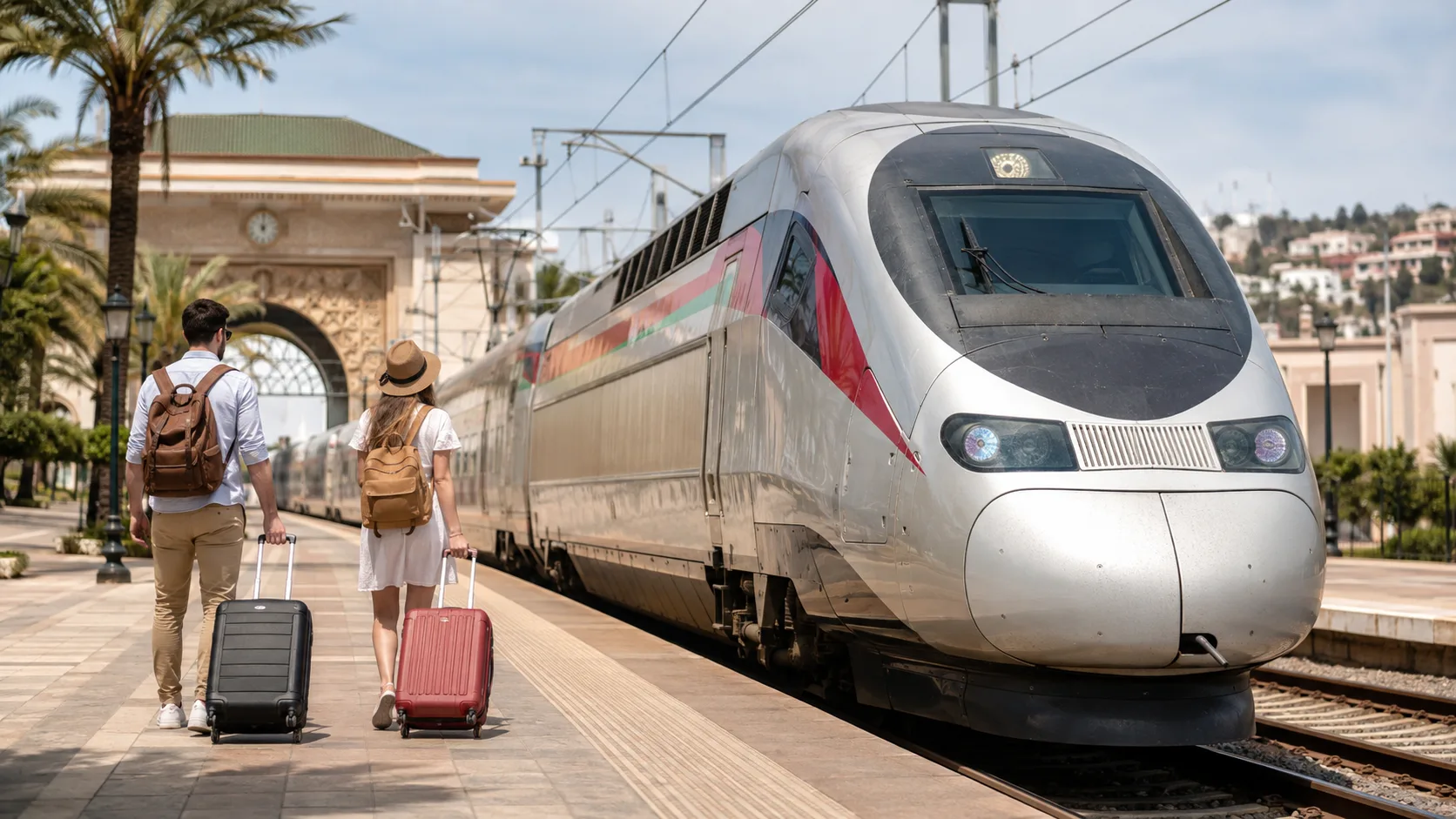
Morocco train travel is one of the simplest ways to connect several major cities without renting a car. The national operator, ONCF, runs conventional Al Atlas services and the Al Boraq high-speed line, while connecting buses operated through Supratours extend access to selected places beyond the rails. Trains are especially useful between Tangier, Kenitra, Rabat, Casablanca, Marrakech, Meknes, Fes, and Oujda, but they do not reach every tourist destination. Agadir, Essaouira, Chefchaouen, and the Sahara require another transport leg. This guide explains Morocco train routes for tourists, how to buy train tickets in Morocco, what to expect from ONCF train booking in English, and how first class vs second class trains in Morocco affect comfort. It also shows how to combine rail with local transport so that a train-based itinerary remains realistic rather than forcing the network to do a job it cannot do.
Understanding the Morocco Rail Network
The railway is strongest along the Atlantic corridor and across the northern and central imperial cities. Al Boraq connects Tangier with Kenitra, Rabat, and Casablanca at high speed. Conventional trains continue to Marrakech, Fes, Meknes, and eastern destinations. Some journeys require a connection, so checking the full itinerary matters more than looking only at a map.
Train travel works best for a city-focused trip. It is less suitable for villages, mountain trailheads, Atlantic towns without stations, or desert camps. The site’s guide to exploring Morocco’s major cities provides destination context before you decide which rail stops deserve multiple nights.
Station names can be confusing. Casablanca has several stations, including Casa Voyageurs and Casa Port, serving different routes and urban areas. Confirm the exact departure station on your ticket and allow time to reach it, particularly during traffic peaks.
Morocco Train Routes for Tourists
The Tangier-Casablanca axis is the showcase route. The Tangier to Casablanca high-speed train also stops at Kenitra and Rabat Agdal, making it easy to combine northern Morocco with the capital and the country’s largest city. From Casablanca, conventional services connect toward Marrakech and Fes, creating flexible multi-city combinations.
Fes and Meknes fit naturally into a rail itinerary, while Chefchaouen usually requires a bus or private transfer from Tangier or another northern hub. Tangier itself has taxis and urban transport for the final distance from the station; the guide to getting around Tangier efficiently helps with that city-level planning.
A practical route might be Tangier-Rabat-Fes-Casablanca-Marrakech. Avoid adding a new city every night. Even when the rail journey is straightforward, hotel check-in, station transfers, and orientation consume time. Two nights in major stops usually produces a better trip than collecting station names.
How to Buy Train Tickets in Morocco
Tickets are sold through the official ONCF Voyages website and app, at station counters, and through ticket machines where available. Online purchasing lets you compare departure times, available fares, class, and seat options. The official interface may display some content in French or Arabic even when English is selected, so travelers should double-check dates, station names, and passenger details before payment.
Fares can vary by train, class, and booking conditions. Discounted tickets may have stricter exchange or refund rules. Rather than quoting a price that may change, compare the exact journey on ONCF’s official platform. Include station transfers in your overall calculation; the Morocco travel budget guide explains why small local expenses matter across a multi-city trip.
Keep the e-ticket available offline and carry identification consistent with the booking. Arrive early enough to locate the platform and ask staff for help. During busy weekends or holiday periods, booking ahead is sensible, especially for preferred Al Boraq departures and first-class seats.
First Class vs Second Class Trains in Morocco
On many conventional trains, first class has fewer seats per compartment or carriage and can offer a quieter environment. Second class is usually more economical and is widely used by local passengers. On Al Boraq, both classes are modern, but first class gives more space and a different seating layout. The best choice depends on journey length, budget, luggage, and how much you value a reserved, calmer setting.
For a short daytime trip, second class may be entirely adequate. For a long journey, a traveler working on a laptop, carrying bulky luggage, or wanting easier seat selection may prefer first class. Regardless of class, keep valuables with you and position luggage where you can monitor it. The general Morocco trip guide for international travelers covers broader practical preparation beyond the rail system.
Food availability varies by service, so bring water and a simple snack without relying on onboard sales. Follow station signs and staff instructions, since platform assignments can change.
Connecting Trains With Buses, Taxis, and Itineraries
A train journey usually ends before the tourist journey does. Petit taxis handle urban trips within a city; grand taxis and buses connect some regional destinations; Supratours services may be coordinated with rail arrivals on selected routes. Confirm where the bus departs, because it may use a station area separate from the train platforms.
Chefchaouen is a common example: travelers reach the north by rail and continue by road. Before squeezing it into a single overnight, review the guide to how much time Chefchaouen deserves. Desert journeys require much more road time and should not be treated as a quick extension from Marrakech or Fes.
Build at least 30 to 60 minutes of buffer when combining independently booked services, and more when a missed connection would affect an expensive tour. A rail-first itinerary is highly workable when it follows the network’s strengths and uses road transport selectively.
Making Morocco Train Travel Work for You
Morocco’s trains are best for travelers linking major northern, Atlantic, and imperial cities. Use Al Boraq for the Tangier-Rabat-Casablanca corridor, conventional trains for Marrakech, Fes, Meknes, and other served destinations, and road connections for Chefchaouen, Essaouira, Agadir, mountain areas, and the Sahara. Book through official ONCF channels, verify the exact station, choose class according to comfort rather than prestige, and protect every important connection with realistic time. Most problems come from assuming that the rail map covers the whole country or that a station sits beside the medina. Plan the final mile as carefully as the main journey. Subscribe through the newsletter field at the bottom of the page for more Morocco transport guidance and practical itinerary ideas.