Choosing a riad vs hotel in Morocco changes more than the look of your room. A riad is traditionally a house organized around an interior courtyard or garden, and many have been converted into intimate guest accommodations inside or near historic medinas. Hotels range from small independent properties to large international resorts with elevators, pools, restaurants, parking, and standardized services. Neither option is automatically more authentic, comfortable, or safe. The right choice depends on location, mobility, noise tolerance, luggage, family needs, arrival time, and how much personal service you want. This guide explains the difference between a riad and a hotel, when it is better to stay in a riad in Morocco, how to choose a riad or hotel in Marrakech, and what first-time visitors should verify before booking. The goal is to match the property to your trip rather than to an idealized image.
The Difference Between a Riad and a Hotel
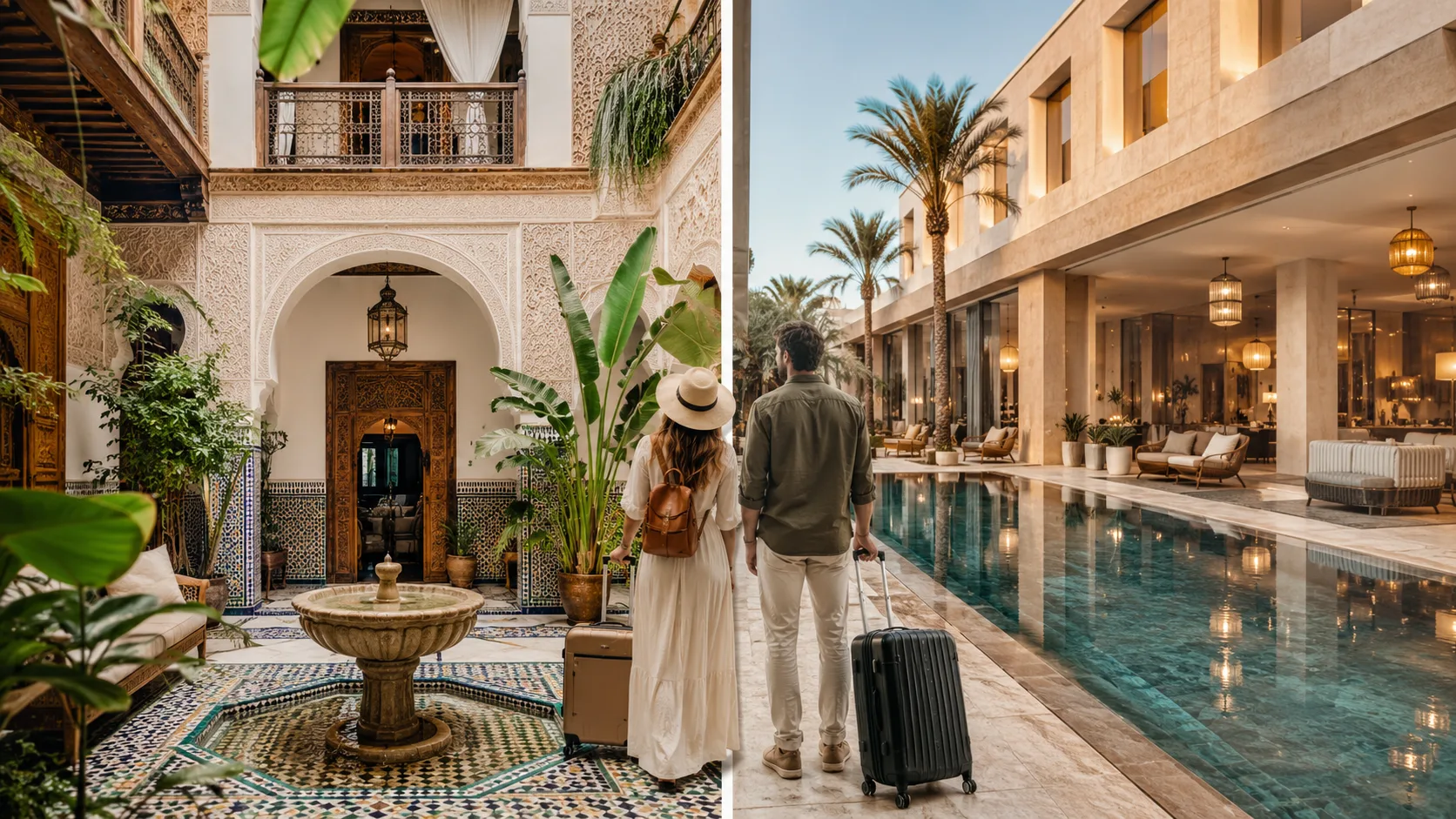
Traditional riads turn inward. Rooms often face a central courtyard, with decorative plaster, tilework, carved wood, plants, or a fountain creating a calm interior. Converted riads may have only a handful of rooms, narrow staircases, rooftop terraces, and no elevator. Service can feel personal because the team is small and guests share common spaces.
Hotels are purpose-built or professionally adapted for larger operations. They are more likely to offer 24-hour reception, elevators, accessible rooms, parking access, multiple room categories, on-site restaurants, and predictable facilities. In Marrakech, location matters as much as property type; review the guide to the best areas to stay in Marrakech before comparing individual listings.
The label alone proves little. Some modern properties call themselves riads despite having a different layout, while some boutique hotels occupy historic buildings. Read the room description, floor plan, access notes, and recent guest feedback instead of booking by category name.
Why Stay in a Riad in Morocco?
A well-run riad can make the medina feel approachable. Staff may help with directions, arrange a porter from the nearest vehicle-access point, serve breakfast in the courtyard, and explain local routines. The enclosed architecture can create a welcome pause after the movement and sound of the streets.
Riads also provide direct exposure to Moroccan design and hospitality traditions. Details such as zellige tile, tadelakt plaster, courtyard proportions, and rooftop living spaces connect naturally with the country’s craft heritage. The article on Moroccan artisan craftsmanship gives useful context for appreciating those features without treating them as mere decoration.
The trade-offs are real. Sound can travel across a courtyard, stairs may be steep, rooms can have limited exterior windows, and a historic lane may be inaccessible by car. Ask about heating or air-conditioning, bathroom privacy, late-night access, and the exact distance from the drop-off point.
When a Hotel Is the Better Choice
Hotels are often easier for families with strollers, travelers with reduced mobility, people arriving late, and anyone carrying heavy luggage. A front entrance reachable by car reduces the friction of finding a property in a maze-like medina. Resorts may add pools, children’s facilities, large gardens, and several dining options.
A hotel can also suit a work trip, one-night airport stop, or coastal holiday where the priority is infrastructure rather than medina atmosphere. Agadir, for example, has many seafront and resort-style properties; the guide to what makes Agadir worth visiting helps explain why its accommodation landscape differs from old-city Marrakech or Fes.
Standardization is not guaranteed, however. Confirm renovation status, room location, noise exposure, pool opening periods, and whether advertised services operate during your dates. A large property can feel anonymous, while a small hotel can be highly personal.
Are Moroccan Riads Safe and Comfortable?
Reputable riads routinely host international visitors, but safety depends on the individual property and neighborhood. Look for clear contact details, consistent recent reviews, secure room doors, smoke detection, safe electrical installations, and a reliable arrival procedure. Ask whether reception is staffed overnight and how guests enter after dark.
Medina navigation is often the bigger concern. Request a meeting point, official transfer, or porter arrangement, especially for a late arrival. Avoid following unsolicited strangers who claim that your riad or street is closed. The wider guide to travel safety in Morocco provides proportionate advice on scams, valuables, and moving through tourist areas.
Comfort is personal. Courtyard rooms may be tranquil but dim; rooftop rooms may have views but more stairs and weather exposure. Families should ask about railings and pool access. Travelers with allergies should inquire about pets, plants, incense, and traditional materials.
How First-Time Visitors Should Decide
Choose a riad when you want a small-scale stay, medina access, architectural character, and personal hosting – and when stairs, walking, and a less standardized room are acceptable. Choose a hotel when you prioritize vehicle access, elevators, broad facilities, predictable reception, or resort-style leisure.
A split stay can work well: two or three nights in a medina riad followed by a hotel near the airport, beach, or modern district. Compare the full experience, including transfers and meals, rather than the nightly rate alone. The guide to selecting a Morocco travel package explains how accommodation choices interact with transport and organized services.
Before paying, verify the cancellation policy, taxes, meal plan, heating or cooling, pool conditions, accessibility, and exact room category. Ask direct questions and keep written answers. Also check whether breakfast begins early enough for planned tours and whether the property can store luggage after check-out. Solo travelers may value a staffed reception and sociable common areas, while couples may prefer privacy and a quieter room away from the courtyard. The best accommodation for first-time visitors to Morocco is the property that removes friction from their specific itinerary.
Your Best Stay May Be a Mix
The riad-versus-hotel decision is not a contest between authenticity and comfort. A riad can offer intimate design, medina immersion, and personal help, while a hotel can provide easier access, more facilities, and operational consistency. Evaluate the exact location, arrival process, stairs, room layout, climate control, noise, family needs, and cancellation terms. In many trips, combining a riad in a historic city with a hotel or resort elsewhere creates the most balanced experience. Choose the stay that supports how you will actually travel, not the one that looks most romantic in a photograph.
Subscribe using the newsletter field at the bottom of the page for more Morocco accommodation advice and destination-planning ideas.