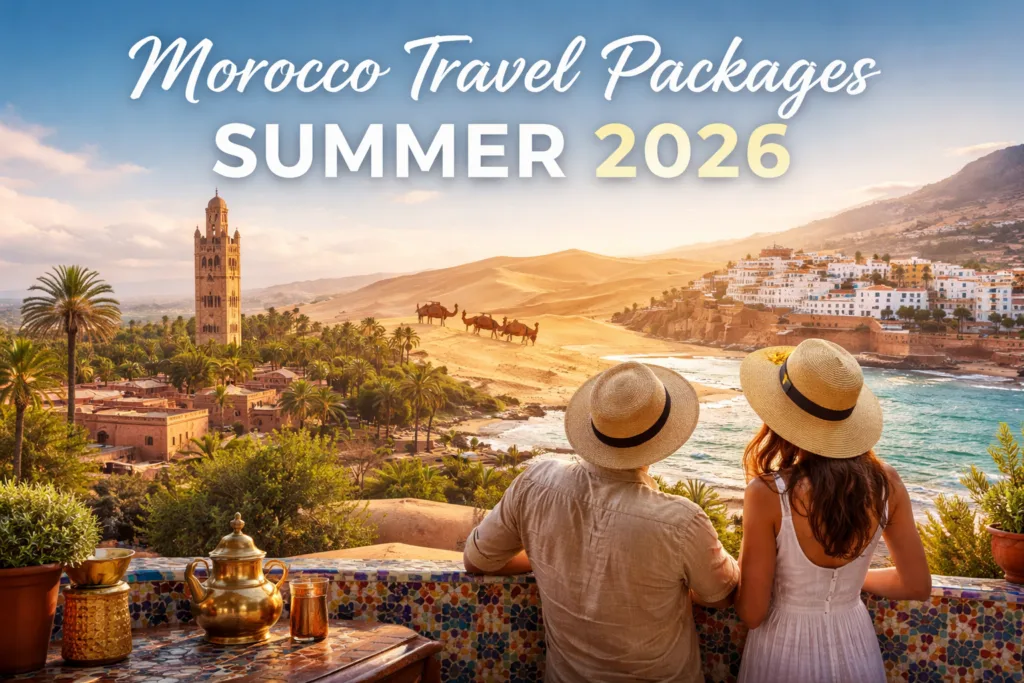
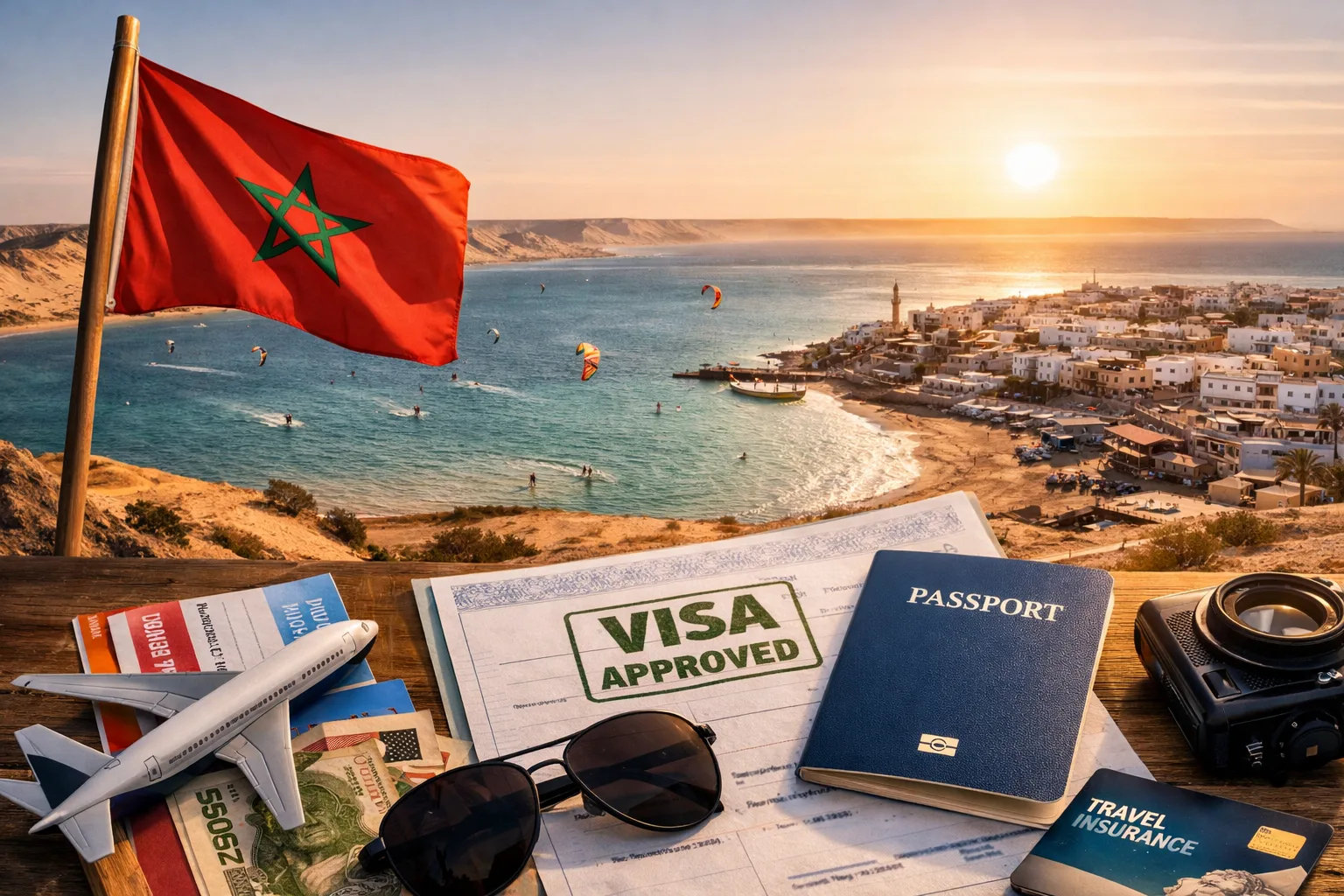
If Dakhla is on your list for the summer 2026 season, one of the first questions to settle is whether you need a visa. That matters even more in summer, when flights, accommodation, and kitesurfing camps fill up faster and travelers want their entry paperwork sorted well before departure. The good news is that visiting Dakhla follows Morocco’s national entry rules, so there is no separate visa system for the destination itself. Once you understand Morocco’s current visa framework, planning a summer 2026 trip to this Atlantic escape becomes far more straightforward.
Dakhla continues to attract travelers looking for a different side of Morocco in summer 2026: wind-driven watersports, dramatic desert-meets-ocean scenery, quieter beaches than the country’s better-known resort hubs, and an atmosphere that feels both remote and easygoing. That makes it especially important to prepare early, because visa needs vary depending on your nationality, your residence status, and whether you qualify for Morocco’s electronic visa system.
In this updated guide, you will find a practical summer 2026 overview of who can travel visa-free, when a Moroccan visa is required, how Morocco’s e-Visa system fits in, and what to keep handy for a smooth arrival in Dakhla. You will also find links to Morocco’s visa policies and our guide to this serene destination if you want to continue planning the rest of your trip.
| Key point | Summer 2026 takeaway |
|---|---|
| Does Dakhla have its own visa? | No. Dakhla follows Morocco’s national visa and entry rules. |
| Visa-free travel | Many travelers from countries such as the US, UK, EU states, Canada, Australia, and New Zealand usually enter Morocco visa-free for short tourist stays, often up to 90 days. Always verify your nationality before booking. |
| Who may need a visa? | Travelers from non-exempt countries generally need a Moroccan visa or, if eligible, an e-Visa. |
| e-Visa processing | Standard processing is typically around 72 working hours in Morocco, with an express option of around 24 working hours for eligible applicants. |
| Best time to apply | For summer 2026, apply well ahead of peak travel dates and do not leave it to the last minute. |
| Documents to keep ready | Passport, accommodation details, return or onward ticket, travel insurance, and proof of funds. |
Understanding Dakhla’s Visa Framework
Moroccan Jurisdiction Over Dakhla
For summer season 2026 travel planning, the most important point is simple: Dakhla operates under Morocco’s administrative control for entry purposes, so it follows Morocco’s visa policies. There is no separate tourist visa for Dakhla itself. Whether you land there directly after a domestic connection or arrive through another approved Moroccan entry point first, the same Moroccan entry framework applies.
What This Means for Travelers in Summer 2026
This is good news for travelers, because it keeps the process clear. If your nationality is visa-exempt for Morocco, you do not need a special permit just because you are visiting Dakhla. If your nationality requires a visa, you follow Morocco’s normal process through an embassy, consulate, or the official e-Visa platform when eligible. In other words, summer 2026 travel to Dakhla is not about learning a new regional system; it is about understanding Morocco’s current entry rules and preparing early enough for the busy season.
That consistency makes planning easier for surfers, digital nomads, couples, and independent travelers who want to combine Dakhla with Casablanca, Agadir, Marrakech, or other parts of the country on the same trip.
Visa-Free Travel to Dakhla in Summer 2026
One reason Dakhla is relatively easy to add to a Morocco itinerary is that many international travelers can enter Morocco without arranging a tourist visa in advance. In practical terms, travelers from countries such as the United States, the United Kingdom, European Union member states, Canada, Australia, and New Zealand are commonly able to visit for short tourist stays without a visa, typically for up to 90 days.
Why This Matters for the Summer 2026 Season
During summer 2026, this visa-free access can save time and reduce pre-trip stress. If you are flying in for a beach-and-lagoon holiday, a kitesurfing escape, or a longer Morocco circuit that ends in Dakhla, you can focus more on routes, bookings, and weather conditions than on formal visa paperwork. That said, visa policy can change, and airline staff will check your documents before boarding, so it is still wise to verify the rules for your exact passport nationality before you finalize your flights.
Length of Stay and Basic Conditions
For travelers who qualify for visa-free entry, a short tourist stay is generally limited to 90 days. For summer season 2026, that is more than enough for a Dakhla-focused break or even a multi-stop Morocco trip. You should still make sure your passport is in good condition, that you can show your onward or return plans if asked, and that you can demonstrate you are traveling for tourism rather than for unauthorized work or long-term residence.
If you are not completely sure whether your nationality is exempt, do not rely on travel forums or outdated blogs alone. Check with the relevant Moroccan diplomatic source before departure, especially if you hold dual nationality, a residence permit in another country, or a travel document that is not a standard ordinary passport.
Visa Requirements for Non-Visa-Exempt Travelers
If your nationality is not covered by Morocco’s visa-free arrangements, you will need a Moroccan visa before traveling to Dakhla in summer 2026. In many cases, that means applying through Moroccan embassies or consulates, unless you qualify for the online e-Visa route.
The Standard Application Process
For travelers using the consular route, the process is usually straightforward but document-heavy. The exact requirements can vary slightly by country and consular post, so always follow the checklist provided by the mission handling your application. In general, the process involves completing the application form, gathering the supporting documents, paying the fee, and waiting for the file to be reviewed before departure.
Documents Commonly Requested
- A valid passport or travel document.
- A completed visa application form.
- Recent passport-style photographs.
- Proof of accommodation, such as hotel bookings or a host invitation.
- Return or onward travel evidence.
- Travel insurance covering your stay.
- Proof of sufficient financial means for the trip.
Summer 2026 Advice for a Smoother Application
Summer is one of the most traveled periods of the year, so do not wait until the final days before departure. Consular processing can take longer when demand rises, and incomplete files can cause preventable delays. Make sure the names, passport number, and dates on your form match your passport exactly. Also check that your accommodation dates line up with your itinerary and that your travel insurance covers the whole planned stay.
For summer 2026, it is especially smart to keep digital and paper copies of everything. Dakhla attracts travelers coming for sports camps and longer stays, which means itineraries can look more detailed than a standard city break. Having your bookings and supporting documents well organized can make the process far less stressful.
Electronic Visas (e-Visas) and Summer 2026 Travel
Understanding Morocco’s e-Visa System
For eligible travelers, Morocco’s e-Visa system is the most convenient option for a summer 2026 trip to Dakhla. It allows qualifying applicants to complete the process online rather than visiting an embassy or consulate in person. That makes it particularly useful for travelers organizing a last-minute watersports holiday or adding Dakhla to a broader Morocco itinerary during the summer season 2026.
Eligibility and Validity
The e-Visa is not open to everyone, but it does cover several categories of travelers. Some nationalities can apply directly, while others may qualify if they are legal residents of certain countries or if they hold specific valid visas from countries recognized by the Moroccan authorities. The official e-Visa rules also state that it is issued for tourism or business purposes only, and it is tied to an ordinary passport.
For practical planning, the key points are these: the maximum validity of the electronic visa can extend up to 180 days from the date of issue, it is generally issued for a single entry, and the stay itself may not exceed 30 days. Standard processing is typically around 72 working hours in Morocco, while an express option may be issued in about 24 working hours. That makes the e-Visa especially relevant for summer 2026 travelers who need speed, but it is still safer to apply well before departure.
Documents and Border Checks
Even after approval, your e-Visa is not the only thing that matters. Travelers may still be asked to show supporting documents at boarding or on arrival. These can include your passport, the e-Visa document itself, a return ticket, proof of financial means, and insurance covering the stay. That is why it is best to think of the e-Visa as one part of your entry file, not the whole file.
If you are applying under a residence-based or visa-based eligibility category, double-check the validity dates of those supporting documents before you submit. Summer 2026 travel is easier when the paperwork is prepared carefully at the start.
How to Enter Dakhla in Summer 2026
Arriving by Air
For most international tourists, the easiest way to reach Dakhla in summer 2026 is by air through Morocco’s regular travel network, often connecting through larger Moroccan cities first. Once you have met Morocco’s entry requirements, traveling onward to Dakhla is usually just a matter of your domestic or connecting itinerary.
Arriving Overland
Overland travel is also possible for some travelers, particularly those moving through the broader region. However, for the summer season 2026, the same rule applies: use officially recognized and authorized entry points only. That helps avoid unnecessary immigration issues and ensures your entry is recorded correctly.
Use Approved Entry Channels
Whether you arrive by plane or overland, always travel through approved airports, seaports, or land crossings. Do not assume that a destination’s remoteness changes the legal entry requirements. Dakhla may feel far from Morocco’s better-known tourist circuit, but its entry procedures remain tied to Morocco’s official border controls.
Summer 2026 Travel Checklist Before You Go
If you want a smooth arrival in Dakhla this summer 2026, run through this checklist before your departure date:
- Confirm whether your passport nationality is visa-exempt or visa-required.
- If needed, apply for a visa or e-Visa early rather than close to departure.
- Check your passport validity and make sure it is an ordinary passport if using the e-Visa route.
- Keep accommodation details and return or onward tickets accessible.
- Carry proof of insurance and enough funds for your stay.
- Save digital copies of all important documents on your phone and email.
- Review any airline-specific boarding requirements before heading to the airport.
This kind of preparation is especially useful in summer, when routes are busier and travelers often move quickly between destinations. A well-prepared file means you can focus on enjoying the lagoon, the desert views, and the laid-back rhythm of this serene destination rather than dealing with paperwork problems at the last minute.
Conclusion
For summer 2026, visiting Dakhla is usually less complicated than many first-time travelers expect. The key is remembering that Dakhla follows Morocco’s national entry rules, not a separate local visa system. If your nationality is visa-exempt, your trip preparation may be very simple. If you need a visa, Morocco’s consular process or the official e-Visa platform can make the path clear as long as you apply early and keep your documents organized.
With the right preparation, Dakhla rewards you with one of Morocco’s most distinctive travel experiences: an Atlantic setting shaped by desert landscapes, water sports, calm beaches, and a slower pace that feels ideal for the summer season 2026. Before you go, take a final moment to verify your exact entry requirements, then move on to the enjoyable part of planning the trip itself.
If you found this guide helpful, subscribe to our newsletter by entering your email address in the subscription field at the bottom of this page. It is the easiest way to get fresh Morocco travel tips, seasonal guides, and practical updates for future trips.
FAQ: Visa Requirements for Dakhla in Summer 2026
Do I need a visa to visit Dakhla in summer 2026?
Not always. Dakhla follows Morocco’s national entry rules, so whether you need a visa depends on your nationality and, in some cases, your residence status or current visas. Many travelers from countries such as the US, UK, EU member states, Canada, Australia, and New Zealand can usually visit Morocco without a visa for a short tourist stay, often up to 90 days.
Is there a separate visa for Dakhla?
No. There is no separate tourist visa for Dakhla. If you are allowed to enter Morocco under visa-free access, a consular visa, or an approved e-Visa, that is the framework that applies to Dakhla as well.
Can I use Morocco’s e-Visa for a summer 2026 trip to Dakhla?
Yes, if you are eligible under Morocco’s official e-Visa categories. The e-Visa is a practical option for many summer 2026 travelers because the application is completed online. Standard processing is typically around 72 working hours in Morocco, while express processing may be around 24 working hours for eligible applications.
How long can I stay in Dakhla with an e-Visa?
For eligible travelers, Morocco’s e-Visa is generally issued for a single entry, with a maximum validity that can extend up to 180 days from issue and a permitted stay that does not exceed 30 days. Always review the exact conditions shown on your approved visa before traveling.
What documents should I keep with me when traveling to Dakhla in summer 2026?
You should keep your passport, approved visa or e-Visa if required, accommodation details, return or onward ticket, proof of travel insurance, and evidence of sufficient funds. Even travelers with approved e-Visas may be asked to show supporting documents during boarding or at the border.
What happens if I overstay in Dakhla?
Overstaying in Dakhla is treated the same way as overstaying elsewhere in Morocco. It can lead to fines, administrative difficulties, or problems with future travel. If your plans change during summer 2026, deal with the issue early rather than waiting until the last day of your authorized stay.