
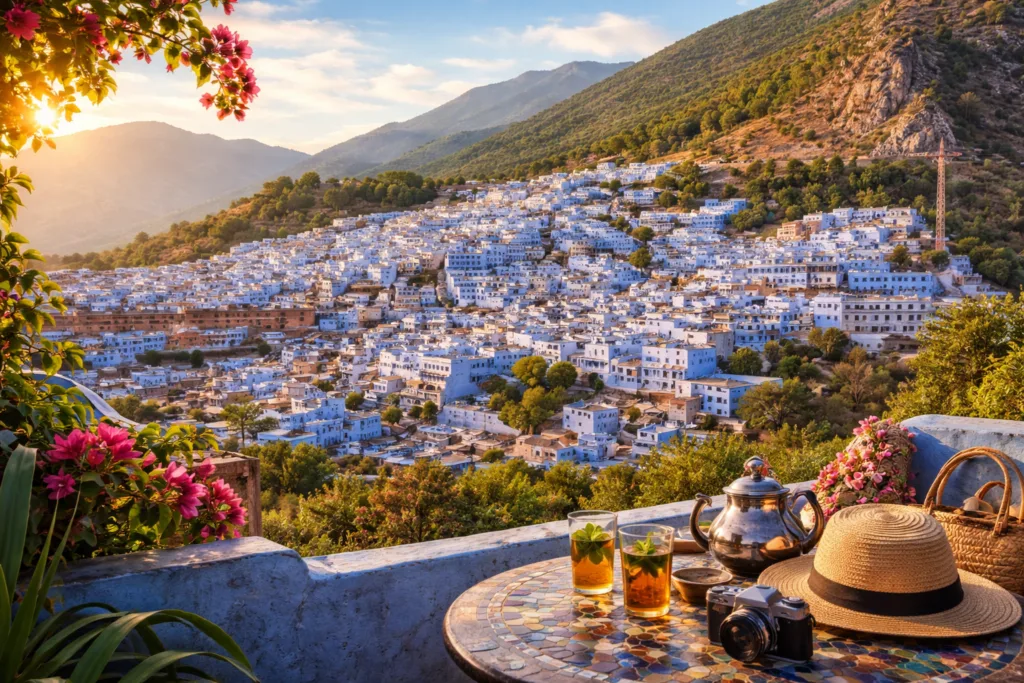
Perched in the Rif Mountains, Chefchaouen remains one of Morocco’s most photogenic and soothing destinations, but for summer 2026 the Blue Pearl feels especially appealing for travelers who want culture, mountain air, walkable streets, and a slower rhythm than the country’s bigger urban hubs. The city’s blue-washed medina, leafy viewpoints, nearby waterfalls, and café terraces make it ideal for couples, solo travelers, photographers, and families alike. In this updated guide, you will find practical Chefchaouen travel tips tailored to the warm months: when to visit, what to pack, where to stay, how to move around, which summer events to watch, and how to build a relaxed 2- or 3-day stay. Whether you are coming from Tangier, Fez, Rabat, or adding Chefchaouen to a wider Morocco itinerary, this guide is designed to help you plan a smoother and more memorable blue-city escape.
| Quick Point | What to Know |
|---|---|
| Why visit in summer 2026 | Chefchaouen stays more comfortable than many inland Moroccan cities, with cooler mornings, lively evenings, and a full blue-medina atmosphere. |
| Best stay length | 2 nights minimum, 3 nights if you want Akchour, a relaxed medina pace, and sunset viewpoints without rushing. |
| Best daily rhythm | Explore early morning and late afternoon, then use midday for lunch, terrace breaks, hammam time, or your riad. |
| Confirmed summer events | Trail Chefchaouen, the Environmental Film Festival, and the July cinema festival all add energy to the city. |
| Essential packing | Good walking shoes, light modest layers, sunscreen, hat, reusable bottle, cash, and a light evening layer. |
| Good add-ons | Spanish Mosque sunset, Ras El Maa, Akchour day trip, local craft shopping, and rooftop dining. |
Why Chefchaouen Works So Well in Summer
Chefchaouen is not a beach town, yet it remains one of the smartest warm-season choices in Morocco because it combines altitude, beauty, and an easy walking layout. The medina is compact, the scenery is instantly rewarding, and you do not need a long checklist of monuments to enjoy it. Much of the pleasure comes from wandering slowly, stopping for mint tea, admiring painted stairways, and climbing to panoramic viewpoints at the right time of day.
The city also works well for travelers who want a softer, more intimate counterpoint to Marrakech, Casablanca, or Fez. You can spend a morning exploring the medina, cool off at Ras El Maa, then finish the day with sunset views above town. Nature lovers can pair the city with the waterfalls and trails around Akchour and the surrounding mountains, while food lovers can use Chefchaouen as a calm place to enjoy goat cheese, tagines, msemen, fresh juice, and terrace dinners.
Best Time to Visit Chefchaouen During the Warm Months
For a summer-focused trip, June and early September are the easiest windows if you want warm weather with a little more breathing room. July and August are still very doable, but they require better timing because afternoons can feel hot on steep, reflective blue streets. This summer, the smartest strategy is simple: start sightseeing early, slow down during midday, and return outside when the medina glows again in softer light.
- June: A strong balance of sunshine, active streets, and slightly easier daytime conditions. Great for combining Chefchaouen with nearby hiking.
- July and August: Livelier and busier, especially in the medina and at famous photo corners. Best for travelers who enjoy atmosphere and longer evenings.
- Early September: Still summery, often a touch easier than peak August, and ideal if you want a more relaxed rhythm.
If you are choosing between a day trip and an overnight stay, always lean toward at least two nights. Your own internal guides already support that logic through this itinerary guide and this one-day breakdown. In summer, an overnight stay is even more valuable because sunrise and evening are the best hours in town.
Chefchaouen Travel Tips for Summer 2026 First-Timers
- Stay inside or just beside the medina. The hills are real, so being central makes your days easier and lets you rest between walks.
- Wear serious walking shoes. Blue beauty comes with stairs, polished stones, slopes, and uneven lanes. A stylish sandal is fine for dinner, but not for full days.
- Carry cash. Small cafés, taxis, and many medina shops still work best with dirhams. Your guide on cash and travel money is still useful advice here.
- Embrace the maze. Chefchaouen is at its best when you let yourself drift, turn, pause, and return later. Do not treat it like a checklist city.
- Protect your energy. Bring water, sunscreen, a hat, and plan café breaks. The blue walls are beautiful, but the reflected light and climbing can tire you faster than expected.
- Dress respectfully. Loose, breathable, modest clothing works best. Your post on how to dress in Morocco is a good companion for this.
Chefchaouen is generally one of the easier Moroccan destinations for many travelers, including solo visitors, but common-sense rules still matter: keep an eye on your belongings, avoid following overly persistent unofficial guides, and agree on taxi fares before getting in. The city is relaxed, but smart travel habits always make a trip smoother.
Getting to Chefchaouen and Moving Around
Chefchaouen has no airport and no train station, so every arrival is by road. The usual gateways are Tangier, Fez, Rabat, and Casablanca. Tangier is usually the easiest pairing for international visitors heading north, while Fez works well if you are building an imperial-cities route and want to combine the Blue City with Fez’s historic medina.
- From Tangier: Usually the simplest transfer. Private drivers, rental cars, and CTM buses are popular choices. Pair this with your guide on getting around Tangier.
- From Fez: A longer but classic route, especially for travelers combining blue streets with imperial-city history.
- From Rabat or Casablanca: Better if you are making a broader circuit rather than popping in for one night.
Inside town, walking is still the only real way to experience Chefchaouen properly. Petit taxis help for the bus station, the newer town, or when the heat peaks, but the medina itself is about strolling. Download an offline map, save your riad location, and do not worry if you get turned around. Getting gently lost is part of the place’s charm.
What to Pack for a Summer Chefchaouen Trip
Use your broader Moroccan adventure packing list as a base, then adapt it to Chefchaouen’s hills and warm-season rhythm.
- Walking shoes: Your number one item.
- Light modest clothing: Breathable trousers, midi skirts, airy shirts, and a light overshirt or scarf.
- Sun protection: Hat, sunglasses, sunscreen, and lip balm.
- Reusable water bottle: Essential for long medina walks and viewpoints.
- Light evening layer: Mountain evenings can feel noticeably softer than midday.
- Power adapter and power bank: Helpful if you spend hours shooting photos.
- Small backpack: Better than a bulky suitcase once you reach the medina.
Food-wise, Chefchaouen is also a pleasant place to slow down and taste regional flavors. If you want pre-trip inspiration, your post on must-try dishes of Chefchaouen fits perfectly here, alongside your broader guide to popular Moroccan food.
Summer 2026 Events in Chefchaouen
The summer season 2026 calendar already gives visitors a few reasons to plan ahead. If you prefer calm streets, book around these dates carefully. If you enjoy extra atmosphere, they can make your trip even better.
- Trail Chefchaouen — June 12 to 14, 2026: A multi-stage trail-running event centered on the mountains and terrain around Chefchaouen. Expect an active outdoor atmosphere and added demand for rooms.
- Chefchaouen International Environmental Film Festival — June 17 to 20, 2026: A cultural event focused on environment and climate themes, with screenings and international participation.
- Festival International de Cinéma de Chefchaouen — July 11 to 13, 2026: A summer cultural program with opening parade, workshops, screenings, masterclasses, and closing ceremony in the medina, cultural center, and Kasbah area.
- Alegria Festival — September 2026: Listed for September, with exact dates still to be announced. Traditionally associated with music, photography, and cultural exchange in the Blue City.
If your trip is flexible, these dates help you decide whether you want a more animated city break or a quieter photo-and-terrace escape. For event lovers, the film festivals can add real texture to a Chefchaouen stay. For slower travelers, early June or early September outside the busiest windows may be the sweet spot.
What Other Summer Visitors Loved About Chefchaouen
One of the best ways to judge a destination is to compare practical advice with what real travelers actually say after being there. Summer visitors consistently highlight the same strengths, and that reliability matters.
- They love the rhythm. A travel writer described Chefchaouen as a great two-day getaway, noting that even though it is popular in summer, early mornings and evenings still feel calm once day-trippers thin out.
- They remember the visual impact. Another visitor called it a photographer’s paradise and said she regretted not staying longer, while also stressing the importance of hydration and sunscreen in the warmer months.
- They appreciate the atmosphere, not just the photos. A small-group traveler recommended two nights because the city’s calm, walkable medina and sunset viewpoints reward a slower pace.
- They keep mentioning how peaceful it feels. Several writers describe Chefchaouen as relaxed, less aggressive than larger cities, and especially enjoyable for simply wandering, eating, and taking it all in.
Taken together, these firsthand impressions support a dependable planning formula: stay overnight, walk early, reserve time for terrace breaks, and do not treat Chefchaouen as just a quick photo stop. That combination of visual beauty and repeatable positive visitor experience is exactly what makes the city such a dependable recommendation for summer travelers.
Recommended 3-Day Summer 2026 Itinerary
- Day 1: Blue Medina and Sunset Viewpoint. Arrive, check into your riad, and spend your first hours walking the medina without a rigid route. Visit Place Outa el Hammam, browse local crafts, enjoy a slow lunch, then head toward the Kasbah and main square. In late afternoon, make the climb to the Spanish Mosque for sunset.
- Day 2: Ras El Maa, craft shopping, and a slow evening. Start with the quieter lanes for photos, then walk to Ras El Maa for fresh air and a break from the denser medina core. Explore ceramics, woven goods, and textiles, especially if you enjoy Morocco’s artisan craftsmanship. In the afternoon, book a hammam, relax on a terrace, or take a short cultural workshop.
- Day 3: Akchour or Talassemtane day trip. Use your final day for nature. Akchour is the classic choice for waterfalls, pools, and dramatic scenery. If you are more interested in walking than swimming, nearby mountain trails are another excellent option. Return for one last dinner in the medina and a rooftop night view.
This structure suits most international visitors because it balances Chefchaouen’s two strongest identities: the dreamy blue city itself and the green mountain world that surrounds it.
Tips for Budget, Solo, Family, and Photography Travelers
Budget travelers should prioritize family-run riads, terrace breakfasts, walking everywhere, and simple local meals. Chefchaouen is not the cheapest shopping stop in Morocco, but it is still manageable if you focus on experience over constant spending.
Solo travelers often find Chefchaouen approachable because the medina is compact and the general atmosphere is softer than in some larger cities. A central riad, good daytime pacing, and one organized outing such as Akchour or a cooking class can make a solo stay both easy and rewarding.
Families should keep itineraries light. Kids usually enjoy the blue lanes, cats, juice stands, and open square atmosphere more than long museum visits. Choose accommodation with easy access and a terrace rather than somewhere too high up with endless steps.
Photography lovers should prioritize sunrise, the first hour after breakfast, and late afternoon. Famous corners get crowded quickly, so the magic often lies in small side alleys, door details, laundry lines, stair textures, and rooftop views rather than only the best-known Instagram spots.
Frequently Asked Questions
Is Chefchaouen worth visiting in summer 2026?
Yes. Chefchaouen is one of the best warm-season city breaks in Morocco if you want mountain scenery, a walkable medina, and a calmer atmosphere than larger cities. It is especially rewarding if you stay at least two nights.
Is Chefchaouen too hot in July or August?
Not usually too hot to visit, but hot enough to require planning. Start early, rest at midday, carry water, and return outside in late afternoon. Good shoes and sun protection matter more than people expect.
How many days do I need in Chefchaouen?
Two nights is the sweet spot for most travelers. Three nights is better if you want to add Akchour, more photography time, or a slower pace with rooftop breaks and shopping.
What events are happening in Chefchaouen in summer 2026?
Confirmed events include Trail Chefchaouen from June 12 to 14, the Environmental Film Festival from June 17 to 20, and the July Chefchaouen cinema festival from July 11 to 13. Alegria is listed for September 2026, with exact dates still pending.
Where should I stay in Chefchaouen?
Stay in or very close to the medina for the easiest experience. A central riad with roof access is ideal because it lets you walk everywhere and enjoy sunrise or evening views without extra transport.
Can I visit Chefchaouen as a day trip?
Yes, but it will feel rushed. Chefchaouen becomes more memorable when you experience its quieter early and late hours, which is why an overnight stay is strongly recommended.
What should I wear in Chefchaouen in summer?
Choose lightweight, breathable, modest clothes and sturdy walking shoes. Add a hat, sunglasses, and sunscreen, and keep a light layer for evenings or breezier terraces.
Is Chefchaouen safe for solo travelers and families?
Chefchaouen is widely considered one of the more relaxed destinations in Morocco for solo travelers, couples, and families. Basic precautions still apply, but its scale and atmosphere make it easier than many first-timers expect.
Conclusion
If Chefchaouen is on your Morocco list for summer 2026, the best plan is not to rush it. Give yourself at least two nights, stay central, walk early, pause often, and leave room for both the medina and the mountains beyond it. That is how the Blue Pearl feels less like a stopover and more like a true highlight of your trip.
And when you reach the bottom of this page, subscribe to the MoroccoJourneying newsletter by entering your email address in the dedicated field below. You will get more practical Morocco guides, destination inspiration, and fresh travel ideas to help shape the rest of your adventure.
Safe travels and enjoy every blue corner of Chefchaouen.