
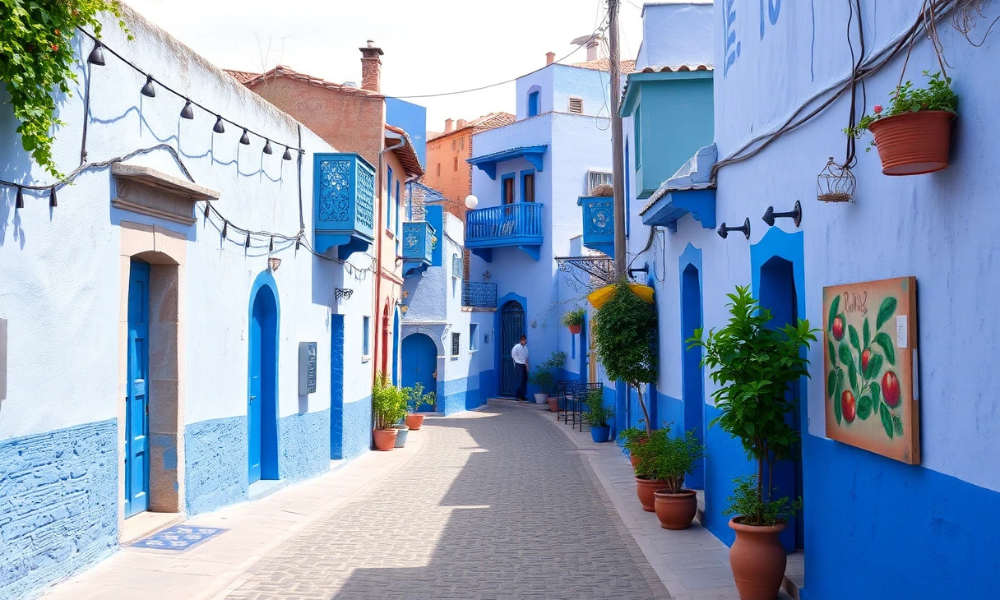
Nestled high in Morocco’s Rif Mountains, Chefchaouen enchants visitors with its labyrinth of blue-painted streets, friendly locals, and laid-back charm. Often called the “Blue Pearl,” this small city feels like stepping into a dream. Imagine sipping mint tea on a terrace overlooking cobalt rooftops or wandering through markets of wool blankets and hand-painted pottery. In this guide we share Chefchaouen travel tips for first-timers and seasoned travelers alike – from the best seasons to visit, to cultural dos and don’ts, essential packing advice, and day-by-day itineraries. Whether you’re an indie backpacker, a solo adventurer, or traveling with family, these tips will help you plan an authentic, stress-free trip to Morocco’s bluest city.
Best Time to Visit
Timing your trip can make all the difference. Spring (March–May) and fall (September–November) are widely considered the best times to visit Chefchaouen. In these months temperatures are comfortable (roughly 15–25°C) and the city is in bloom under sunny skies. The blue alleys truly pop in the soft light, and you’ll avoid the heat and summer crowds. During these peak seasons you can enjoy bustling markets and nearly-perfect weather for exploring.
- Spring & Fall: Mild weather (15–25°C). Great for hiking and sightseeing. Expect more tourists, especially in April–May and October.
- Summer (June–August): Can be hot (up to 30–35°C), though evening strolls are pleasant. Some tourists like that lighting for photos, but be prepared to rest during midday. July–August also bring occasional summer rains.
- Winter (Dec–Feb): Chilly nights (as low as 5°C) and cooler days. Off-season means very few crowds and lower prices. You may even see snow on the surrounding peaks. Pack layers for cold mornings and evenings.
Keep in mind local holidays: Fridays are holy days, so many shops close for prayer. Also check if your trip overlaps Ramadan (a lunar month of fasting) – businesses may have shorter hours, but Chefchaouen still welcomes tourists year-round.
Chefchaouen Travel Tips for First-Time Visitors
- Stay at least 2 days (better 3+). The Blue City is easy to walk, but if you come for a day-trip you’ll likely feel you rushed. One travel tip advises “spending at least a day here so that you can scratch the surface… or, if you stick around for two days, you’ll get to hit more of the main spots”. We recommend two nights minimum to truly soak in the atmosphere.
- Stay in or near the medina. Most of Chefchaouen’s charm is in its old town. Choose a riad or guesthouse inside the city walls if possible. Many top riads (see “Where to Stay” below) are just steps from the main square (Place Uta el-Hammam). This lets you easily return to your room between sightseeing, which is handy given the hilly streets.
- Wear comfortable shoes. Chefchaouen is built on steep hills and winding lanes, so expect lots of uphill walking and uneven cobblestones. Nearly every walking tour says “pack good shoes, and be prepared for some stairs”. Breathable sneakers or hiking shoes are best – avoid heels or flimsy sandals.
- Embrace getting lost. There is one main square and two parts to the town (“New City” and medina), but the medina streets are a maze. Even with a map or GPS, you’ll likely turn corners and find surprises. A guide suggests: “just embrace the fact that you might get a little lost and enjoy being surprised by what you stumble across”. Use your detours to your advantage: every blue alley or hidden courtyard is a photo op!
- Carry cash. Most shops and restaurants accept only Moroccan dirhams. There are ATMs in the main square, but outside medina hotels and petit taxis rarely take cards. It’s wise to bring some USD or EUR to exchange in case ATMs are empty. Also have small bills (5–20 DH notes) ready – drivers and shopkeepers may not have change for large notes.
- Language. Many locals in Chefchaouen speak Arabic and French, and in tourist areas some English/Spanish as well. It never hurts to learn basic French or Arabic phrases for greetings, numbers, and directions. Even a simple “Bonjour” or “Choukran” (thank you) goes a long way. One traveler tip: “consider learning some basic French or Arabic expressions to communicate with your [taxi] driver”.
- Respect customs: Chefchaouen is relatively open, but still conservative by Western standards. Dress modestly (cover shoulders/legs) especially in neighborhoods outside the tourist zone or near mosques. When eating or accepting food, remember Moroccans use the right hand only. Also carry tissues or wipes – many restrooms in Morocco (and in small cafes) may not supply toilet paper.
- Safety: Chefchaouen is generally very safe. Violent and property crimes are extremely low – it’s one of the safest places in Morocco to walk at night. Of course, petty theft can happen anywhere: keep an eye on valuables and backpacks, especially on crowded buses or while at cafes. Solo women travelers often report feeling safe here (“I never once felt unsafe here as a solo female traveller, even at night”), though you may receive the usual curious stares or catcalls. If anyone offers unsolicited “help” (with directions or luggage), politely decline or confirm a fixed fee, since local teens sometimes expect a tip.
Essential Packing List for Chefchaouen
Pack smart for mountain climate and cobblestone streets. Must-haves include:
- Comfortable shoes: Good hiking or walking shoes are a must. You’ll be climbing many steps and stairs.
- Light layers & sun protection: Even in warm months, mornings/evenings can be cool (bring a light jacket). Sunscreen, sunglasses, and a hat are also essential – the sun reflects off the blue walls and can be intense, especially midday.
- Modest clothing: Loose, breathable garments that cover shoulders and knees show respect in this Muslim country. It’s not enforced, but recommended.
- Cash and cards: As noted, most places take cash only. Bring travel-friendly gear (money belt/pouch) to keep dirhams safe. ATM cards (international) work at the big bank in town if needed.
- Travel documents: Passport (plus photocopy) and any reservations. We also suggest travel insurance.
- Toiletries & health: Toilet paper or wet wipes (public WC’s may lack paper), hand sanitizer, basic first-aid kit, medications (pain reliever, stomach remedy, etc.). Also reusable water bottle – tap water isn’t potable, so refill from purified sources or buy bottled water.
- Electronics: Camera (or phone with good camera) – you’ll want to capture the colours!. Extra memory cards/chargers. Morocco uses European two-pin plugs (220V), so bring an adapter. Power banks are handy if you plan long walks.
- Miscellaneous: Rain jacket or umbrella (especially if visiting during summer thunderstorms), backpack for day trips, sunscreen lip balm. If planning to hike outside town, a lightweight towel and swimwear can be fun (see waterfall tip below).
A blogger wisely reminds: “no matter when you’re visiting, be sure to check the weather forecast… and pack accordingly”. Chefchaouen’s weather can vary, so layers and versatile gear are key.
Getting to Chefchaouen: Routes and Transport Advice
Chefchaouen has no airport or train. All travelers arrive by road or long-distance bus. The nearest airports and cities are:
- Tangier (TNG) – 2–3 hours south by car/bus. Buses (CTM and local) run from Tangier’s bus station several times daily. A CTM bus takes ~2.5 hours to Chefchaouen. Alternatively, hire a private transfer or rent a car. Tip: The highway (A1) and N2 have mountain sections – keep small bills for tolls and drive carefully around hairpin turns.
- Fez (FES) – ~4 hours east by road. CTM and local coaches run roughly 4–5 times a day from Fez bus station. Shared “grand taxis” (6-passenger) also offer Fez–Chefchaouen rides – wait by the grand taxi stand for a departing car.
- Rabat / Casablanca – If flying into Casablanca or Rabat, you can catch a bus (CTM has a daily Rabat–Chefchaouen line) or drive ~4–5 hours north via highway. From Casablanca it’s about 5–6 hours. Some travelers break the journey with an overnight in Rabat or Meknes.
- Seaports: Tangier Med (port) is also convenient by road via the highway.
Major bus companies like CTM, Supratours, and Nejme Chamalia connect Chefchaouen with all above cities. Tickets cost roughly 100–150 MAD (10–15 USD) one-way from Fez/Tangier. Book online or at stations if possible, especially in peak season. Grand taxis (shared cabs) from Tangier or Fez are faster but crowded; ensure the meter is used or agree on a price beforehand.
No matter how you arrive, you’ll end your journey in the historic medina or at Ras el-Maa (waterfalls) on the edge of town. From the bus terminal (Mohandessin) just outside the blue walls, you can walk downhill to the Kasbah square in 10–15 minutes, or grab a petit taxi (flat 10 MAD or so) if needed.
How to Get Around Chefchaouen
Once you’re in town, walking is best. Chefchaouen’s medina is compact and full of narrow alleys that cars simply can’t enter. The Blonde Abroad notes “It’s pretty easy to get around Chefchaouen by foot…some of the directions can be tricky!”. We echo that – a map or offline GPS is handy, as Google Maps may not be perfect here. Exploring on foot lets you appreciate the blue-washed details and hidden gems. Just be prepared for hills – many streets slope steeply, so take it slow.
Taxi: Chefchaouen’s “petit taxis” are small cars (usually €4–6 per ride) that can take you between main points (e.g. Kasbah to Cascades). Unlike bigger cities, these taxis do not have meters and often run flat rates. It’s polite to negotiate or insist on a price up front. Taxis usually operate from the main square or bus terminal – if you hail one in the medina itself, be prepared to walk him out to the street. Many drivers speak limited English, so using French or Arabic numbers helps (for example, “quatre” for 4 MAD).
Grand taxis: For short trips just outside town (like nearby villages), share one if you can (splitting cost by seat). There are usually grand taxis waiting near the bus station for nearby routes. Always confirm the route with the driver – some expect you to hire out the whole car (or split with others).
Other: Donkeys and mules are sometimes seen carrying goods, but you won’t need to use one unless your hotel’s at an inaccessible spot. Tuk-tuks/mototaxis exist but are rare and unofficial – drivers may approach with fixed fares (negotiate well).
Cultural Etiquette & Safety Tips
Understanding local customs will help you travel respectfully:
- Dress & Behavior: Morocco is Muslim; be modest in dress. Men can go shirtless at the beach, but keep it covered in towns. Women should cover shoulders and knees out of respect (hijab is not required, except inside mosques). Public displays of affection (hugging/kissing) are frowned upon. If you enter a mosque, women need a headscarf (most tours avoid mosque interiors, but smaller mosques may allow visitors outside prayer times). Friday midday prayers mean streets quiet as businesses pause – plan to eat lunch or shop around that.
- Right hand rule: People traditionally eat and pass items with the right hand. Use your right hand or both hands when giving or accepting food. Using your left hand (considered “unclean”) can offend.
- Tea & Hospitality: Moroccan mint tea (maghrebi) is served by the glass. It’s polite to have a sip (usually three times, each with “bismillah”). Locals are warm hosts – you may be offered tea or a meal; accepting it is a kindness.
- Photography: The stunning scenery tempts many photos, but ask permission before photographing people. As the Dangerously travel blog warns, “don’t photograph people unless you ask permission first”. This is especially true for women and elders. Some picturesque homes or staircases are privately owned – one blogger even notes that certain doorways “charge 5 dirhams (50 cents US) to pose with various props for photos”. Always be courteous: if someone closes their door or objects, respect that privacy.
- Bargaining: Haggling is expected in souks and markets. Start low and negotiate politely. If a price feels fair, a 5–10% tip is considerate. In restaurants, a 5–10% tip is standard if service is not included.
- Local Laws: Alcohol is available in some riads and bars, but not in shops or general streets. Drugs (including cannabis/kif) are illegal nationwide (despite the Rif’s history with hashish) – avoid any offers. (We’ll address this under “unusual experiences.”)
- General Safety: Chefchaouen is very safe by global standards. A travel safety report shows violent and property crime are extremely low (<1%). Petty theft (like wallet or phone snatching) can happen in crowds, so stay aware. Trust your instincts, stay in well-lit areas at night, and keep an eye on bags. One traveler summed it up: “there’s not so much hassle… and I never once felt unsafe here as a solo female traveller, even at night”. Use common sense (lock hotel doors, don’t flash expensive gear) and Chefchaouen should be trouble-free.
Chefchaouen Travel Tips for Budget Travelers
Chefchaouen can be surprisingly affordable if you watch your spending. Try these money-saving tips:
- Choose budget lodging: Many riads are modest and family-run. For example, Casa Blue Star (with a rooftop terrace) and Casa Blue Pearl (near the Kasbah) are friendly, budget guesthouses. Dorm beds or basic rooms can be found for under $20–30/night in low season. Book early for the best deals.
- Eat local: Skip fancy restaurants. Fill up on Moroccan street and cafe fare: hearty tagines (~40–70 MAD), vegetable couscous, grilled meats, or msemen (Moroccan pancakes with honey). For breakfast, most riads include a simple spread of eggs, bread and jam. In town squares you’ll see stands selling fresh orange juice (around 5–10 MAD) – it’s delicious and cheap. A cup of mint tea is only a few dirhams. Avoid imported drinks or Western chains.
- Bargain hard: Practice your bargaining in the medina. Vendors expect it. Don’t pay the first price; a good rule is to start at half or 2/3 of the sticker price and negotiate up. Often you can shave 20–30% off souvenirs. Remember you want the skill to “stick to side streets” and avoid tourist traps.
- Walk: As noted, strolling is free. By walking everywhere in the medina you’ll save taxi fares. The medina is small enough that you rarely need a car anyway.
- Public transport: Use local petit taxis (pre-negotiated fare) rather than private tours. For day trips beyond town, share a grand taxi or take a bus (for example, to Akchour Waterfalls, a grand taxi from Chefchaouen may cost ~50 MAD if shared).
- Free activities: Many attractions cost nothing (just walking the blue streets). The Kasbah has a small museum fee (~60 MAD), but window-shopping local crafts or people-watching in Place Uta el-Hammam are entirely free. Visit Ras El Maa and the Spanish Mosque viewpoint without paying a guide.
- Stay connected cheaply: Don’t pay for expensive roaming. Buy a local SIM card (Maroc Telecom’s red packages) for as little as ~$30 USD for a few gigabytes. Data is fast, and this lets you use Google Maps and messaging on the go.
By choosing simple guesthouses, eating where locals eat, and doing lots of self-guided wandering, even budget travelers can enjoy Chefchaouen’s magic without breaking the bank. As one blogger reminds, “Haggling is encouraged. Never pay the first asking price!”.
Chefchaouen Travel Tips for Solo Travelers
Chefchaouen’s friendly vibe makes it great for solo travel. Here are a few extra tips:
- Safety for solo adventurers: The city is very walkable and hospitable to lone travelers. Many solo women say they felt completely safe, even at night. As always, be smart: stick to well-trafficked areas after dark, and choose centrally-located accommodation so you’re not wandering unfamiliar streets late.
- Meet other travelers: Many hostels and riads cater to backpackers. Staying in a smaller hostel or attending a cooking class can lead to new friends. Café Hafa (the famous cliffside cafe overlooking the valley) is popular for meeting others at sunset.
- Plan shared trips: On your 3rd day, consider a guided day trip (e.g. to Akchour – see next section). Joining an organized excursion is a great way to meet fellow travelers in a safe, fun setting.
- Trust locals and guides: Solo travelers often love hiring a local guide for a half-day walking tour. Guides point out hidden gems of the medina and negotiate on your behalf with taxi drivers or shopkeepers.
- Stay connected: Keep family/friends updated on your itinerary. Morocco’s cell service is reliable in Chefchaouen, and free Wi-Fi exists in many cafes and hotels.
- Enjoy solo perks: Feel free to set your own pace. Sleep in, linger over breakfast on a terrace, chase the perfect photo angle without holding anyone up. Solo travel is liberating in this tranquil town – one traveler notes Chefchaouen’s quiet streets meant “never once felt unsafe” as a woman traveling alone. Relax into the rhythm of the town and the welcome will follow.
Family-Friendly Tips & Activities in Chefchaouen
Chefchaouen’s peaceful vibe and unique sights make it surprisingly fun for kids of all ages. Consider these family-focused tips:
Enjoy the blue maze: Children love exploring the narrow lanes and spotting the many cats that roam Chefchaouen. Turn a walk into a game: see who can find the bluest door or count the ceramic pots on each stair. The main plaza (Place Uta el-Hammam) is pedestrian-friendly, a safe spot to let kids take in the sights or enjoy a mint tea at an outdoor café.
- Kasbah & Water: In the main square sits the Kasbah – a small fortress with a colorful garden and a low admission fee (~10 MAD for kids). Climb its tower for panoramic views of the city; kids often love the ramparts and fish pond. Just outside the medina, Ras El Maa is a gentle waterfall with shallow pools. Families often enjoy splashing in the cool spring water, and many stands sell fresh orange juice or bananas qucha (fruit in hollowed bamboo). It’s a natural playground for children (just supervise them on the rocks).
- Easy hikes: If your family is active, consider a half-day hike. The 1–2 hour uphill trek to the Spanish Mosque (Jebel el-Kelaa) rewards you with an unforgettable lookout over Chefchaouen. Older kids will enjoy the adventure; bring snacks and plenty of water. From there you can walk back through terraced fields (if it’s too much uphill return). For a full-day adventure, a guided family-friendly hike to Akchour Waterfalls and God’s Bridge (45 minutes outside town) is possible – just pack a picnic and go early to avoid crowds.
- Hands-on fun: Cook together! Enroll kids in a family-style Moroccan cooking class (available through local tour operators), where they can learn to knead bread or make couscous. They’ll enjoy tasting their creations after. Alternatively, a short weaving workshop or visiting an artisan dyer (drying natural indigo) can be educational.
- Kid-friendly lodging: Look for riads with terrace space or a pool. For example, Villa Rita Chaouen (a villa outside town) offers apartment-style family rooms and a small pool. Or Dar Qaysar (in the medina) has a 3-bedroom suite – handy for larger families.
- Snacks and treats: You’ll find plenty of child-approved food: sweet honey pastries (chebakia, ghriba), fruity drinks, and rich tagines. Orange juice stands are always a hit. Also look for msemen (Moroccan flatbread) with honey or jam – a kid-favorite breakfast.
With its relaxed pace and gentle adventures, Chefchaouen can be a family hit. Just keep kids hydrated and protected from the sun, and let them help pick blue souvenirs (a couple of ceramic bowls or a handwoven rugs can be fun mementos).
Where to Stay in Chefchaouen (Accommodation Suggestions)
Chefchaouen’s lodging ranges from budget hostels to luxury riads. The city’s best stays are traditional riads (guesthouses built around a courtyard). Here are some options by budget:
- Luxury Riads/Hotels:
- Dar Echchaouen Maison d’Hôtes – A hillside riad with a pool and panoramic city views. (Staying here even has a pool, “a rarity in the Blue Pearl”.) Rooms are elegantly decorated, and the hilltop location provides quiet and vistas.
- Lina Ryad & Spa – A luxury riad north of the main square with gorgeous terraces and an on-site hammam and spa. Panoramic views of Chefchaouen and the mountains are a highlight.
- Dar Jasmine (boutique hotel) – Known for its infinity pool overlooking the medina. Though on the outskirts, it’s one of the most picturesque stays.
- Mid-Range Riads:
- Riad Nila – A romantic, newly renovated riad just above the main square. It has several terraces with sweeping views and a charming courtyard fountain. Great for couples or small families.
- Dar Baibou – Traditional riad in the heart of the medina with colorful tiles and a rooftop terrace. (See the dining section below for more on local riad food.)
- Riad Nisa or Dar Qaysar – Converted homes with family rooms. Dar Qaysar offers a 3-bedroom suite – ideal for groups.
- Budget Riads/Guesthouses:
- Casa Blue Star – Very affordable, tucked in a quiet medina corner. It has a delightful rooftop terrace with mountain views. Private rooms and studios are available, and the host is known for hospitality.
- Casa Blue Pearl – A small guesthouse right behind the Kasbah. The terrace is great for sunrise and sunset photos. Rooms are simple but clean, and it’s in a convenient central location.
- Hostels: For backpackers, a few hostels in the medina offer dorm beds (10–15 USD per night). These often have communal terraces – a good way to meet other travelers.
- Family & Group Accommodations:
- Villa Authentique – A hillside villa 3 km from town with three bedrooms, pool, and kitchen – good for larger families (note: outside town, so rent a car or taxi).
- Villa Rita Chaouen – A guesthouse/villa offering multi-bedroom apartments and a pool. It’s a short drive from town, with a kitchen and lounge – excellent for self-catering families.
- Dar Qaysar – In the medina with three bedrooms and a mountain-view terrace. It’s highly rated for groups and families.
No matter where you stay, try to book a room with a terrace or roof access – many riads have incredible views of the blue rooftops and mountains at sunrise/sunset. (Pro-tip: staying somewhere centrally in the medina not only saves taxi fares, it immerses you in the magical blue alleys.)
Recommended 3-Day Itinerary (Tours & Highlights)
Chefchaouen is small, so 2–3 days lets you cover its highlights at a relaxed pace. Here’s a suggested itinerary:
- Day 1: Arrival & Medina – Arrive and settle into your riad. Spend the afternoon wandering the old medina: stroll through the narrow blue streets, browse handwoven rugs and leather goods in the souks, and visit the Kasbah museum in Place Uta el-Hammam (entry ~60 MAD). Stop at a café in the square for mint tea or orange juice. In late afternoon, hike up the short trail to Spanish Mosque on Jebel el-Kelaa (about 1.5 km from town). This 30-minute uphill walk rewards you with a breathtaking view of Chefchaouen at sunset. Return via the path behind the waterfall (Ras El Maa), and end your day with a leisurely dinner of tagine in the medina.
- Day 2: Nature & Culture – Morning: climb or drive out to the Caves/Ain Djemaa (Ask a local to find the unmarked trail) and visit the small marble quarries above town. Midday: enjoy a traditional hammam (steam bath) and massage – this is a classic Moroccan experience that adults and older kids will appreciate (many riads offer in-house hammams). Late afternoon: consider a cooking class or craft workshop. For example, Chefchaouen Adventures and others offer half-day cooking classes with local families, where you can learn to make tagine or bread. Alternatively, a short weaving workshop gives insight into Moroccan crafts. Evening: relax on a roof terrace and watch the city lights come on.
- Day 3: Waterfalls Day Trip – Dedicate this day to the Rif Mountains. Join a guided tour or drive 45 minutes north to Akchour. Here you can hike to two famous sites: the Grand Waterfall and God’s Bridge (a natural stone arch). These scenic trails are shown as “must-do” for Chefchaouen visitors. Pack water and a picnic lunch – the hike is moderately easy (kids may need help on some rocky parts). The earlier you start, the better to beat afternoon crowds. In summer, many swim in the cool pools, so bring swimwear. After a full day in nature, return to town for a final dinner.
Tour Options: If you prefer an organized trip, there are many Chefchaouen tours available. For example, Chefchaouen Adventures offers a private “Full Day Chefchaouen & Akchour Waterfalls” tour from Tangier/Fez and cooking classes. Even without a guide, local taxis and buses can get you to Akchour cheaply. For cultural immersion, look for a city walking tour (local guides will show you alley secrets) or a food tour through the markets. No matter your style, a mix of self-led exploration and one structured activity (like a hike or class) will make a perfect 3-day visit.
Top 5 Unusual Experiences in Chefchaouen
Think beyond the typical photo spots – here are five quirky, memorable things to try:
- Paid Photo-Ops: In the Instagram era, some locals have turned their blue staircases and courtyards into impromptu photo studios. It’s not unheard of to be asked for a small donation (e.g. 5 MAD) to take pictures at a particularly “picture-perfect” spot. An example is a courtyard labeled “Pic Photos IG” on Google Maps that charges just for fun snaps. (Tip: Enjoy the scene, but respect that these are people’s homes. If asked for money, just drop a coin in the jar and say thanks.)
- Fresh Orange Juice at the Waterfall: One visitor quips that nothing says Morocco like “drinking orange juice… on a waterfall”. At the Ras El Maa spring near the medina, friendly vendors sell glasses of freshly squeezed orange juice (and even bananas qucha) right beside the flowing stream. Let the kids dip their toes in the water while you sip – it’s a fun and refreshing stop that many travelers overlook.
- Sunrise/Sunset at the Spanish Mosque: Climbing up to the Spanish Mosque at dusk or dawn is an unforgettable experience. One blogger declares it “without a doubt the best viewpoint of the blue city for sunset”. Pack a small snack and arrive early (about 30 minutes walk uphill from town) to catch the soft light turning all shades of blue and gold. Even on weekdays you’ll likely have the sunrise almost to yourself.
- Stay in a Cave Hotel (Auberge Dardara): About an hour’s drive north of Chefchaouen, the village of Dardara is known for traditional cave houses. Auberge Dardara has converted some caves into guest rooms and a dining area. Spend a night sleeping “underground” in a cozy cave and explore the lush valley – it feels like stepping back in time. (Be warned: it’s a 4×4-only road and rooms are basic, but the experience is truly unique.)
- Spot an (Illegal) Kif Field: The Rif Mountains are famous for wild cannabis, known locally as kif. While you should never participate, spotting a distant kif field can be one of the most unusual experiences. In spring and summer, you may drive past terraces of green plants that locals cultivate (common near Chefchaouen). This region produces much of Morocco’s famed hashish (one blog notes “50% of the world’s hash production is from Morocco”), though it’s illegal and grown discreetly. If you see fields on a remote dirt road, treat it as a curious cultural note but do not photograph or engage – remember it’s still against the law.
Bonus fun: Keep an eye out for the countless cats in Chefchaouen – one traveller’s “Meet all the cute kittens and cats” list suggests even animal lovers will be charmed (just watch your belongings when an inquisitive cat demands attention!). And enjoy an impromptu street performance: local musicians sometimes busk in the square at night, filling the air with traditional tunes.
Chefchaouen Travel Tips for Photography Enthusiasts
Chefchaouen is a photographer’s dream, but a few pointers will help you get the best shots:
- Best Light: Golden hour (sunrise and sunset) is magic. The soft sun makes the blue walls pop. As mentioned, the Spanish Mosque viewpoint at sunset is legendary for its city panorama. Early morning is also excellent: wait for the call to prayer to subside and you’ll have streets mostly to yourself. Midday sun casts harsh shadows on white-blue facades, so use shade for contrast if shooting then.
- Iconic Spots: Besides the Spanish Mosque, key photo locations include Place Uta el-Hammam (especially the Kasbah tower from outside), the fountain area (Ras El Maa stairway), and the hundreds of shutter-blue alleys leading off the main square. The wall at Bab el-Ain (a gate into the Kasbah) is a classic deep-blue backdrop.
- Technique: A wide-angle lens is useful for narrow alleys and architecture. For details (mosaics, pottery, lamps), a standard zoom or macro works well. A tripod will help in low light (indoors or dusk on rooftops). Remember to clean your sensor often – the blue can be intense on gear.
- Compositions: Look for symmetry – many windows and doors are painted with geometric patterns. Include locals in your frame for cultural context (with permission). Street scenes: capture life at a tea house, vendors, or cats lounging on steps. One tip from a blogger: “watch the buskers play awesome music in the evenings” – photos of local musicians can be evocative.
- Respect & Privacy: Always be polite. Some spots charge for photos (see Unusual experiences); others may quietly object. If someone asks not to be photographed, smile and move on. Likewise, do not just wander into a private courtyard that looks photogenic. A travel blogger reminded us that open doorways are not an invitation – don’t trespass.
- Be Patient: If your dream shot is an empty street corner, wait a few minutes for crowds to disperse. Experiment with angles: sometimes shooting through a doorway or arch (even just over your shoulder) creates a beautiful frame-within-frame of the blue street beyond.
By sunrise or sunset, you’ll capture Chefchaouen at its most spectacular. As one photographer notes, “the Spanish Mosque…offers panoramic views across the city”, making it irresistible. Enjoy the hunt for color and light – Chefchaouen delivers on every lens.
Frequently Asked Questions
What is the best time of year to visit Chefchaouen?
Spring (March–May) and fall (Sept–Nov) are ideal. Temperatures are mild (15–25°C) and crowds are manageable. Summers are hot (30°C) and can be rainy; winters are quiet and cool, good for budget travelers.
What should first-time visitors to Chefchaouen know?
Key Chefchaouen travel tips for first-time visitors include: wear sturdy walking shoes (lots of hills), carry Moroccan dirhams (small bills), and allow 2–3 days to explore (day trips feel rushed). Stay in a riad inside the medina to be near attractions, and keep your belongings secure (though it’s very safe here).
How do I get to Chefchaouen from Tangier or Fez?
By road only. From Tangier, take CTM or local buses (~2.5 hours) or a grand taxi. From Fez, CTM buses run several times a day (~4 hours). You can also rent a car via the scenic mountain roads (use toll highways, have cash for tolls). There is no train service to Chefchaouen.
How to get around Chefchaouen?
Mostly on foot – the medina’s alleys are pedestrian-only. Bring a map or GPS, as the blue-walled streets look very similar! For longer trips (e.g. to Ras El Maa or outskirts), use petit taxis. Negotiate the fare first, or request the meter. Grand taxis can be hired (often shared) for short drives outside town.
What should I pack for Chefchaouen?
Lightweight layers and a jacket (mornings can be cool), sun protection (hat, sunscreen), and good walking shoes. Bring cash (ATMs are mostly in the main square). Also pack tissues/wipes for bathrooms, a power adapter, and a reusable water bottle (buy local bottled water).
How can I save money in Chefchaouen?
Stay in a budget riad or hostel, walk instead of using taxis, and eat at local cafés or street stands. Bargain in markets (vendors expect it). Free activities include admiring the blue city and visiting the Kasbah (small fee). Consider a family-style cooking class instead of dining at expensive restaurants.
Is Chefchaouen safe for solo travelers (and especially women)?
Yes. Chefchaouen is peaceful and police presence is visible. Violent crime is virtually non-existent. Solo women especially report feeling comfortable even at night. Normal precautions (watch your things, avoid dim alleys at night) apply, but you can confidently explore as a solo traveler here.
What cultural etiquette should I follow in Chefchaouen?
Dress modestly (cover shoulders and knees) outside tourist cafés. Eat with your right hand and use polite greetings (a simple “Salam” and “merci” go far). Ask before photographing people and respect prayer times (avoid noisy tours on Friday midday). Tip hotel staff around 5–10% if service is good.
What are some family-friendly Chefchaouen activities?
Families will enjoy the Kasbah tower (simple climb with panoramic views), playing by the Ras El Maa waterfall, and feeding street cats. Easy hikes like to the Spanish Mosque or strolls through the markets are great for kids. Look for accommodations with pools (e.g. Villa Rita) or apartment-style rooms. Many riads welcome children with extra bedding or connecting rooms.
Where are the best places to stay in Chefchaouen?
Staying in a riad (traditional guesthouse) inside the medina is popular. For example, Dar Echchaouen (hillside riad with pool) and Lina Ryad & Spa (luxury with spa) come highly recommended. Budget options include Casa Blue Star (colorful riad with rooftop) and Casa Blue Pearl. For families/groups, consider Villa Rita Chaouen (2-bedroom apartment, pool) or Dar Qaysar (3-bedroom medina riad). All offer authentic Moroccan charm with helpful hosts.
Can I get good photos everywhere?
Yes – Chefchaouen practically begs for photography. But use caution: the town can get very crowded mid-day. Plan to shoot in the early morning or late afternoon, and always be respectful. (See our photography tips above.)
Conclusion
With its dreamy blue lanes and friendly charm, Chefchaouen is a gem of Morocco that rewards those who plan wisely. We hope these Chefchaouen travel tips help you feel prepared to wander, explore, and savor every moment in the Blue Pearl. Remember: pack your best walking shoes, carry your sense of adventure (and some cash!), and be respectful of local customs. Above all, soak up the unique atmosphere – watch the sunrise paint the medina in gold and blue, share a sweet mint tea with a new friend, and enjoy the peaceful magic of Chefchaouen.
If you found these tips helpful, subscribe to the MoroccoJourneying newsletter for more insider guides, travel inspiration, and special offers. Your journey to Morocco’s most enchanting destinations has only just begun – let’s discover them together!
Safe travels and happy adventuring!