
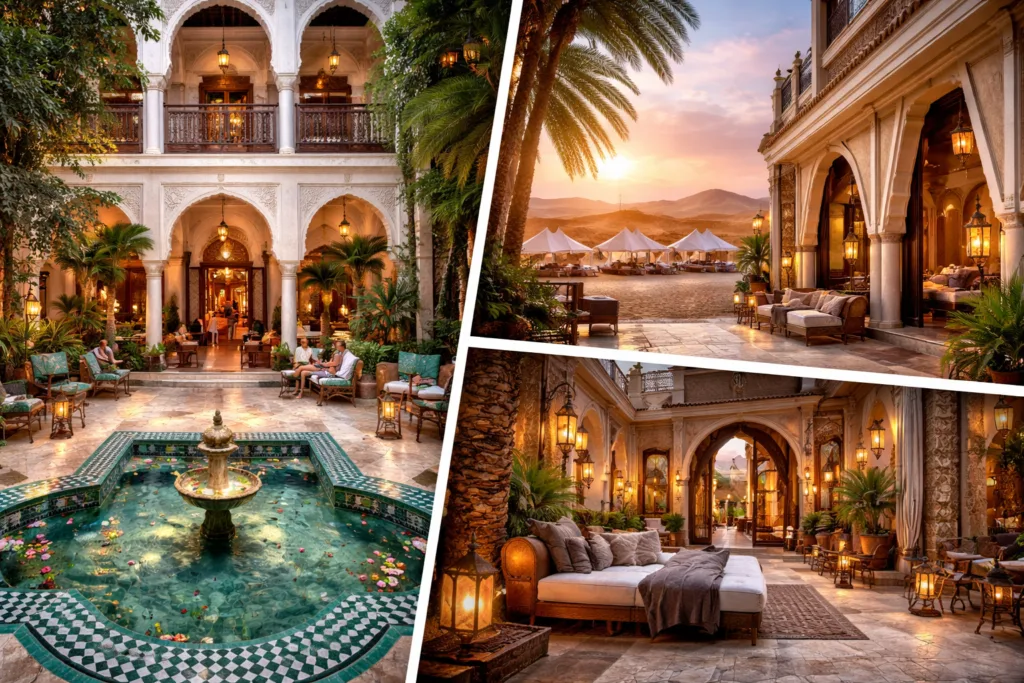
If you are planning a trip to Morocco for summer 2026, choosing the right accommodation can shape your entire experience. The country offers far more than standard hotel rooms. You can sleep in a restored riad hidden inside an old medina, check into a beach resort on the Atlantic, wake up in a mountain guesthouse, or spend a night under canvas in a desert camp. Each option comes with its own atmosphere, practical advantages, and trade-offs.
This matters even more now because Morocco is welcoming record numbers of travelers. According to Morocco’s Ministry of Tourism, the country received 19.8 million visitors in 2025, while classified tourist accommodation recorded 43.4 million overnight stays. That makes smart planning essential, especially if you want the best location, reliable comfort, and a stay that matches your travel style.
Official Moroccan tourism sources also highlight just how varied the accommodation offer is, from hotels and riads to guesthouses, hostels, camps, and countryside stays. At the same time, Morocco has introduced updated accommodation classification rules and a public official directory of classified establishments, giving travelers more transparency when comparing where to stay.
This guide explains what international tourists should know before booking, how riads compare with hotels, when desert camps make sense, how to stay comfortable in the warmer months, and how to use official information to make better decisions. Whether you want culture, beach time, family comfort, romance, or adventure, this page will help you choose the right base for your Moroccan trip.
| Accommodation type | Best for | Main strengths | Things to check | Summer 2026 tip |
|---|---|---|---|---|
| Riads | Couples, culture lovers, first-time visitors to historic medinas | Character, traditional architecture, intimate service, central locations | Air conditioning, stair access, transfer support, rooftop heat | Choose riads with strong cooling and easy drop-off access if arriving in hot weather. |
| Hotels | Families, business travelers, beach breaks, travelers wanting standard amenities | Pools, elevators, parking, room service, predictable facilities | Distance from medina, resort atmosphere, hidden local taxes or transfer costs | Coastal hotels are often more comfortable than inland city stays in peak heat. |
| Hostels | Backpackers, solo travelers, flexible itineraries | Budget-friendly, social atmosphere, tours and transfers | Noise, privacy, locker quality, cooling, women-only options | Book early in popular medinas and surf towns if you want highly rated hostels. |
| Guesthouses & B&Bs | Slow travel, food lovers, rural stays | Warm hospitality, local meals, relaxed rhythm | Transport access, Wi-Fi strength, language support | Great choice if you want cooler mountain or countryside nights away from big-city crowds. |
| Desert camps & eco-lodges | Adventure travelers, photographers, one-night experience seekers | Scenery, stars, silence, memorable atmosphere | Heat, private bathroom availability, power supply, transfer logistics | In hot months, keep desert stays short and confirm exact comfort level before booking. |
Types of Accommodation in Morocco
Morocco’s official tourism communication presents accommodation as one of the country’s great strengths, and that feels accurate on the ground. You can travel here at almost any budget level. A luxury traveler can book a refined city riad, a golf resort, or a spa hotel with a large pool. A mid-range traveler can find comfortable boutique stays and guesthouses with breakfast included. A backpacker can still build a flexible itinerary around hostels, simple inns, and affordable private rooms.
The most important thing is to match the stay to the destination. In a medina such as Marrakech, Fes, or Chefchaouen, the accommodation itself often becomes part of the cultural experience. On the coast, travelers tend to prioritize sea views, pools, parking, and easy beach access. In mountain villages or the edge of the Sahara, location, meal options, and transport logistics often matter more than luxury labels.
It is also worth knowing that not every place to sleep in Morocco offers the same level of official oversight. Morocco’s Ministry of Tourism now provides a public directory of classified tourist accommodation and has strengthened the accommodation classification framework. For travelers, that means you can be more selective and check whether a property appears in the official system before you commit.
Riads: Traditional Moroccan Guesthouses
Riads remain the accommodation type most visitors imagine when they picture Morocco. In official tourism material, they are closely tied to the atmosphere of the medina: inward-looking homes organized around a central courtyard, often decorated with carved plaster, zellige tilework, woodwork, and rooftop terraces. They tend to feel calm and sheltered even when the surrounding streets are full of life.
The best riads offer something hotels often cannot: intimacy. You may be one of only a few guests, breakfast may be served on a terrace or beside a small plunge pool, and staff usually have time to help with restaurant reservations, hammam bookings, airport transfers, or excursions. For travelers who want a memorable sense of place, riads are usually the strongest choice.
That said, riads are not one-size-fits-all. Some are romantic and polished, some are compact and budget-conscious, and some are better suited to couples than families with very young children or guests with mobility concerns. Always read the room details carefully before booking.
Hotels: From Luxury to Budget Options
Hotels are still the most practical option for many international tourists. If you are arriving late, traveling with children, carrying large luggage, driving a rental car, or planning to spend more time around the beach than inside the old city, a hotel can be the easiest fit. You are more likely to get elevators, larger rooms, stronger cooling, parking, and standard front-desk services.
Morocco’s hotel range is broad. You will find polished international brands in major cities, beach resorts in Agadir and along the coast, wellness properties near Marrakech, and locally run hotels in smaller towns. The new accommodation classification reforms are designed to make category labels more transparent and easier for travelers to understand, which is useful when comparing options online.
For many travelers, the smartest approach is to mix styles: a riad for the old city, a resort or hotel for a coastal stop, and a rural guesthouse or lodge for the mountains.
Hostels: Affordable Stay for Backpackers
Hostels are a solid choice for solo travelers, younger visitors, and budget-conscious backpackers moving between cities. In Morocco, the best hostels often combine low prices with genuinely stylish common areas, rooftop terraces, walking tours, surf connections, or transport help for trips into the desert or mountains.
What matters most here is not just price. Check whether the hostel has lockers, women-only dorms if needed, reliable air conditioning or fans, and a realistic location. In summer, a very cheap bed loses its appeal quickly if the room is stuffy or the property is hard to reach with luggage.
Guesthouses and Bed & Breakfasts
Guesthouses and bed & breakfasts sit somewhere between a riad and a family-run inn. They usually feel less theatrical than a luxury riad and more personal than a standard hotel. They are especially appealing in smaller towns, mountain valleys, agricultural areas, and near nature-focused destinations where local hospitality is part of the stay.
These places can be excellent for food. Many travelers remember the evening meal at a guesthouse long after they forget the room itself. If you enjoy slow mornings, home-style dinners, and local advice rather than concierge polish, this is one of the best ways to travel in Morocco.
Desert Camps, Kasbah Stays, and Eco-Lodges
Morocco’s official tourism messaging also highlights bivouacs, countryside accommodation, inns, and more unusual stays. That is where desert camps, kasbah-style lodgings, and eco-lodges come in. These are the options that turn a standard itinerary into something cinematic. A night in the dunes, a mud-brick kasbah near a palm valley, or a lodge in the foothills of the Atlas can give your trip texture and contrast.
These stays work best when you choose them for atmosphere rather than checklist luxury. Some are wonderfully comfortable. Others are intentionally simple. The trick is to confirm what “comfort” means in practical terms: private bathroom or shared, power at all hours or only part of the evening, full meals on site or not, 4×4 transfer included or extra, and how hot the rooms get before sunset.
No matter your style, Morocco gives you more than one way to experience the country. The best itinerary usually combines at least two accommodation types so you get both comfort and character.
Staying in a Riad: What to Expect
Stay in a riad if you want Morocco to feel close, textured, and personal from the moment you arrive. Instead of a generic corridor-and-lobby layout, a riad tends to wrap around an interior courtyard. Sound drops. Light changes. The city feels suddenly distant, even though it is just beyond the door.
Unique Features of Riads
A riad often has only a handful of rooms, which changes the entire rhythm of the stay. Service can feel attentive without being formal. Breakfast may be more generous and more local than in chain hotels. Architectural details are part of the appeal, not just decoration. Even budget riads often deliver a sense of beauty that would cost much more elsewhere.
But the charm comes with realities. Medina access is not always car-friendly. Your driver may drop you at the nearest gate and someone from the property may meet you for the last few minutes on foot. Some riads have steep stairs, compact bathrooms, or smaller rooms than their photos suggest. In hot weather, the quality of air conditioning makes a major difference, especially on the top floor.
If you are booking a riad for a special trip, do not stop at style. Check whether the room has strong cooling, whether the plunge pool is actually usable, whether breakfast is included, whether the rooftop is shaded, and whether the riad offers airport or station pickup. Those details often matter more than a photogenic courtyard.
Riads vs. Hotels: Which Is Right for You?
Choose a riad if atmosphere is high on your list. It is usually the better fit for a romantic trip, a design-focused stay, a short city break, or a first encounter with a Moroccan medina. Riads also tend to work well when you want local guidance, homemade meals, and a slower pace.
Choose a hotel if you value convenience over ambiance. This is often the right move for families, travelers with mobility needs, road-trippers with a car, long work-and-leisure stays, or anyone who wants a gym, elevator, larger pool, kids’ services, or very standardized comfort.
Many travelers discover that the best answer is not either-or. It is both. Spend two or three nights in a medina riad to absorb the history, then switch to a coastal or resort-style hotel when you want more space, easier transport, and a pool-centric break.
Booking Accommodation in Morocco
Booking a place to stay in Morocco is easy in theory, but the best results come from looking beyond price alone. Beautiful photos can hide practical issues. A bargain can become inconvenient if the room overheats, the property is difficult to reach, or breakfast starts too late for your schedule. The most reliable approach is to compare three things together: comfort, location, and official standing.
Morocco’s Ministry of Tourism now offers a public directory of classified accommodation, and that gives travelers an excellent cross-check. If a property presents itself as an established tourist accommodation, see whether it appears in the ministry’s official directory. That does not guarantee a perfect stay, but it adds a layer of transparency and helps you separate professionally recognized options from places with less formal oversight.
Online Platforms and Local Booking Tips
Websites like Booking.com, Expedia, and Airbnb remain useful for comparing prices, maps, photos, and reviews. They are especially helpful if you are planning a multi-stop trip. Still, it is smart to verify details directly with the property after booking, particularly for transfers, room location, accessibility, and air conditioning. In riads and guesthouses, that short message before arrival can save a lot of confusion later.
Read recent reviews with a practical eye. Do guests mention strong cooling, quiet rooms, and easy check-in? Or do they mainly praise décor while warning about heat, stairs, and poor access? In Morocco, “great location” can mean “inside the heart of the medina,” which is wonderful for atmosphere but not always ideal if you have heavy luggage or an early departure.
Bring your passport and keep it accessible at check-in. Morocco’s accommodation framework includes guest data declaration requirements, so legitimate tourist accommodation will usually collect identity information when you arrive. That is normal and should not surprise you.
Best Times to Book for Discounts and Availability
During the summer season 2026, booking earlier is the safest strategy for the most sought-after stays, especially in Marrakech, Essaouira, Tangier, Chefchaouen, Agadir, and popular desert gateways. Morocco’s strong 2025 tourism performance suggests demand is not softening, and well-rated riads, beach hotels, and family rooms can disappear faster than expected.
If your goal is value, focus on shoulder dates, longer stays, or second-choice neighborhoods rather than the absolute cheapest room. In many Moroccan cities, a slightly higher budget can make a dramatic difference in comfort: better cooling, quieter nights, stronger cleaning standards, and a more reliable breakfast. That is money well spent.
For travelers planning a mixed itinerary, it often makes sense to lock in the difficult segments first: medina riads, surf accommodations, and any property close to the coast. Morocco’s official tourism guidance continues to present the Atlantic as a major strength, and Agadir’s beaches remain one of the easiest summer-friendly bases if you want milder coastal conditions and classic resort infrastructure.
Staying in Rural Areas and the Desert
One of Morocco’s greatest travel advantages is contrast. You can move from a city riad to a mountain lodge or from a beach hotel to a desert camp in the space of a few days. Rural stays are where many travelers find Morocco at its most peaceful: birds instead of traffic, long dinners instead of quick city meals, and stars instead of urban light.
These places can also feel more personal. Family-run guesthouses and countryside retreats often share practical local knowledge that large hotels do not, from walking routes and scenic viewpoints to market days and simple etiquette in nearby villages.
Berber Tents and Desert Camps
Desert camps are one of Morocco’s signature experiences, and official tourism material continues to highlight bivouacs and overnight stays in the Sahara. They can be magical: camel tracks in the sand, dinner under the open sky, music around a fire, and sunrise over the dunes. But they are not all the same.
Some camps are styled as luxury experiences with private bathrooms, proper beds, and carefully designed communal tents. Others are much simpler and should be understood as adventure stays rather than comfort stays. Before booking, ask directly about bathroom privacy, electricity, transport from the last town, and whether meals and sand transfer are included.
This summer, desert camps are best treated as a short, carefully chosen experience rather than a place for a long multi-night stay unless you are fully comfortable with heat. A single well-organized night often gives you the atmosphere you want without turning the desert into a logistical strain.
Eco-Lodges and Rural Retreats
Eco-lodges and rural retreats appeal to travelers who want scenery and stillness without the intensity of the deep desert. In the Atlas foothills, valleys, and greener inland areas, these stays can be a smart alternative in warmer months because evenings often feel calmer and cooler than in the major inland cities.
They are especially good for travelers who value meals on site, nature views, and a less hurried rhythm. The trade-off is transport: you may need a driver, a clear arrival time, or advance coordination for meals and excursions. In return, you often get the kind of stay people remember most vividly.
Safety and Comfort: Tips for Accommodation in Morocco
Accommodation safety in Morocco is usually less about dramatic risk and more about choosing the right setup for your needs. Read for practicality. Does the property have 24-hour reception or at least coordinated late check-in? Is it reachable by taxi at night? Is the entrance easy to find? Are recent guests positive about cleanliness, room security, and staff responsiveness?
Comfort matters just as much. In hot months, the difference between a pleasant stay and an exhausting one often comes down to room temperature, noise, and water pressure. A gorgeous room that traps heat is not a good bargain.
Safety Measures in Hotels and Riads
Hotels usually win on visible infrastructure: staffed reception, card access, pools with supervision rules, elevators, and sometimes on-site dining late into the evening. Riads tend to feel secure in a different way: discreet entrances, a small number of guests, and staff who notice who comes and goes. Both models can work very well.
Your part is simple. Use the in-room safe if there is one, keep passports and valuables organized, confirm the exact meeting point if the property is inside a medina, and do not assume a transfer is automatic just because it was mentioned in the listing. In smaller properties, details are often handled by direct message rather than formal pre-arrival systems.
If you are traveling as a family, confirm room configuration carefully. “Triple room” does not always mean the same thing from one property to another. If you are traveling as a couple, ask whether the room faces the courtyard, the terrace, or the street, since noise levels can vary.
Dealing with Language Barriers and Local Customs
Language is usually manageable. In tourist areas, many accommodation staff speak at least some English or French, and often several languages. Still, simple polite phrases go a long way, especially in guesthouses and rural settings. Courtesy matters and is generally returned warmly.
Customs are also easy to navigate when you stay observant. Dress codes inside your accommodation are usually relaxed, but in medinas and village settings it is still smart to dress respectfully when heading out. Quiet behavior in shared riad spaces, especially late at night, is appreciated. Rooftop terraces are wonderful, but they are still part of a neighborhood, not a private club.
If a property offers dinner, ask in advance whether it must be ordered earlier in the day. This is common in riads and guesthouses. It is not a problem, just part of the local rhythm. Once you understand these small habits, staying in Morocco feels easy and rewarding.
Conclusion
Morocco rewards travelers who choose their accommodation with intention. A riad can give you heritage and intimacy. A hotel can deliver convenience and family-friendly facilities. A guesthouse can offer warmth and local food. A desert camp or eco-lodge can add wonder and contrast. The best choice depends on your route, your comfort needs, and the kind of memories you want to build.
For summer 2026, the smartest approach is to combine inspiration with practicality: check whether the property is officially classified, book strong options early in high-demand destinations, prioritize air conditioning and access in hotter inland cities, and use the coast, mountains, and countryside strategically when you want a softer climate. Do that, and your accommodation will become one of the highlights of the trip rather than just a place to sleep.
Planning more Morocco travel ideas? Subscribe to our newsletter by entering your email address in the designated field at the bottom of the page. It is the easiest way to receive fresh guides, seasonal advice, and practical tips for building a smoother, more memorable trip across Morocco.
FAQ
Should I stay in a riad or a hotel in Morocco?
Choose a riad if you want atmosphere, traditional architecture, and a more intimate stay inside or near a historic medina. Choose a hotel if you want larger rooms, easier vehicle access, elevators, family facilities, or resort-style amenities such as pools and parking.
How can I check whether accommodation in Morocco is officially recognized?
A practical step is to look for the property in Morocco’s official Ministry of Tourism directory of classified tourist accommodation. It is one of the best ways to verify whether a stay appears within the country’s recognized tourism accommodation system.
Do I need to book accommodation early for a Morocco trip in summer?
Yes, especially for well-rated riads in Marrakech and Fes, coastal hotels, surf stays, and family rooms. Morocco recorded very strong tourism results in 2025, so popular summer dates can fill faster than many travelers expect.
Are desert camps a good idea in the warmer months?
They can still be memorable, but they are best booked with realistic expectations. In hotter periods, a one-night stay is often enough, and you should confirm private bathroom availability, transport, electricity, and the actual comfort level before paying.
What should I prepare before checking in to accommodation in Morocco?
Keep your passport handy, confirm your arrival time, and message the property directly if it is inside a medina or remote area. It is also wise to double-check transfer arrangements, payment method, air conditioning, and whether meals must be ordered in advance.