
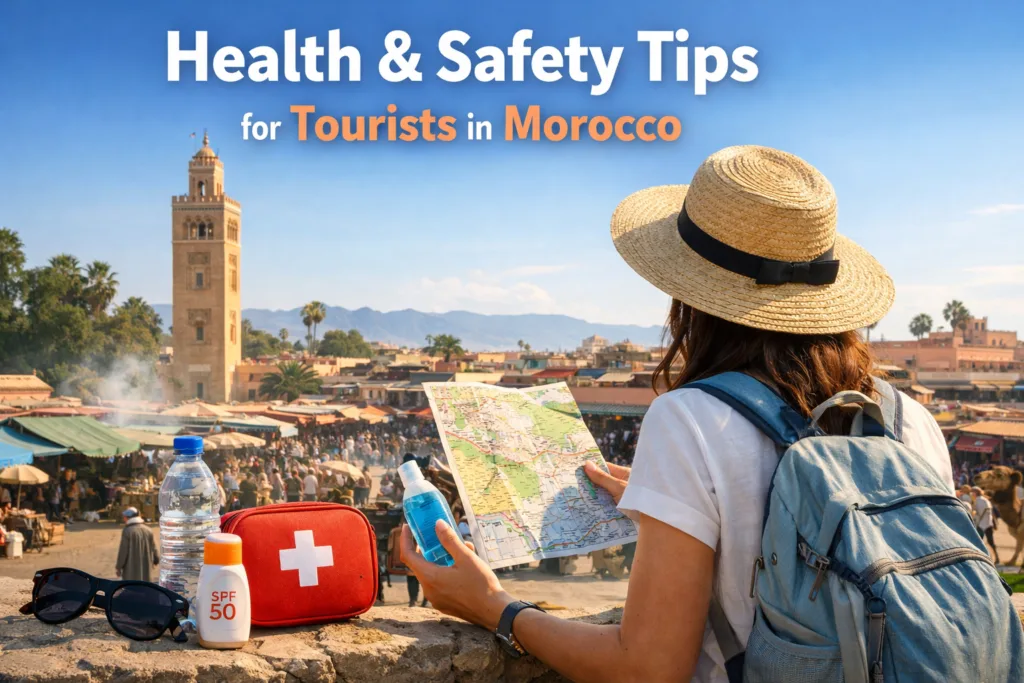
If you’re planning a trip to Morocco in 2026, health and safety preparation should be part of your itinerary from the very beginning. Morocco remains one of North Africa’s most rewarding destinations for international visitors, and most trips go smoothly, but smart planning still matters. The most useful approach is to combine official Moroccan guidance with practical traveler habits: know the emergency numbers, choose food and water carefully, prepare for sun and weather changes, and understand how local transport and local customs affect your day-to-day safety.
For this update, the page has been aligned with practical information published by official Moroccan sources, including the Moroccan National Tourist Office, the Ministry of Health and Social Protection, the Direction Générale de la Météorologie, NARSA, and ONSSA. Official tourism guidance states that no specific vaccines are required for entry, that bottled water is recommended, and that the national medical emergency number is 141.
This guide explains what to do before departure, what to watch for after arrival, and when to seek help. It is designed for first-time visitors and returning travelers who want a clear overview of health precautions, street-smart habits, women’s safety considerations, medical access, and emergency support in Morocco.
| Topic | Key point | What to do |
|---|---|---|
| Vaccines | No specific vaccines are required for entry according to official Moroccan tourism guidance. | Be up to date on routine vaccines and ask your doctor about extra protection for rural or long stays. |
| Food and water | Currently, official tourism advice recommends bottled water and careful food hygiene. | Wash hands, peel fruit when possible, and choose busy vendors with freshly cooked food. |
| Medical help | Major cities offer public and private care, while remote areas are more limited. | Save 141 for medical emergencies and carry insurance details, medication, and passport copies. |
| Street safety | Petty theft and overcharging are more common than violent crime in tourist zones. | Use official taxis, keep valuables discreet, and stay alert in busy medinas, stations, and markets. |
| Weather | Heat waves, strong winds, dangerous swell, and sudden rain can affect plans. | Check Météo Maroc or Vigilance Maroc Météo before long drives, hikes, surf sessions, or desert trips. |
| Police support | Official tourism guidance lists police emergency numbers for quick assistance in cities. | Call 19, or 190 from a mobile phone, and contact your embassy or consulate if documents are lost. |
Health Considerations for Travelers to Morocco
The first thing to understand is that Morocco does not impose heavy health formalities on most tourists. The Moroccan National Tourist Office states that no specific vaccine is required to enter the country, beyond being reasonably up to date on standard immunizations. That said, “not required” does not mean “ignore preparation.” Routine protection still matters, and the same official tourism guidance notes that some vaccines can be useful for a traveler’s personal protection, especially for extended rural stays.
Vaccination Requirements for Morocco
For most international tourists, the practical message is simple: check your routine vaccinations before departure, and talk to a travel clinic if you plan to spend a long time in the countryside, trek through remote mountain zones, or spend time around animals. Official Moroccan tourism guidance specifically notes that rabies vaccination may be worth discussing in the case of prolonged rural stays.
Just as important as vaccines is your personal medical kit. Bring enough prescription medicine for the whole trip, plus extra in case of delays. Keep medicines in original packaging and carry a prescription or doctor’s note when possible.
Common Travel Health Issues and How to Prevent Them
- Traveler’s diarrhea: usually linked to food, water, or poor hand hygiene. Wash hands often and use sanitizer before eating.
- Dehydration and heat exhaustion: common in inland cities, the south, and desert itineraries. Drink water throughout the day, not only when you feel thirsty.
- Sun exposure: strong light and dry heat can catch visitors off guard even outside midsummer. Use sunscreen, sunglasses, and a hat.
- Altitude and exertion: mountain routes in the Atlas require a slower pace, proper footwear, and realistic expectations about fitness.
- Animal bites and scratches: avoid contact with stray dogs and cats, and never encourage monkeys or other wildlife to come close for photos.
This year, one of the smartest habits is to treat weather awareness as a health precaution, not just a comfort issue. Morocco’s official meteorological vigilance system warns for heat waves, strong winds, dangerous swell, heavy rain, cold waves, and snow, so keep your plans flexible for the desert, mountains, coast, and long road trips.
Medical Care in Morocco
Medical care in Morocco is easier to access in large cities than in remote regions. Official Moroccan tourism information highlights that both public and private healthcare are available in major urban centers. For tourists, private clinics are often the more comfortable option for routine urgent care because they tend to be faster and more accustomed to dealing with international patients, while public hospitals are essential for broader emergency coverage.
Availability of Hospitals and Clinics
In Rabat, Casablanca, Marrakech, Tangier, Fes, and Agadir, you can generally find hospitals, clinics, pharmacies, and laboratories without much difficulty. In smaller towns, services may be more basic, so travelers with chronic conditions or severe allergies should plan ahead.
A broad overview of Morocco’s public healthcare system can help you understand how care is organized, but for a traveler the key point is practical: know the nearest clinic to your accommodation, keep your passport details accessible, and do not leave serious symptoms too long. Official tourism guidance also notes that Moroccan pharmacies are usually well stocked and that doctors are generally well trained.
Travel Insurance and Health Coverage
Good travel insurance is not optional in real life, even if entry rules do not demand it. Choose a policy that covers emergency consultations, hospital treatment, medication, transport between cities if necessary, and medical evacuation. If you plan adventure activities, confirm that the policy covers them explicitly.
Store the policy number on your phone, keep an offline copy, and share it with a companion if you are not traveling alone. Also save the national medical emergency number 141, which official Moroccan tourism information identifies as the single toll-free medical emergency line. That number matters far more than a long list of addresses you will not remember under pressure.
Food and Water Safety in Morocco
Morocco’s food culture is one of the highlights of any trip, but excitement should be balanced with common sense. Official Moroccan tourism advice recommends washing hands before meals, washing and peeling fruits and vegetables, making sure meat is well cooked, and avoiding excessive sun exposure.
Drinking Water and Food Hygiene
Official tourism guidance for Morocco recommends bottled water for visitors. In many urban areas, the public water network is treated and controlled, but travelers often feel better sticking to sealed bottled water or using a reliable filter bottle, especially if they have a sensitive stomach or are moving between cities and rural stops. Use the same caution for ice, raw salads washed outside your accommodation, and drinks prepared in places where hygiene standards are difficult to judge.
If you do get stomach trouble, pay attention to the warning signs. Official tourism guidance says diarrhea accompanied by fever, blood, mucus, or pus should lead you to consult a doctor rather than self-manage for too long.
Street Food: What’s Safe to Eat?
Street food in Morocco can be excellent, and avoiding it completely would mean missing a major part of local life. Choose stalls that are busy with local customers, look for food cooked in front of you, avoid items that have been sitting in the sun, and favor places with high turnover.
At the moment, one of the most practical safety tools is the ONSSA consumer information system. Even though most tourists will never need to contact it, knowing that Morocco has a dedicated food-safety authority and public complaint channel is useful if you encounter a serious hygiene problem in a food business, especially during a longer stay.
Safety Tips for Tourists in Morocco
For most visitors, everyday safety in Morocco is less about dramatic danger and more about reducing small, preventable problems: pickpocketing in crowded areas, unofficial “guides,” distraction scams, pressure sales, overcharging, and transport confusion. Official Moroccan tourism planning pages describe the country as generally safe.
Staying Safe in Cities and Tourist Areas
Busy medinas, train stations, bus terminals, large squares, festivals, and tourist-heavy avenues are the places where you should be most careful with your phone, wallet, and passport. Carry only the cash you need for the day, keep your bag zipped and worn across the body, and avoid displaying jewelry, thick wads of cash, or expensive cameras when you do not actively need them.
Use registered accommodation, licensed transport, and recognized booking channels whenever possible. If a stranger insists that a street is closed and offers to lead you elsewhere for a fee, or tries to “help” with a ticket machine or ATM, slow down before accepting. A calm but firm “no, thank you” solves more than people expect.
Protecting Your Valuables and Avoiding Scams
Never keep all your money and cards in one place. Leave spare cash, a backup bank card, and a passport copy in your accommodation. At ATMs, prefer machines inside banks, malls, airports, or clearly supervised areas. For taxis, ask the driver to use the meter when that is standard practice in the city, or agree on the fare before departure.
If you rent a car or scooter, road safety deserves more attention than many travelers give it. NARSA’s official road-safety messaging stresses the danger of speeding, alcohol or drugs behind the wheel, and failure to use helmets and seat belts. In plain terms: buckle up on every ride, wear a real helmet on two-wheelers, and skip night driving if you are tired.
Women’s Safety in Morocco
Women travel successfully in Morocco every day, including solo travelers, but expectations and daily interactions may feel different from what some visitors are used to. Street attention or unwanted comments can happen, especially in heavily touristed areas, so extra situational awareness helps.
Cultural Considerations and Practical Tips
Modest clothing is not a legal requirement for foreign tourists in most daily settings, but it often makes travel easier and more comfortable. Tops that cover the chest and shoulders, looser trousers, skirts below the knee, and a light layer for religious sites or conservative neighborhoods are practical choices rather than strict rules. Reading the room matters more than trying to memorize a fixed dress code.
Understanding local cultural considerations Morocco can also reduce friction. A friendly tone is appreciated, but clear boundaries are equally important. If someone’s attention becomes uncomfortable, step into a shop, hotel, café, or family-oriented space rather than trying to argue in the street.
Traveling Solo as a Woman in Morocco
Solo female travel in Morocco is realistic, especially with thoughtful logistics. Book well-reviewed accommodation, arrive before dark when possible, use licensed guides for complicated medinas or rural excursions, and trust your instincts early if a situation feels off.
Outdoor, Weather, and Activity Safety
Morocco rewards active travelers, but that freedom comes with environmental risks that change by region. The official Moroccan meteorological vigilance platform tracks dangerous swell, strong winds, heat waves, cold waves, and heavy rain, and the official Météo Maroc app provides forecasts, alerts, and real-time conditions for Moroccan cities.
If you are hiking, desert trekking, or exploring mountain valleys, use a professional guide for routes you do not know well. Recent official tourism material specifically recommends professional guides for hikes in the Moroccan countryside because they understand the terrain, local weather, and route conditions.
For heat alerts, the official weather-vigilance guidance is practical: spend time in a cool place, drink plenty of water, cool your body several times a day, and avoid going out during the hottest hours, especially from 11 a.m. to 9 p.m. For coastal trips, strong wind and dangerous swell warnings should be taken seriously even on beautiful days.
Emergency Contacts and Resources in Morocco
Emergency planning is what makes the rest of your trip feel relaxed. Save the right numbers on your phone before you board the plane, and keep them written down as well in case your battery dies.
- 141 – national toll-free medical emergency number, according to official Moroccan tourism and health information.
- 19 – police emergency in cities, or 190 from a mobile phone, according to official Moroccan tourism guidance.
- Your own embassy or consulate in Morocco – essential if your passport is lost or stolen.
- Météo Maroc / Vigilance Maroc Météo – useful for heat, wind, rain, and swell alerts before day trips and transfers.
If you face a medical issue, go early rather than late. If you lose your passport, file a police report promptly and contact your embassy. If you are simply unsure what to do, ask your hotel or riad staff to help you contact the right service.
Official references consulted for this update: Moroccan National Tourist Office (Visit Morocco), Ministry of Health and Social Protection, Direction Générale de la Météorologie / Vigilance Maroc Météo, NARSA, and ONSSA.
Conclusion
For 2026, the safest way to enjoy Morocco is not to travel fearfully, but to travel informed. Prepare your medication and insurance, respect food and water basics, save the emergency numbers, follow weather alerts for outdoor plans, and use common-sense precautions in transport hubs, medinas, and busy tourist districts.
Morocco is welcoming, diverse, and deeply memorable. Most visitors experience the country through generosity, hospitality, and discovery rather than risk. Build a little preparation into your planning, and you will give yourself much more freedom once you arrive.
And when you are done reading, subscribe to our newsletter by entering your email address in the designated field at the bottom of the page so you can receive more practical Morocco travel advice, updates, and inspiration before your trip.
FAQ
Do tourists need vaccines to visit Morocco?
Official Moroccan tourism guidance says no specific vaccines are required for entry. Still, routine vaccinations should be up to date, and rabies vaccination may be worth discussing for prolonged rural stays.
What number should I call for a medical emergency in Morocco?
The official national toll-free medical emergency number is 141. Save it before your trip and keep your insurance details easy to access.
Is bottled water necessary in Morocco?
Official Moroccan tourism information recommends bottled water for visitors. Many travelers also use a reliable filter bottle, especially outside major urban settings.
Is Morocco safe for solo female travelers?
Yes. Many women travel solo in Morocco successfully, but modest dress, clear boundaries, careful transport choices, and well-reviewed accommodation usually make the experience smoother.
What should I do during a heat wave or severe weather alert?
Check Météo Maroc or Vigilance Maroc Météo before outdoor plans. Official weather advice includes drinking plenty of water, cooling your body, and avoiding the hottest hours when heat alerts are active.
Are pharmacies and clinics easy to find in Morocco?
In major cities, yes. Morocco has public and private healthcare in large urban areas, pharmacies are usually well stocked, and private clinics are often the quickest option for tourists.
What police number should tourists know in Morocco?
Official Moroccan tourism guidance lists 19 for police emergency in cities, or 190 from a mobile phone. Keep your embassy or consulate contact details saved separately from your wallet and passport.