
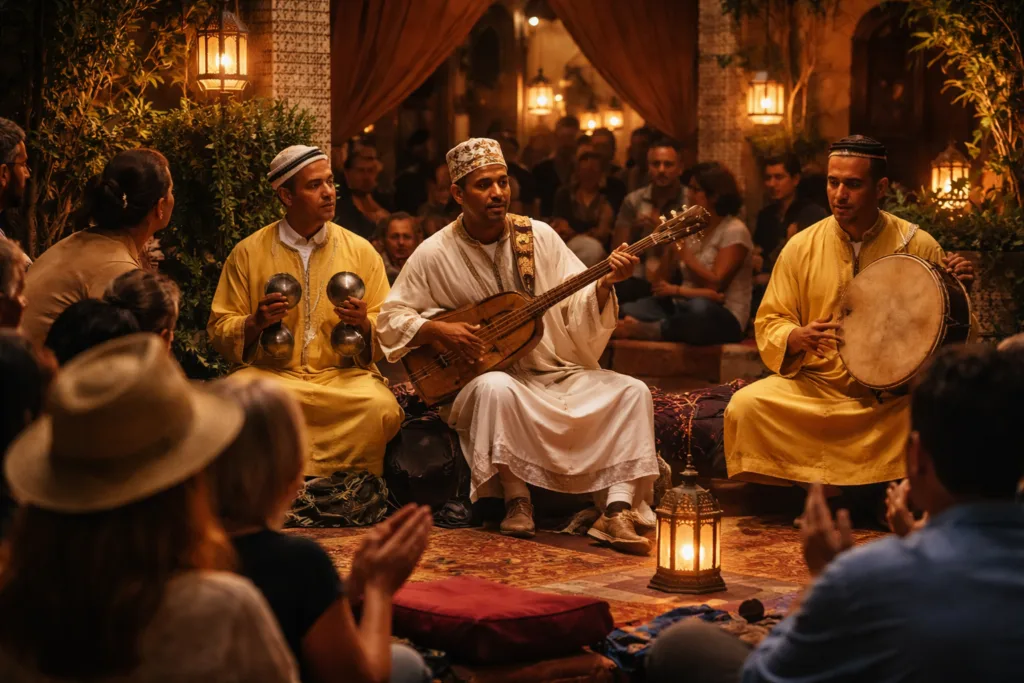
For travelers planning a cultural journey in summer 2026, few experiences feel as immediate, emotional, and distinctly Moroccan as a live traditional music performance. In Morocco, music is not simply something you watch from a distance. It is something you feel in your chest through the bendir’s pulse, follow with your hands when clapping begins, and remember long after the evening ends. Whether you find yourself in a riad courtyard in Marrakech, a seaside venue in Essaouira, a cultural hall in Fez, or a village celebration near the mountains, traditional music can turn an ordinary night into one of the defining memories of a trip.
This guide is designed for international visitors who want more than a quick photo stop or a staged show. It explains the major styles you may encounter, the instruments you are likely to hear, the kinds of venues that create the most authentic atmosphere, and the best ways to experience a performance respectfully and confidently. It also helps you understand which cities are especially rewarding for music lovers, how to choose between intimate performances and festival settings, and why live music remains one of the strongest gateways into Moroccan culture.
| Key Point | What You Should Know |
|---|---|
| Best reason to go | Traditional Moroccan music offers one of the most immersive cultural activities for travelers during the summer season 2026. |
| Most rewarding settings | Riad courtyards, heritage venues, desert camps, cultural centers, medina spaces, and open-air festival stages. |
| Music styles to know | Gnawa, Andalusian, Amazigh traditions, Chaabi, Dakka Marrakchia, Aita, and regional folk performance styles. |
| Top cities for music lovers | Essaouira, Fez, Marrakech, Rabat, Tangier, and some Atlas and desert areas for intimate community-rooted experiences. |
| How to choose well | Pick between intimate performances, cultural dinner shows, festival evenings, or hands-on workshops depending on your pace and interests. |
| Etiquette essentials | Arrive on time, dress respectfully, keep phone use discreet, and follow the mood of the room before filming or joining in. |
The Rich Heritage of Moroccan Music
Moroccan music reflects centuries of movement, memory, faith, trade, and cultural exchange. Arab, Amazigh, Andalusian, Saharan, sub-Saharan, Jewish, and regional urban influences all left their mark on the country’s soundscape. That is why no single performance can represent all of Morocco. Instead, every city and every venue offers a slightly different way into the nation’s musical identity.
For visitors, this diversity is part of the magic. You may hear a spiritually charged Gnawa set built on repetition and trance-like rhythm, then encounter an Andalusian ensemble shaped by refinement and melodic precision, and on another evening discover a joyful folk performance rooted in clapping, call-and-response singing, and communal dance. Listening across these styles gives you a more complete sense of Morocco itself: layered, regional, expressive, and deeply alive.
Traditional Genres and Styles
Gnawa music is one of Morocco’s most internationally recognized traditions. Built around repetitive bass lines, metallic percussion, and chant, it often carries a spiritual dimension and a powerful sense of momentum. It can feel intimate in a small courtyard and electrifying on a large outdoor stage.
Andalusian music offers a very different atmosphere. Refined, poetic, and often performed in formal settings, it is associated with cities such as Fez and Tetouan and appeals especially to travelers who enjoy musical detail, classical structure, and elegant vocal interplay.
Amazigh and Berber performance traditions vary widely by region, but visitors often remember their strong rhythm, collective energy, and close link to dance and celebration. In some places, you may also encounter Chaabi, festive urban popular music, or local ceremonial traditions that bring together drumming, chanting, and movement in a way that feels both celebratory and communal.
Instruments Unique to Moroccan Music
- Guembri (Sintir): a deep-toned three-stringed lute central to many Gnawa performances.
- Bendir: a frame drum with a warm, earthy resonance used in many traditional settings.
- Qraqeb: large metal castanets whose sharp sound creates the unmistakable pulse of Gnawa music.
- Oud: a richly expressive string instrument often associated with classical and Andalusian traditions.
- Ney: a reed flute known for its airy, meditative tone.
- Darbuka and regional drums: percussion instruments that give many performances their forward movement and festive power.
Knowing even a little about these instruments changes the way you listen. Instead of hearing “world music” as a broad category, you begin to recognize texture, structure, and dialogue between instruments. That deeper awareness often turns a pleasant evening into a meaningful cultural experience.
What to Expect at a Moroccan Music Performance
A traditional performance in Morocco can be as polished as a ticketed concert or as relaxed as an evening set in a courtyard, garden, desert camp, or cultural guesthouse. Some experiences are designed specifically for travelers, with explanatory introductions and dinner service. Others are more rooted in local life, where the music is not “put on” for tourists so much as shared with them. Both can be memorable, but they create different kinds of connection.
Authentic Venues for Live Performances
Some of the most rewarding venues are the ones that feel human in scale: riads with candlelit courtyards, restored heritage houses, small cultural centers, intimate rooftop spaces, and traditional restaurants that prioritize atmosphere over spectacle. These venues allow you to see facial expressions, hand movements, and small details of the performance that disappear on a very large stage. They also pair especially well with travelers seeking a deeper introduction to Moroccan culture rather than a loud, generic night out.
Larger venues matter too. Open-air stages, heritage palaces, and city festivals create a more collective kind of excitement. The crowd response becomes part of the experience. You hear how Moroccans themselves react, when they clap, when they sing along, and when a moment of silence carries just as much weight as the percussion.
Types of Performances: Gnawa, Andalusian, and Berber Music
- Gnawa performances often feel hypnotic and physical, driven by bass, metal percussion, repetition, and spiritual intensity.
- Andalusian performances tend to be more formal and melodic, with an atmosphere of precision, elegance, and historical depth.
- Berber and Amazigh performances frequently feel communal, rhythmic, and joyfully participatory, especially when dance enters the scene.
- Folk troupes and regional ensembles may present costumes, ceremonial gestures, oral poetry, and group choreography that broaden the experience beyond music alone.
The best approach is not to ask which one is “best,” but which atmosphere matches your travel style. Some visitors want contemplation and acoustic detail. Others want movement, percussion, and energy. Morocco offers both.
Best Places in Morocco for Live Music Performances
During summer 2026, Morocco’s live music scene is especially appealing in the evening, when temperatures soften and courtyards, terraces, and festival spaces come to life. Coastal destinations can feel especially comfortable for open-air listening, while inland cities often reward travelers who plan music experiences for later in the day and combine them with a slower afternoon rhythm.
Cities Known for Their Musical Traditions
Essaouira is indispensable for anyone curious about Gnawa traditions. The city’s scale, sea air, artistic atmosphere, and musical identity make it one of the most evocative places in the country to hear rhythm-based performance. Even outside major festivals, Essaouira often feels naturally tuned to live music.
Fez offers a more meditative and heritage-rich setting. If you are drawn to craftsmanship, sacred ambiance, and classical musical traditions, Fez can provide one of the most textured listening experiences in Morocco. It is especially satisfying for travelers who want a performance that feels intellectually and emotionally layered.
Marrakech brings range. Here, you can move from refined cultural evenings to energetic folk display, from polished staged events to warm, intimate performances in restored houses and boutique riads. Rabat expands the picture with larger event energy, while Tangier and northern cities can be rewarding for travelers interested in Andalusian influence and a more cross-Mediterranean atmosphere.
Festivals and Seasonal Programming Worth Watching
Festival season can add extraordinary depth to a trip. Travelers often look first to the Gnawa Music Festival in Essaouira, while Fez and Marrakech also host respected music and heritage programming that can transform a city stay into a more immersive cultural journey. Even when you are not building your trip around a festival, keeping an eye on city calendars, riad cultural nights, and heritage venue programming can help you catch a performance that feels far more special than a last-minute tourist dinner show.
If you are planning multiple stops, it is smart to treat music as part of your route rather than an afterthought. A coastal stay, a medina stay, and a desert or mountain excursion can each expose you to very different sonic atmospheres.
How to Experience a Traditional Moroccan Music Performance
The easiest mistake travelers make is choosing the first available option without considering style, venue, timing, or audience. If you want a deeper cultural evening this summer, choose the performance the way you would choose a restaurant or guided visit: based on atmosphere, quality, and fit with your interests rather than convenience alone.
Popular Venues and Events for Tourists
- Choose small heritage venues if you want intimacy, acoustic detail, and conversation with hosts or musicians.
- Choose festival evenings if you want scale, energy, and a broader sense of Morocco’s musical diversity.
- Choose cultural dinner performances if convenience matters and you want music included in a full evening plan.
- Choose desert camps and excursion nights if you want music framed by landscape and starlit atmosphere.
- Choose city cultural centers if you prefer a more respectful, learning-oriented environment.
Travelers heading out on a Sahara Desert Trip often discover that evening drumming and song around campfire-style settings become one of the most emotionally memorable parts of the journey. These moments may be simpler than city performances, but they often feel very direct, especially when silence, stars, and percussion all work together.
Joining a Moroccan Music Workshop or Jam Session
Listening is powerful, but participation can create a stronger connection. In some destinations, travelers can join a short introductory workshop focused on rhythm, clapping patterns, or instruments such as the bendir or darbuka. This kind of session is ideal for families, curious beginners, and anyone who wants to move beyond passive spectatorship.
You may also find musical moments tied to excursions in the Atlas Mountains, where village celebrations, local gatherings, and hospitality rituals sometimes include song, percussion, or dance. Not every one of these moments is a formal “show,” and that is precisely why they can feel so memorable.
Tips for Enjoying and Understanding Moroccan Music
The most satisfied travelers are rarely the ones who simply attend a performance and leave. They are the ones who arrive curious, listen carefully, and allow the music to reveal its rhythm instead of expecting it to function like a familiar Western concert format. Moroccan performance traditions often build atmosphere gradually. Repetition is not a lack of development; it is often the very path through which the performance gains power.
Understanding the Rhythm and Instruments
Try to focus on what is driving the room. Is it the guembri’s grounding pulse? The metallic conversation of qraqeb? A hand drum pushing the tempo forward? A vocalist leading the emotional tone? When you identify the musical center, the performance becomes easier to follow, even if you do not understand the lyrics. That is one reason Moroccan music often reaches travelers so deeply: it communicates through rhythm and atmosphere before language ever becomes a barrier.
It also helps to remember that many traditional forms are linked to memory, spirituality, craftsmanship, and ceremony. They are not random entertainment. Even in a tourist-accessible setting, what you are hearing often comes from a much older social and cultural context.
Respecting Local Etiquette During Performances
- Arrive with enough time to settle in before the performance begins.
- Dress modestly and neatly, especially in traditional or heritage venues.
- Keep phone use discreet and ask before filming close-up footage of musicians.
- Follow the room before clapping, dancing, or singing along.
- Avoid loud conversation during quieter or more ceremonial passages.
- Show appreciation generously, especially in intimate venues where audience response matters.
These small gestures matter. They help protect the dignity of the performance and make it more likely that musicians, hosts, and local audiences will welcome international visitors warmly.
What Summer Travelers Often Love Most About the Experience
One reason traditional music performances work so well for visitors is that they combine several kinds of travel pleasure at once: culture, atmosphere, memory, learning, and emotion. You are not only hearing Morocco. You are also noticing architecture, evening light, hospitality rituals, dress, language, and the energy of the audience around you. Music becomes the thread that ties those elements together.
Below is a testimonial-style compilation of the kinds of positive impressions international visitors often share after attending Moroccan music performances during their warm-weather trips:
“I expected a nice show, but what I found was something much more human. The musicians felt completely present, and the whole evening felt rooted in real life rather than staged only for visitors.”
“What stayed with me was the setting as much as the music: lantern light, old walls, night air, and a rhythm that seemed to pull the whole room together.”
“I did not understand every lyric, but I never felt lost. The percussion, the handclaps, and the expressions of the musicians made everything emotionally clear.”
“It became one of the highlights of my trip because it gave me a feeling I could not get from museums or monuments alone. It felt alive, shared, and unforgettable.”
Conclusion
A traditional music performance is one of the most rewarding ways to experience Morocco beyond its famous landmarks. It gives shape to the country’s cultural diversity, creates real emotional contact, and slows you down enough to absorb place through sound instead of rushing from one checklist item to the next. For travelers visiting in the summer season 2026, this is one of the easiest activities to pair with city exploration, dinner, festival evenings, desert excursions, or heritage-focused stays.
If you want your trip to include at least one moment that feels both intimate and unmistakably Moroccan, make room for live music. Then, before you leave this page, subscribe to our newsletter by entering your email address in the designated field at the bottom of the page so you can keep receiving practical inspiration, seasonal tips, and carefully selected cultural experiences for your Morocco itinerary.
FAQs
Is a traditional Moroccan music performance worth adding to a Morocco itinerary in summer 2026?
Yes. For many travelers, summer 2026 is an excellent time to include a music evening because performances fit naturally into cooler nighttime hours and pair well with medina visits, riad stays, and cultural dinners. It is also one of the most memorable ways to connect with Morocco beyond sightseeing.
Which city is best for a first traditional music experience this summer?
If you want atmosphere and accessibility, Essaouira and Marrakech are strong starting points this summer. Essaouira is especially appealing for travelers interested in Gnawa traditions, while Marrakech offers a wider range of venue styles, from intimate cultural spaces to larger performance settings.
Should I choose a festival performance or a small riad concert?
It depends on the experience you want. A festival can feel vibrant, collective, and dramatic, while a small riad concert is often more personal and easier to follow. During the summer season 2026, many travelers enjoy combining both: one large-scale evening for energy and one intimate performance for atmosphere and detail.
Can families and first-time visitors enjoy Moroccan music performances?
Absolutely. Many performances are accessible even if you know nothing about Moroccan music beforehand. In summer 2026, family-friendly cultural evenings, introductory workshops, and hotel or riad programs can be a gentle entry point for travelers who want a meaningful but easy-to-organize activity.
What should I wear to a traditional music performance in Morocco?
Smart casual clothing is usually the safest choice. Lightweight, respectful outfits work well in hot weather, especially for evening events. If the venue is traditional or formal, modest clothing helps you feel comfortable and aligned with the setting.
Do I need to book in advance for summer performances?
Booking ahead is wise, especially for well-known venues, festival dates, and premium riad experiences in this summer travel period. Even when a city offers many options, the most atmospheric places often have limited seating, and advance planning gives you a much better chance of securing a quality experience.
Is it acceptable to take photos or record video during the performance?
Usually yes, but only in a respectful way. Keep your phone discreet, avoid using flash, and look for cues from the venue or host. In smaller or more ceremonial settings, it is always best to ask first before recording musicians at close range.