
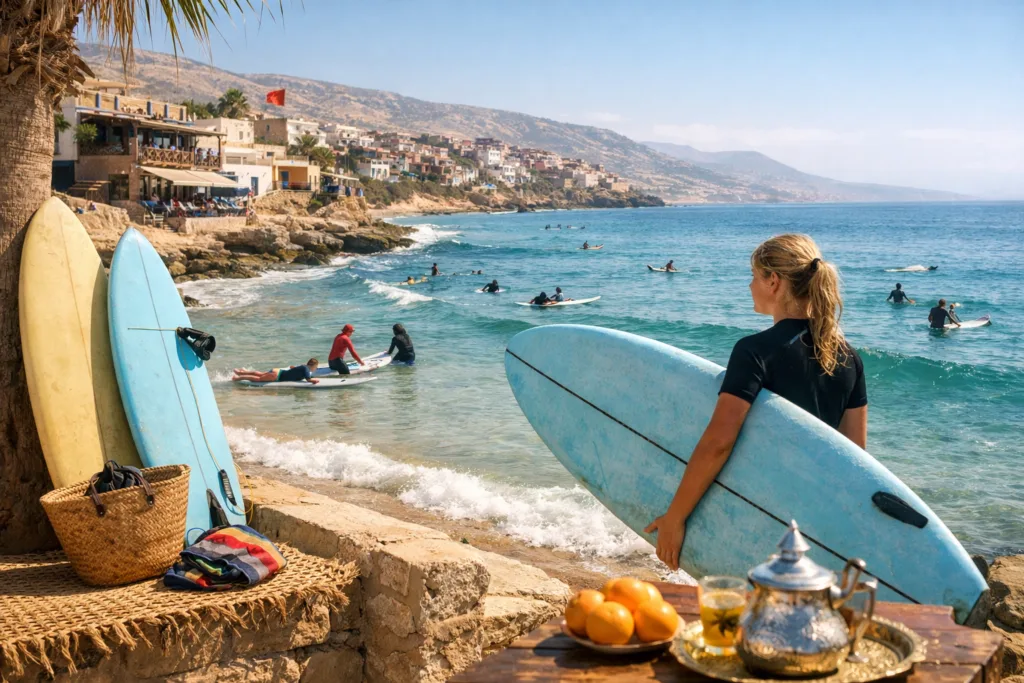
Morocco has long been one of the world’s most exciting surf destinations, but the smartest way to frame this page for summer 2026 is not around giant winter swells. It is around accessibility, warm Atlantic light, relaxed beach towns, and beginner-friendly sessions that fit naturally into a wider Morocco trip. If you want to combine surf lessons with good food, scenic drives, beach sunsets, and easy access to culture, Morocco offers one of the most rewarding summer surf escapes on the edge of Europe and Africa.
Along the Atlantic coast, from the Agadir-Taghazout area up to Imsouane and north toward Essaouira and Sidi Kaouki, the mood changes in summer. Waves are often smaller and more forgiving, the water is pleasantly cool rather than cold, and many visitors discover that surfing here is not only about performance. It is also about rhythm: early sessions, mint tea after the beach, fresh seafood, rooftop sunsets, and spontaneous detours to villages, souks, and ocean viewpoints.
That combination is what makes Morocco special for international tourists. You can take your first lesson in the morning, spend the afternoon exploring a medina or coastal café, and build a trip that feels active without becoming exhausting. For families, couples, solo travelers, and first-time surfers, the country’s surf towns are especially appealing because they are social, scenic, and easy to combine with the rest of a Moroccan itinerary.
| Key point | What to know |
|---|---|
| Best fit | Morocco is especially attractive in summer 2026 for beginners, casual surfers, families, and travelers who want a balanced beach-and-culture trip. |
| Top areas | Taghazout, Tamraght, Imsouane, Agadir, Sidi Kaouki, and Essaouira remain the most practical bases depending on your level and the kind of atmosphere you want. |
| Wave style | Summer usually brings smaller, friendlier waves than the peak winter surf season, which is ideal for lessons, soft progression, and longboard-style fun. |
| Who should go | First-timers, improvers, and travelers who want surfing as part of a broader Morocco holiday rather than a hardcore performance trip. |
| Typical trip style | Morning surf, relaxed afternoons, sunset cafés, local food, short road trips, hammam sessions, and cultural stops. |
| What to pack | Light beachwear, sun protection, and usually a light wetsuit or spring suit depending on your tolerance, your spot, and the day’s wind. |
| Biggest advantage | Morocco lets you learn to surf without giving up comfort, culture, or variety. |
Why Morocco Works So Well for a Summer Surf Trip
Morocco’s coastline gives travelers something many surf destinations struggle to offer at the same time: consistency, character, and variety. You are not choosing between a sterile surf resort and a meaningful trip. In Morocco, the surf experience naturally comes with Berber hospitality, grilled fish by the ocean, colorful markets, and a sense of place that stays with you long after the last session.
Another major advantage is flexibility. You do not need to build an entire vacation around advanced wave chasing. You can stay in a surf village for a few days, take lessons, enjoy beach life, and then continue inland or northward. That is why surfing in Morocco appeals not only to dedicated surfers, but also to tourists who simply want to try something memorable during their holiday.
The coast south and north of Agadir is especially practical because several beaches and point breaks sit within manageable driving distance of one another. That means surf schools can choose spots according to conditions and student level instead of forcing everyone into one fixed location. For many visitors, that makes progress easier and the whole trip less stressful.
Morocco also remains highly attractive because surf towns do not feel isolated from the rest of the country. After a session, you can browse local shops, eat tagine on a rooftop, take a coastal road trip, or even hike the Atlas Mountains if you want to add more adventure to your stay.
Best Surf Spots in Morocco for a Summer Trip
Not every Moroccan surf spot behaves the same way in summer, which is exactly why choosing the right base matters. Some places are better for first lessons, others for gentle progression, and a few remain more appealing to surfers who already know how to read a lineup and handle more technical waves.
Taghazout and Tamraght
Taghazout remains the best-known surf village in the country, and for good reason. It offers a lively mix of cafés, accommodations, rental shops, instructors, and transport options. Nearby Tamraght gives you a slightly calmer base while keeping you close to the same coastline. For travelers who want convenience and atmosphere, this area is often the easiest choice.
Many schools operating here have access to a broad range of moroccan surf spots, which is valuable when you are learning. In practice, that means beginners can be moved toward softer beach breaks while more confident surfers can sample more demanding waves if conditions allow.
Imsouane
Imsouane is one of the most appealing places in Morocco for travelers who want a slower, more scenic surf experience. The village has a beautiful bay, a more peaceful rhythm, and a reputation for long, more approachable rides that help new surfers feel the glide of a wave for longer than they often can elsewhere.
It is also a strong option for couples or mixed-skill groups because the village itself feels like a destination, not just a surf stop. Even people who are not surfing every day can enjoy the fishing-port atmosphere, ocean views, and easygoing pace.
Agadir and Nearby Beaches
Agadir is not always the first name surf travelers mention, yet it is one of the most convenient bases for visitors who want city comfort together with access to the coast. It works particularly well if your group is not entirely focused on surfing, because you have broader accommodation choices, restaurants, transport links, and beach amenities.
For some travelers, this is the most practical compromise: surf in the morning, return to a full-service city later in the day, and keep the trip comfortable for everyone.
Sidi Kaouki and Essaouira
Sidi Kaouki and Essaouira offer beach atmosphere, character, and a different mood from the Agadir-Taghazout zone. Essaouira is famous for its windy energy and artistic identity, while Sidi Kaouki feels wilder and more open. In summer, this part of the coast can be especially attractive for travelers who like breezy days, casual surf sessions, and a town with strong visual charm.
If your ideal trip includes as much medina time, seafood, and seaside wandering as actual surf time, Essaouira deserves a place on your shortlist.
What Surfing in Morocco Feels Like in the Warmer Months
Morocco is often marketed through its famous autumn and winter swell windows, but that is only part of the story. The real appeal of the summer season 2026 is that it lowers the barrier to entry. Instead of intimidating walls of water and lineups aimed at experienced surfers, many visitors find smaller, more manageable conditions that let them focus on fundamentals, confidence, and enjoyment.
That does not mean every day is flat or identical. Conditions still depend on wind, tide, and local geography, which is why choosing a good school or camp matters. But for most international tourists planning a summer holiday, the important point is simple: Morocco becomes less about chasing heroic surf and more about learning, improving, and having fun without pressure.
Because the coast can also get windy, especially around Essaouira, many instructors prefer early sessions. Morning usually offers the cleanest window, while afternoons are better suited to relaxed beach time, café breaks, or sightseeing. That rhythm works beautifully for travelers who do not want their entire day controlled by surfing.
For that reason, many visitors find that this summer is the perfect moment to book lessons rather than waiting for the heavier, more technical months that attract advanced surfers.
Surfing for Beginners: Why Morocco Is Such a Good Place to Learn
If you have never surfed before, Morocco is one of the easiest places to start without feeling overwhelmed. The country has a mature surf infrastructure, particularly around Taghazout, Tamraght, Agadir, and Imsouane. That means lessons are easy to find, boards are easy to rent, and instructors are used to working with complete beginners from many different countries.
Learning here is also appealing because the experience rarely feels clinical. A lesson in Morocco often comes with shared transport to the beach, tea breaks, group encouragement, and a social atmosphere that makes beginners feel comfortable. For solo travelers especially, that can turn a lesson into the highlight of the trip.
Surf Schools and Coaching
The best schools focus on three things: safety, wave choice, and repetition. Good instructors will spend time explaining how to paddle, where to stand, when to pop up, and how to move safely in the water before they ever expect you to catch a clean wave. That patient structure is one of the reasons Morocco has developed such a strong reputation among first-time surfers.
Group lessons are common and work well if you enjoy a social mood, but private or semi-private lessons are often worth considering if you want faster feedback. Families with children can also benefit from smaller lesson formats because instructors can adapt the pace more easily.
Lessons, Soft Progression, and Board Choice
Most beginners start on larger foam boards because they are more stable and forgiving. That is exactly what you want. Summer is not the time to pretend you need an advanced setup. It is the time to build timing, balance, and confidence. Once you can paddle efficiently, stand up consistently, and angle across a wave with some control, you can think about refining equipment.
A smart school will not just hand you a board. It will choose the right beach and the right board for your size, your level, and the conditions of the day. That individualized approach is often what separates a fun first experience from a frustrating one.
Surf Camps and What They Add to the Experience
For many travelers, a surf camp is the easiest way to organize a Morocco surf trip. Accommodation, breakfast, transport to spots, rentals, and lessons are often bundled together, which removes a lot of friction from the planning stage. That can be particularly useful if you are arriving from abroad and want a simple start to your trip.
Another advantage is community. Good camps bring together solo travelers, couples, and small groups in a way that feels easy rather than forced. You might surf together in the morning, share dinner in the evening, and trade recommendations for day trips, cafés, or onward travel. That communal side is often as memorable as the surfing itself.
Guests can also use surf camps as a gateway to Moroccan culture, because many of the best stays blend surf routines with local food, neighborhood walks, hammam suggestions, and regional excursions instead of isolating visitors in a bubble.
When comparing camps, look beyond marketing photos. Ask how many people are typically in a lesson, whether transport is included, which beaches they use for beginners, what kind of boards are provided, and whether they separate first-timers from improvers. These details matter more than rooftop décor.
Surfing Gear and Rentals
Morocco is easy when it comes to gear. If you do not want to travel with a board, you absolutely do not need to. Shops and camps along the main surf stretch offer rentals for short sessions, day use, and longer stays. That convenience is one of the reasons Morocco works so well for mainstream travelers and not only hardcore surfers.
What You Actually Need
For a summer surf trip, the essentials are simple: your swimwear, sun protection, a towel, secure sandals, and usually a light wetsuit or spring suit depending on wind, water temperature, and personal comfort. Some people are comfortable in lighter gear on warmer days, while others prefer more coverage for longer sessions.
Do not underestimate the sun. Beginners often focus on the board and forget that long paddles, reflective water, and open beaches can make sun exposure intense even when the temperature feels pleasant. A rash vest, high-SPF sunscreen, and a hat for time on land go a long way.
Renting Gear vs. Bringing Your Own
If you are a beginner or an occasional surfer, renting is usually the smartest option. You avoid airline hassles, you can switch board types if needed, and you do not have to worry about transporting fragile equipment between towns. If you are an experienced surfer with strong board preferences, bringing your own setup may still make sense, but even then many travelers appreciate having local rental backup.
For most tourists visiting Morocco for a broader holiday, simplicity wins. Rent locally, let the school guide you, and use your luggage space for the rest of your trip.
What to Do Between Sessions
One of the best things about surfing in Morocco is that the trip never has to feel one-dimensional. When the beach session ends, the country keeps delivering. You can browse artisan shops, eat fresh grilled fish, watch local life unfold from a café terrace, or step into slower rituals that balance out the physical side of the day.
Many travelers love pairing surf days with Moroccan traditions like a hammam, especially after a few days of paddling and saltwater. It is one of the most satisfying ways to recover and also one of the most culturally distinctive experiences you can add to a Morocco holiday.
If you are extending your route beyond the coast, you can also turn the surf section of your trip into the beginning of a larger journey. Some visitors head inland for mountain scenery, while others continue toward the south for desert landscapes and a camel safari in the Sahara Desert. That is part of what makes Morocco so compelling: surfing can be a major chapter, but it never has to be the whole story.
What Other Tourists Loved About Summer Surfing in Morocco
Positive feedback from recent travelers tends to circle back to the same strengths. First, beginners repeatedly say Moroccan instructors help them feel at ease quickly. Instead of throwing newcomers into intimidating conditions, many lessons are described as patient, organized, and genuinely encouraging.
Second, visitors often highlight how social the experience feels. Travelers regularly praise the friendliness of camp teams, shared meals, and the ease of meeting people through group surf days. That matters because many international tourists are not just buying a lesson. They are looking for a holiday atmosphere.
Third, places such as Imsouane and Essaouira are frequently appreciated not only for the wave itself, but for the wider setting. Tourists mention the relaxed mood, scenic surroundings, and the satisfaction of making progress in a place that still feels visually and culturally rich. In other words, they do not remember only the technical details of the surf. They remember the feeling of the whole day.
That combination of manageable surf, welcoming instruction, and memorable coastal atmosphere is exactly why Morocco works so well for travelers who want their first or second surf trip to feel exciting without becoming overwhelming.
Conclusion
If your goal is to experience Moroccan surf culture without building the entire holiday around heavy winter swells, summer 2026 is a smart time to go. The season suits beginners, casual surfers, couples, and curious travelers who want warm weather, approachable waves, beautiful coastal towns, and enough flexibility to mix surf with food, culture, and road-trip moments.
From the social energy of Taghazout to the long glides of Imsouane and the breezy charm of Essaouira, Morocco offers more than a lesson. It offers a full travel experience shaped by the ocean. That is what turns a simple surf holiday into something much more memorable.
Stay in Touch for More Morocco Travel Ideas
If this guide helped you plan your surf adventure, subscribe to our newsletter by entering your email address in the designated field at the bottom of the page. It is the easiest way to receive fresh Morocco travel inspiration, practical tips, and new activity guides for your next trip.
FAQ
Is summer 2026 a good time to surf in Morocco?
Yes. For many international tourists, summer 2026 is one of the easiest times to enjoy surfing in Morocco because the atmosphere is relaxed and many breaks are more approachable than in the stronger winter season. It is especially attractive for beginners, improvers, and travelers who want surfing to be part of a wider holiday rather than the sole purpose of the trip.
Which Moroccan surf towns are best for beginners in summer 2026?
Taghazout, Tamraght, Imsouane, and parts of the Essaouira area are among the strongest choices for summer 2026. Taghazout and Tamraght are practical and lively, Imsouane is calm and scenic, and Essaouira adds culture and coastal charm. The best base depends on whether you want convenience, a peaceful village feel, or a mix of surfing and city exploration.
Will the waves be too small in Morocco this summer?
Not necessarily. This summer, many visitors will actually benefit from smaller, less intimidating surf because it makes learning easier and sessions more enjoyable. Advanced surfers chasing powerful, technical waves usually prefer Morocco’s autumn-to-winter season, but summer remains a very good fit for first lessons, longboards, and relaxed progression.
Do I need to bring my own board for a Morocco surf trip in summer 2026?
No. In summer 2026, most travelers can rely on local rentals without any problem, especially in Taghazout, Tamraght, Agadir, and Imsouane. That is often the easiest choice if you are coming for a holiday and do not want the stress of flying with boards and wetsuits.
What should I wear for surfing in Morocco during the summer season 2026?
For the summer season 2026, bring normal beachwear, strong sun protection, and plan for a light wetsuit or similar layer depending on your comfort, the wind, and your surf spot. Local schools and rental shops can usually advise you on what feels best on the day you go out.
Is Morocco a good destination if only one person in the group wants to surf?
Absolutely. That is one of Morocco’s biggest strengths. One traveler can surf while others enjoy the beach, cafés, markets, hammams, or day trips. Places like Taghazout, Agadir, and Essaouira work particularly well for mixed-interest groups because the trip still feels rewarding even when not everyone is in the water every day.
Can I combine surfing with other Moroccan experiences on the same trip?
Yes. Morocco is ideal for combining surf with culture and landscape. Many travelers pair a coastal stay with medina visits, hammam experiences, Atlas Mountain excursions, or a desert extension. That flexibility is one of the main reasons surfing in Morocco feels richer than a simple beach holiday.