
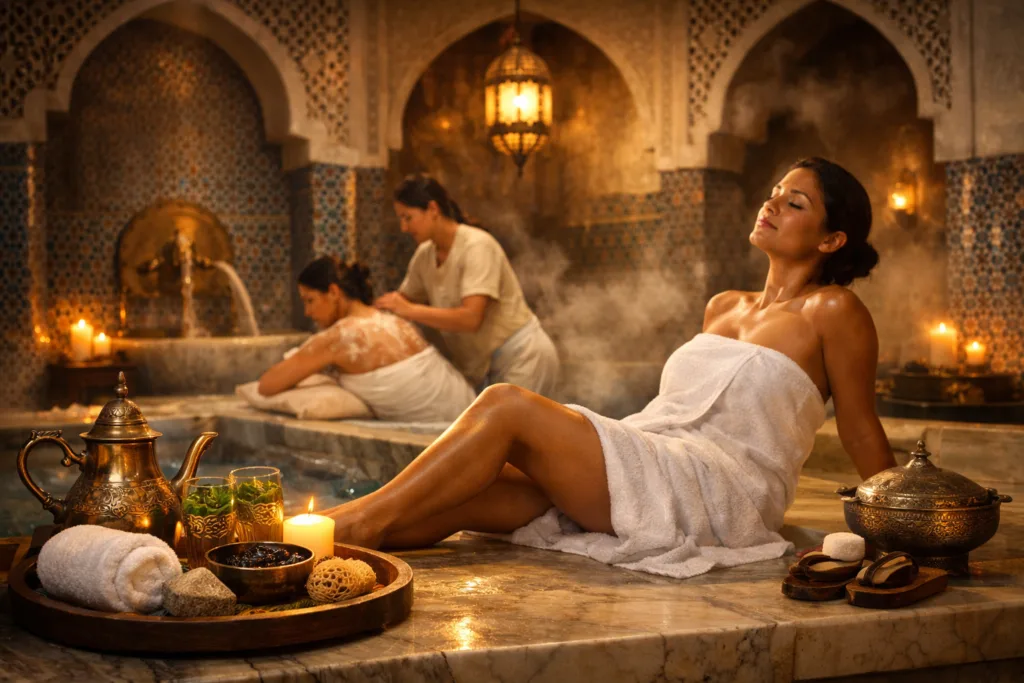
Step inside one of Morocco’s most soothing traditions and discover why a hammam is far more than a spa treatment. For travelers planning a restorative escape in summer 2026, a Moroccan hammam offers the perfect balance of cultural immersion, deep relaxation, and practical recovery after long flights, warm city walks, beach days, or desert adventures.
At once ancient and wonderfully current, the Moroccan hammam remains one of the country’s most beloved rituals. Whether you choose a neighborhood bathhouse used by locals or a beautifully designed spa inside a riad, the experience usually follows a familiar rhythm: heat, steam, black soap, exfoliation, rinsing, and a final moment of calm. It is simple in concept, yet memorable in the way it resets both body and mind.
Looking for peace or a deeper understanding of Moroccan culture? This guide explains what a traditional hammam is, how the ritual works, what to bring, what to expect, how much it usually costs, and how to choose the right setting for your travel style. By the end, you will be ready to enjoy one of Morocco’s most timeless wellness experiences with confidence.
| Key Point | What You Should Know |
|---|---|
| What it is | A traditional Moroccan steam-bath ritual focused on cleansing, exfoliation, and relaxation. |
| Best for | Travelers who want a cultural wellness experience and a practical reset during the summer season 2026. |
| Typical steps | Steam room, black soap application, kessa glove scrub, rinsing, and sometimes a massage or clay treatment. |
| What to bring | Flip-flops, underwear or swim bottoms if preferred, a change of clothes, and sometimes your own towel for public hammams. |
| Budget | Public hammams are the cheapest; riad and spa hammams cost more but are easier for first-time visitors. |
| Good to know | Book ahead in busy tourist cities, hydrate well, and choose a gentler scrub if you have sensitive skin. |
What is a Traditional Hammam?
The Moroccan hammam is one of the country’s most enduring wellness traditions. Inspired by the bath culture inherited from Roman times and shaped over centuries in North Africa, it remains a familiar part of daily life in Morocco. It is both practical and symbolic: a place to wash, unwind, and slow down.
History of the Hammam
For generations, hammams have served as neighborhood bathhouses where people come not only for cleanliness, but also for rhythm and routine. Before private bathrooms became common in many homes, hammams were essential communal spaces. Even today, they retain that social and cultural function. In cities and towns across Morocco, the traditional layout still centers on warmth, moisture, and progressive heat that prepares the skin for deep exfoliation.
Social and Cleansing Ritual
What makes the hammam special is that it is never just about appearance. It is also about feeling lighter, calmer, and more present. The ritual usually combines steam, black soap, vigorous scrubbing with a kessa glove, rinsing, and rest. In local hammams, the atmosphere can feel lively and communal. In riad spas and luxury hammams, the same ritual is often delivered in a quieter, more private setting.
For visitors, the hammam offers a rare chance to connect with Moroccan everyday life through a ritual that locals know instinctively. That combination of cultural authenticity and physical relief is exactly why so many travelers place it high on their Morocco wish list.
The Process of a Hammam Experience
Even if every venue has its own style, the basic sequence stays reassuringly familiar. Understanding it in advance helps first-time visitors relax and enjoy the experience instead of wondering what happens next.
Steam Bath
The experience usually begins in a warm or hot steam room. The heat softens the skin, opens pores, and helps your body settle into a slower pace. Some hammams are softly lit and quiet, while others feel more active and local. Either way, the goal is the same: prepare the body for cleansing and release the tension built up from travel.
Exfoliation
After steaming, black soap is applied to the body and left on for a few minutes. This olive-based soap softens the skin before the exfoliation begins. Then comes the kessa glove scrub, the step most visitors remember best. It can feel surprisingly vigorous, but it is also what leaves your skin noticeably smoother. In many hammams, this is followed by a rinse, a hair wash, or a ghassoul clay application depending on the package you choose.
Rinsing and Relaxation
Once the scrub is complete, warm water is used to rinse away soap and dead skin. In spa-style hammams, you may then move to a cooler room for tea or continue with an argan oil massage. The contrast between heat, cleansing, and rest is part of what makes the ritual so satisfying. Many travelers say it feels like hitting reset after several busy travel days.
Benefits of the Hammam for Health and Well-being
A traditional hammam is best understood as a wellness ritual rather than a medical treatment. Its appeal lies in how grounded and physical it feels: warmth on the skin, pressure from the scrub, fragrant soap, and the sense of being fully present for an hour or two.
Cleansing and Skin Renewal
One of the clearest benefits is deep exfoliation. Black soap and the kessa glove remove surface buildup more thoroughly than a quick hotel shower ever could. After a few dusty medina strolls, sunscreen-heavy beach days, or long transport legs, many travelers appreciate how refreshed their skin feels afterward.
A Mental Reset During Travel
Travel can be exhilarating, but it is also tiring. Between early departures, changing temperatures, and packed sightseeing days, the body rarely gets a full pause. A hammam gives you exactly that. The heat encourages stillness, the ritual creates a sense of care, and the final rest period often leaves visitors calmer than they realized they needed to be.
Relief After Busy Days
If you plan to book a hammam after a beach outing, a medina walk, or a long transfer this summer, it can feel especially rewarding. Many travelers use it as a restorative break between sightseeing days rather than as a final luxury add-on. Done at the right moment in your itinerary, it can improve the pace of your whole trip.
Different Types of Hammams in Morocco
Not all hammams feel the same, and choosing the right style matters. The main difference is not whether one is “better” than the other, but whether you want authenticity, simplicity, privacy, or comfort.
Public Hammams
Public hammams are the most traditional option. They are budget-friendly, highly local, and often less polished than tourist-oriented spas. You may need to bring more of your own items, and staff may speak little English or French depending on the area. That said, they can offer a memorable glimpse into everyday Moroccan life. For experienced travelers or those with a local guide, they can be deeply rewarding.
Luxury Hammams
Luxury hammams, usually found in riads, hotels, or dedicated spas, are designed to be more intuitive for international visitors. Towels, products, and private changing areas are often provided. The decor is calmer, instructions are clearer, and extra treatments such as argan oil massage, clay wraps, or herbal tea are common. These are usually the easiest choice for first-timers.
Because summer 2026 is likely to bring long sightseeing days in Morocco’s major tourist hubs, many visitors will prefer a riad or spa hammam for the comfort of advance booking, a controlled environment, and a gentler introduction to the ritual. But if authenticity matters most to you, a local hammam remains unmatched.
What to Expect in a Moroccan Hammam
A hammam is relaxing, but it is not passive in the same way as a Western spa massage. It is warmer, more hands-on, and more ritualized. The scrub may be stronger than you expect, the steam more intense, and the sequence more practical than luxurious, especially in traditional settings. That is part of the charm.
At the same time, it should never feel confusing or uncomfortable if you choose a place that matches your expectations. The best experience comes from knowing whether you are booking a local bathhouse or a polished spa experience in advance.
Gender-Segregated Spaces
Many traditional hammams still separate men and women, either by having different sections or different opening times. Spa hammams may offer private rooms or couples options depending on the establishment. If privacy matters to you, check this before booking rather than assuming all venues work the same way.
Communal Atmosphere
Public hammams can be social, energetic places where people know the routine and move through it naturally. Private hammams feel quieter and more curated. Neither is wrong; they simply reflect different sides of Moroccan wellness culture. The important thing is to choose the environment that will help you relax rather than feel unsure.
What to Bring to a Traditional Hammam
Preparation is easy once you know the basics. A few practical items make the difference between feeling organized and feeling flustered.
Towels and Soap
In public hammams, bring a towel, flip-flops, and, if needed, your own black soap and exfoliating glove. Many tourist hammams provide these, but it is always wise to confirm ahead of time. If you prefer gentler skincare, ask whether the staff can adjust the strength of the scrub.
Clean Clothes
Bring fresh clothes for after your session, especially if you are heading back out for dinner or an evening walk. Loose clothing is easiest after exfoliation, when your skin feels newly sensitive. A bottle of water is also a good idea, particularly in warm weather.
Packing the right hammam packing list items ensures a relaxing hammam towels and soap experience. Dress appropriately and be ready for the traditional what to wear to a hammam experience.
Tips for Enjoying a Hammam Experience
A great hammam experience depends as much on timing and expectation as on the venue itself. The following tips will help you enjoy the ritual more fully.
Preparing for the Heat
Hydrate before you go, especially if you have spent the day outside. Try not to arrive overheated, rushed, or immediately after a heavy meal. Late afternoon and early evening often work well for travelers because the hammam then becomes a transition from sightseeing mode into rest mode.
Relaxing and Customs
Do not be afraid to communicate. If the scrub feels too strong, say so. If you want a quieter experience, choose a private spa. If you want local atmosphere, pick a neighborhood hammam with simple expectations. The most rewarding guests are not the ones who know every step in advance, but the ones who enter with curiosity and respect.
By understanding the hammam preparation tips and following the hammam customs, you can enjoy the ritual at your own pace. For many travelers, the best approach is to treat it as a cultural experience first and a beauty treatment second.
Cultural Etiquette in a Hammam
Respect is central to the hammam experience. Even in highly touristic cities, the ritual still reflects local habits and personal boundaries.
Modesty and Privacy
Rules vary by establishment, but modesty is always appreciated. Some places provide disposable underwear; others expect you to wear your own bottoms or wrap yourself with a towel between stages. Private spa hammams generally explain their process clearly. When in doubt, ask at reception before your session starts.
Interactions and Tipping
Be polite with attendants and keep your expectations realistic. In a local hammam, service may feel direct and practical rather than elaborate. In a luxury venue, it may feel slower and more curated. Tipping is appreciated when the service is attentive. A modest tip for attendants in a public hammam and a larger one in spa settings is common, especially if you received a scrub or massage.
Above all, avoid treating the hammam as a performance or photo opportunity. Phones should stay away, voices should remain low in quiet spaces, and the best attitude is simple gratitude.
Hammam Pricing and Booking
Prices vary widely depending on location, privacy, and what is included. A neighborhood hammam may remain one of the cheapest cultural wellness experiences in Morocco, while a private spa session in a riad or hotel can cost several times more because it includes staff attention, premium products, massage, and transfers.
As a broad guide, public hammams are usually the best choice for budget-conscious travelers, while private or luxury hammams are best for comfort, clarity, and atmosphere. Tourist-friendly packages can include black soap, kessa scrub, ghassoul clay, mint tea, and a massage of 30 to 60 minutes. In large cities such as Marrakech, Fes, Rabat, Casablanca, and Agadir, online booking has made it easier to compare what each package really includes.
Public vs. Luxury Hammam Prices
Public hammams are usually inexpensive, but you may need to pay extra for soap, towel rental, or scrubbing help. Private hammams and spa-style venues cost more, but that higher price often brings easier logistics, a cleaner presentation, clearer communication, and more restful surroundings. If it is your first hammam in Morocco, that extra comfort can be worth it.
Booking Tips
- Read recent reviews carefully and look for comments about cleanliness, professionalism, and whether the experience matched the photos.
- Check exactly what is included: steam room, scrub, massage, transfers, tea, private room, and total duration can vary a lot.
- Consider booking your hammam experience in advance, especially if visiting during peak tourist seasons.
- If you want a calm experience, avoid booking at the very end of an exhausting day when you are dehydrated or rushed.
By understanding the range of hammam pricing and following these booking tips, you can choose a setting that fits both your budget and your comfort level without disappointment.
Positive Testimonials from Summer Travelers
Recent traveler feedback helps paint a realistic picture of why hammams remain such a popular activity in Morocco during the warmer months. The most positive comments tend to repeat the same themes: authenticity, smoother skin, kind staff, and the feeling of complete release after a long travel day.
One traveler who tried a local hammam experience in Rabat in June described it as genuine, simple, and clean, adding that the scrub left their skin feeling ultra-soft. In Marrakech, August visitors praised welcoming staff and professional treatment, saying the scrub and massage felt well balanced and deeply relaxing. In Agadir, July reviewers highlighted punctual pickup, cleanliness, and friendly service, with some already planning to return the following year.
What matters most in these positive reviews is not luxury alone. Travelers consistently appreciate places where the ritual feels well organized, respectful, and true to Moroccan wellness traditions. That is a useful reminder: the best hammam for you is not necessarily the most expensive one, but the one that matches your expectations and makes you feel at ease from the first minute to the last.
Conclusion
A Moroccan hammam is one of those rare travel experiences that feels both timeless and deeply useful. It connects you to local culture while offering something many travelers need more of: a deliberate pause. The heat, the scrub, the soap, and the final calm create a ritual that stays with you long after you leave the steam room.
Whether you choose a neighborhood bathhouse or a refined spa inside a riad, the key is to approach the experience with openness and a little preparation. Know what kind of setting you want, read recent reviews, bring the essentials, and allow yourself enough time to enjoy the process rather than rush through it.
If you are building your Morocco itinerary this summer, a hammam deserves serious consideration. It is not just a pleasant treatment; it is a meaningful part of Moroccan life and one of the most satisfying ways to slow down, reset, and experience the country through touch, scent, warmth, and tradition.
If you’d like more practical Morocco travel ideas, seasonal tips, and handpicked inspiration for your next experience, subscribe to our newsletter by entering your email address in the designated field at the bottom of the page.
FAQ
Is a Moroccan hammam worth doing in summer 2026?
Yes. A hammam can be an excellent addition to a Morocco itinerary in summer 2026, especially if you want a relaxing break from sightseeing, heat, or long travel days. Many travelers book one halfway through their trip so they can reset physically and mentally before continuing.
Should I book a hammam in the morning or evening this summer?
For many travelers, late afternoon or early evening works best this summer because it turns the hammam into a recovery ritual after walking, shopping, or day trips. Morning sessions can also be a good choice if you prefer quieter hours and want to start the day feeling refreshed.
Do I need to reserve ahead during the summer season 2026?
In major tourist cities, yes. During the summer season 2026, popular riad spas and well-reviewed hammams may fill up, especially in Marrakech, Fes, Rabat, and Agadir. Booking ahead gives you better time slots and lets you confirm whether towels, massage, tea, or transfers are included.
What should I wear to a Moroccan hammam in summer 2026?
Most travelers wear underwear, disposable bottoms if provided, or swimwear bottoms depending on the venue. In summer 2026, choose loose clothes for afterward, bring flip-flops, and carry water so you feel comfortable when you leave the steam room.
Are Moroccan hammams gender-segregated?
Many traditional hammams are still gender-segregated, either by separate spaces or separate hours. Tourist-oriented spas may also offer private rooms or couples packages. Always check the venue’s setup before booking if that matters to you.
How long does a hammam session usually last?
A simple hammam session may last 45 minutes to an hour, while a fuller package with massage can take 90 minutes to two hours. Public hammams tend to be more flexible and less structured, while spa packages usually follow a fixed schedule.
What is the difference between a public hammam and a luxury hammam?
A public hammam is more local, simpler, and budget-friendly. A luxury hammam usually offers a calmer environment, more privacy, provided products, and optional treatments such as massage or clay wraps. First-time visitors often find luxury hammams easier, while repeat travelers may enjoy the authenticity of public ones.
Can children or families visit Moroccan hammams?
Some traditional hammams welcome children at certain times, and some spa venues accept families if booked privately. Policies vary widely, so it is always best to ask in advance rather than assume. For very young children, a private setting is usually the most comfortable choice.