
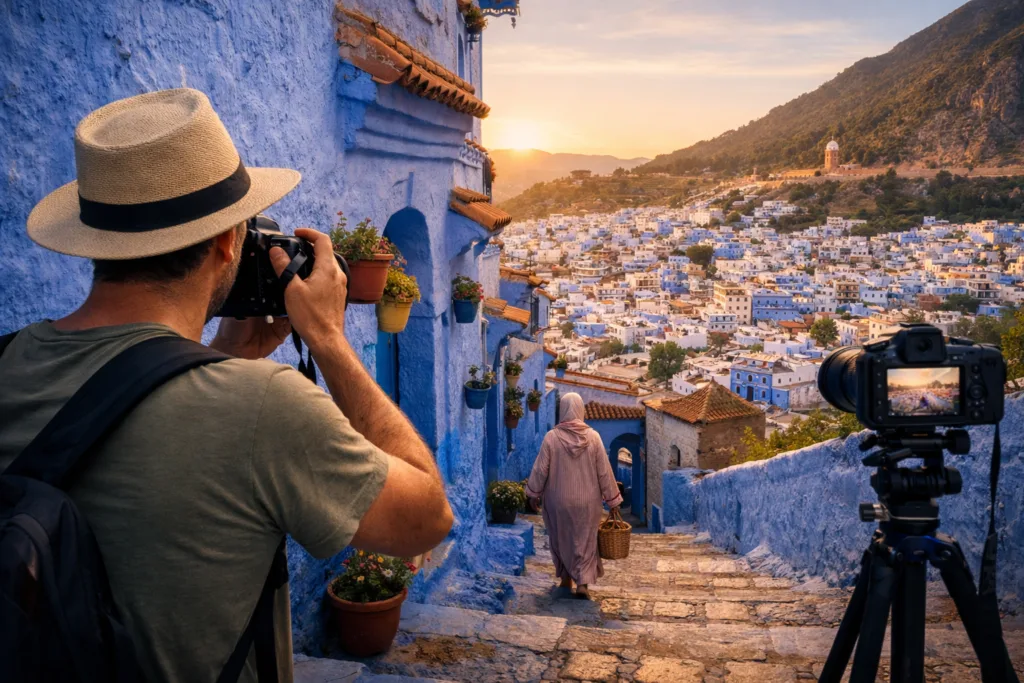
Summer 2026 is an excellent time to experience Chefchaouen through a photography tour, especially if you want soft mountain mornings, glowing late-afternoon light, and enough time to explore the Blue City at a relaxed pace. Tucked into the Rif Mountains, Chefchaouen combines blue-painted streets, textured walls, mountain panoramas, and everyday local life in a way that feels almost made for the camera.
Rather than simply wandering with no plan, a photography-focused experience helps you understand where the best light falls, which alleys look most beautiful at different times of day, and how to photograph the city respectfully. From the blue buildings to the Rif Mountains, every part of the walk offers fresh visual possibilities for portraits, architecture, street scenes, and landscape frames.
Whether you are traveling with a professional camera, a lightweight mirrorless setup, or simply your phone, this guide will help you plan a better photo experience in Chefchaouen. You will discover what to expect from a tour, when to shoot, how to handle strong summer light, which viewpoints matter most, and how to photograph this iconic town with more confidence and cultural sensitivity.
| Quick Summary | What to Know |
|---|---|
| Why book | A photography tour helps you find the best blue alleyways, viewpoints, and lighting conditions while learning how to photograph Chefchaouen more thoughtfully in summer 2026. |
| Best shooting times | Early morning and the last hours before sunset are usually best for softer light, cooler walking conditions, and cleaner compositions. |
| Top photo spots | The medina’s blue lanes, doorways, staircases, Plaza Uta el-Hammam, the Kasbah surroundings, rooftop views, and the Spanish Mosque viewpoint. |
| Who it suits | Beginners, hobby photographers, couples, solo travelers, and content creators looking for a focused visual experience. |
| What to bring | Comfortable shoes, water, sun protection, a spare battery, and a lens or phone setup that works well in narrow streets and bright conditions. |
| Summer advantage | Longer daylight hours give you more flexibility to combine blue-hour walks, portraits, medina details, and sunset viewpoints in one day. |
Why Chefchaouen is a Photographer’s Paradise
Chefchaouen has long attracted travelers because it offers something rare: a destination that feels visually coherent from street to street, yet never repetitive. The town is famous for its blue-painted medina, but what makes it exceptional for photography is not only the color. It is the combination of blue surfaces, mountain air, shifting shadows, stone textures, handcrafted doors, laundry lines, cats resting on steps, and local daily life moving naturally through the frame.
For international visitors planning a creative trip, Chefchaouen is one of the easiest places in Morocco to enjoy slow photography. You do not need to rush between distant landmarks. Many of the strongest images come from walking carefully, waiting patiently, and noticing how small visual details interact with the light.
The Unique Blue Architecture of Chefchaouen
The medina is the obvious star of any photography tour, and for good reason. Narrow alleys twist between blue walls in shades ranging from pale powder blue to deeper indigo. Staircases create natural leading lines, archways frame passersby beautifully, and weathered wooden doors add contrast and character. Even when you turn into a quiet corner with no famous landmark in sight, you can still find a composition worth stopping for.
During the summer season 2026, this architecture becomes especially rewarding for photographers who like to work with contrast. Early in the day, light enters the lanes more gently and reveals texture without washing out the blue tones. Later on, you can use stronger sun creatively by composing with shadow, geometry, and bright patches of reflected light.
Stunning Landscapes and Mountain Views
Chefchaouen is not only about alleyways. The town sits against the Rif Mountains, and that setting gives your photo tour a second visual language. You can move from intimate street compositions to wider landscapes in the same half day. Rooftops, higher terraces, and viewpoints outside the center allow you to photograph the city as a blue cluster surrounded by rugged green and brown mountain forms.
That contrast is one reason the town remains so memorable in photographs. The medina feels enclosed and detailed; the mountain backdrop feels open and expansive. Together, they give you variety without forcing you to travel far. For travelers who want to come home with a more complete visual story of northern Morocco, that balance is a major advantage.
What to Expect on a Chefchaouen Photography Tour
A photography tour in Chefchaouen is usually more focused than a standard sightseeing walk. Instead of simply checking off landmarks, you move with intention. A good guide helps you understand how the city photographs, how to avoid the busiest moments, which corners work best for portraits or street scenes, and how to adjust your pace to the rhythm of the place.
Many experiences are private or semi-private and last around two to four hours, which is ideal for staying concentrated without feeling rushed. Some are led by a local photographer, while others are hosted by a guide who knows the visual highlights and timing of the medina very well. Depending on the format, you may also be able to request portrait stops, couple photos, short content-creation sessions, or a route that includes panoramic viewpoints.
Guided Photo Walks Through the Blue Medina
The most enjoyable tours are designed around flow. You start in quieter lanes, ease into the busiest areas later, and pause when the scene deserves it. This is particularly useful if you are not familiar with Chefchaouen, because the town can feel deceptively simple at first while actually hiding many of its most photogenic corners behind ordinary turns and staircases.
A local guide can also help you see beyond the obvious postcard views. Instead of photographing only empty blue walls, you can look for scenes with human presence, craftsmanship, texture, and atmosphere. That might mean waiting for someone to pass through a doorway, framing a cat against a set of steps, or capturing the visual rhythm of pots, textiles, and door frames in a quieter section of the medina.
Best Times for Capturing the Perfect Shot
In Chefchaouen, timing matters as much as location. Sunrise and early morning are ideal if you want cooler temperatures, softer light, and emptier streets. This is often the best option for clean architectural images and calm portrait work. Late afternoon and sunset are equally strong, especially if you want warm light on upper walls and a short climb to a panoramic viewpoint afterward.
This summer, midday can still be useful, but it requires a different mindset. Instead of chasing soft color, you work with graphic lines, strong contrast, and the dramatic way light cuts through narrow passages. A tour guide who understands this difference can help you adapt rather than getting disappointed when the light becomes harsher.
Photography Tips for Chefchaouen
Chefchaouen rewards patience more than speed. It is tempting to photograph every blue wall you see, but the strongest images usually come when you slow down and watch how the scene changes for a few moments. A doorway becomes interesting when someone steps through it. A staircase becomes memorable when a shaft of light reaches it. A simple alley becomes layered when shadows, texture, and color align.
Working with Natural Light in Chefchaouen
Natural light in Chefchaouen can be gentle, reflective, and surprisingly flattering in the morning, then bold and contrast-heavy by midday. The blue walls bounce light into faces and corners, which is useful for portraits and detail shots. If you are shooting with a camera, keep an eye on highlights because pale walls can brighten quickly. If you are shooting on a phone, tap to expose carefully so the image does not lose the richness of the blue tones.
Summer 2026 travelers should be ready for brightness more than difficulty. A hat, sunglasses between stops, and a quick lens wipe for dust or fingerprints can make a bigger difference than carrying a heavy amount of gear. Many visitors do perfectly well with one lens or a smartphone plus a power bank.
Capturing the Essence of Local Life
What gives Chefchaouen depth is not just the color palette but the life inside it. Shopkeepers opening their doors, residents walking uphill with groceries, artisans arranging goods, cats stretching in doorways, and the everyday calm of the medina all add story to your images. These moments feel especially meaningful when they are photographed respectfully rather than taken hurriedly from a distance.
Ask before making close portraits. Smile. Use body language that shows patience and kindness. Sometimes the better image comes after a short exchange, not before it. This approach is not only more ethical; it also often leads to better, warmer photographs.
What to Bring for a Summer Photo Walk
Pack lightly but intentionally. Comfortable walking shoes are essential because many streets are sloped, paved with stone, or uneven in places. Bring water, sun protection, and a bag that lets you move easily through narrow lanes. If you use interchangeable lenses, a wide or standard focal length is usually enough for most medina scenes, while a short telephoto can be useful for compressing architectural details or shooting discreet candid moments from a respectful distance.
Lightweight clothing works well, but modest, breathable outfits are often the most practical choice in Chefchaouen. They help you stay comfortable while also blending in more naturally with the atmosphere of the town.
Iconic Spots for Photography in Chefchaouen
One reason photographers love Chefchaouen is that the city offers recognizable highlights without feeling limited to them. You can photograph famous viewpoints and still return with images that feel personal. The key is to combine a few iconic locations with quieter streets in between.
The Medina and Blue Alleyways
The medina remains the heart of any photo route. This is where you will find layered staircases, flower pots against blue walls, painted door frames, textured stone, and the endlessly photogenic interplay of shade and color. The goal is not to rush through the most famous lanes, but to let the medina reveal smaller compositions: a hand on a doorway, laundry above a passage, the repetition of blue surfaces interrupted by wood, metal, and terracotta.
Plaza Uta el-Hammam and the surrounding streets are also worth including. They bring more movement into your images and can be useful if you want a series that shows Chefchaouen as a living town rather than a visual set piece.
The Kasbah and Spanish Mosque Views
The Kasbah area offers a different atmosphere from the narrow alleyways. Here you can work with broader spaces, walls, gates, and elevated views that help balance the intimacy of the medina. It is a strong stop for travelers who want a more varied set of images in one tour.
The Spanish Mosque viewpoint is especially popular close to sunset, when the town begins to soften under warmer light. It gives you the classic wide view over Chefchaouen and the surrounding mountains. If you can include it at the end of your route, it creates a satisfying visual finish to a photography day.
How to Choose the Right Photography Tour
Not every photography tour offers the same experience, so it is worth choosing carefully. Some are best for travelers who want polished portraits and curated photo stops. Others are better for photographers who want time, coaching, and access to less obvious corners of the medina. The right choice depends on whether your goal is technical learning, visual storytelling, social-media content, or simply a memorable way to explore the city.
Local Photographers vs. International Tours
Local photographers often bring the biggest advantage in Chefchaouen because they understand the town’s rhythm. They know which streets get crowded, which corners hold shade longer, and where a seemingly ordinary passage can turn into one of the best compositions of the day. They also tend to provide stronger cultural context, which makes your images feel more grounded.
International tour operators can still be a good fit if you prefer a more packaged experience with transport, scheduling support, or broader multi-city itineraries. They are often convenient, but the experience may feel slightly less rooted in local rhythm unless the guide on the ground is excellent.
Customizing Your Tour Experience
A good Chefchaouen photography tour should be flexible enough to match your interests. If you love portraits, ask for a route with fewer crowds and better soft-light stops. If you prefer architecture, prioritize staircases, doorways, and rooftop angles. If you are creating travel content for social media, ask for a route that balances iconic views with short, practical walking distances.
Customization matters even more if you are visiting with a partner, friends, or family. Some travelers want a calm creative walk; others want a faster route with plenty of posed photos. Clarifying this before the tour makes the whole experience better.
Cultural Considerations for Photographers
Chefchaouen is warm and welcoming, but it is still important to approach photography with respect. The medina is not a studio. It is a lived-in place where people shop, work, pray, rest, and move through ordinary routines. The more respectful you are, the more meaningful your photographic experience becomes.
Respecting Locals’ Privacy and Traditions
A simple rule works well: photograph places freely, photograph people thoughtfully. Wide street scenes are generally easier than close portraits. If someone is the clear subject of your image, ask first whenever possible. Be especially careful around older residents, children, and anyone who appears uncomfortable. Courtesy matters more than getting a quick shot.
This respectful approach will also enrich your trip beyond photography. You are more likely to leave with genuine memories, warmer exchanges, and images that feel connected to the place rather than taken from it.
Etiquette for Taking Photos in Religious Spaces
In and around religious spaces, be extra attentive. Avoid interrupting moments of prayer, do not block entrances, and follow local guidance about where photography is welcome or limited. Dress respectfully and keep your behavior discreet. Even when a building looks visually irresistible, the cultural meaning of the space should come first.
This is one more reason a guided experience can be helpful: it reduces uncertainty and helps you photograph the city with greater confidence and awareness.
What Summer Travelers Often Love About the Experience
One of the strongest patterns among summer visitors is how often they praise the pace of a Chefchaouen photography walk. Travelers frequently say that the activity feels immersive without being exhausting. Instead of trying to “cover” the whole town quickly, they get to notice details they would normally miss, from shadows on steps to tiny decorative elements around doors and windows.
Another recurring positive reaction is the emotional effect of the place itself. Many visitors love the calm mood of early morning sessions and the way the blue tones seem to shift as the light changes. Others mention that the tour gave them better images than they expected, not because they used advanced equipment, but because someone helped them slow down, position themselves better, and look more carefully.
Couples and solo travelers also tend to appreciate that a photography tour can be both practical and memorable. It is useful because you come away with stronger photos and a better understanding of the medina. It is memorable because the experience feels personal, creative, and rooted in one of Morocco’s most visually distinctive towns.
Conclusion
A Chefchaouen photography tour is one of the most rewarding creative activities you can add to a Morocco itinerary. It combines visual beauty, slower exploration, cultural awareness, and practical learning in a way that suits both beginners and experienced photographers. From blue alleyways and handcrafted details to mountain viewpoints and warm human moments, the city offers far more than a simple backdrop.
If you are visiting Morocco this summer, Chefchaouen deserves more than a quick photo stop. Giving it a dedicated photography walk can completely change the quality of the images and memories you take home. It can also help you engage more deeply with the town rather than only skimming its most famous corners.
This experience is also a wonderful gateway into Morocco’s culture. The better you understand the pace, courtesy, and everyday life of the medina, the more meaningful your photographs become.
If you enjoyed this guide, subscribe to our newsletter by entering your email address in the designated field at the bottom of the page. You will receive more practical Morocco travel ideas, seasonal inspiration, and useful tips for planning a richer trip.
FAQ
Is a photography tour in Chefchaouen worth booking in summer 2026?
Yes. Summer 2026 is a great time for a photography-focused walk because longer daylight hours give you more flexibility for sunrise sessions, shaded medina scenes, and late-day viewpoints. A guided tour also helps you manage bright conditions and find stronger compositions than you would on a casual walk.
What time of day is best for photography in Chefchaouen this summer?
Early morning is usually best for softer light, cooler temperatures, and quieter alleyways. Late afternoon is another excellent option if you want warmer tones and the chance to finish at a panoramic viewpoint. Midday can still work this summer, but it is better for contrast-heavy architectural shots than for soft portraits.
Do I need a professional camera for a Chefchaouen photography tour during the summer season 2026?
No. A phone with a good camera can work very well in Chefchaouen, especially if you pay attention to framing and exposure. A camera gives you more control, but the city’s beauty is accessible to all levels. What matters most is timing, patience, and knowing where to stop.
How long should I plan for a photography walk in Chefchaouen?
A focused walk of two to four hours is ideal for most travelers. That is long enough to cover key blue alleyways, a few wider viewpoints, and some quieter streets without turning the experience into a tiring rush. If you want portraits or lots of content creation, a private tour is often the best choice.
What should I wear and bring for a summer 2026 photo tour?
Choose breathable clothing, comfortable walking shoes, and sun protection. Bring water, a fully charged phone or spare camera battery, and a lightweight bag. In summer 2026, packing lightly will make it much easier to move through the sloped alleys and pause quickly when you see a strong scene.
Can I take photos of local people in Chefchaouen?
You should always be respectful. Wide street scenes are usually easier, but for close portraits it is best to ask first. A smile, a greeting, and a calm attitude go a long way. Thoughtful photography usually leads to a better experience and better images.
Which locations should I prioritize if I only have one photo session in Chefchaouen?
Prioritize the blue medina, a few stair-lined alleyways, Plaza Uta el-Hammam, the Kasbah surroundings, and if time allows, the Spanish Mosque viewpoint. This combination gives you detail shots, street atmosphere, architecture, and a wider city panorama in one session.
Is Chefchaouen family-friendly for travelers who want beautiful vacation photos in summer 2026?
Yes, especially if you choose a shorter route and schedule it early or late in the day. Families often enjoy the colorful streets and calmer pace of the town. A flexible guide can help you keep the walk comfortable while still stopping at photogenic places.