
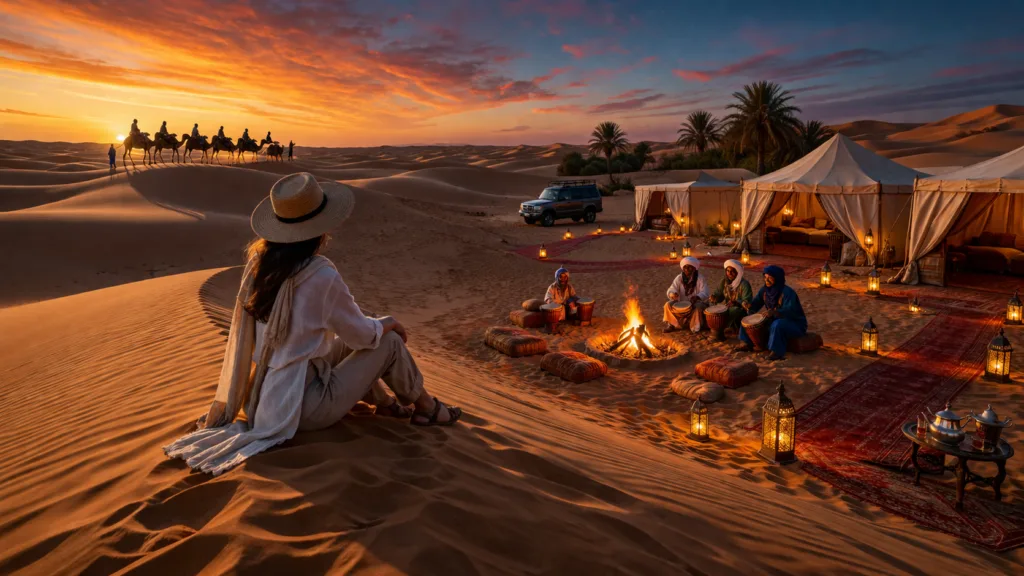
Planning a Saharan escape for summer 2026? The Moroccan Sahara remains one of the country’s most unforgettable travel experiences, but this season calls for smarter planning, earlier starts, and the right expectations. In return, you get glowing dunes at sunrise, quieter camps, vivid desert nights, and a deeper connection to the landscapes and cultures that have shaped Morocco’s great south for centuries. From iconic Erg Chebbi near Merzouga to more remote desert gateways linked to Zagora and M’Hamid, this is the place to come for camel treks, stargazing, desert camp dinners, Gnawa rhythms, oasis towns, and the stillness that only a true desert can offer.
For international travelers, the Moroccan Sahara is not just about scenery. It is about timing your day around the heat, choosing the right camp style, understanding distances, and making room for cultural encounters that go far beyond a quick sunset photo. This updated guide is built specifically for the 2026 travel season and will help you decide where to go, what to do, what to pack, which summer events to watch for, and how to enjoy the desert safely and comfortably.
| Quick takeaway | What it means for travelers |
|---|---|
| Best fit for summer season 2026 | Choose one-night or two-night desert experiences with sunrise and sunset activities, rest during midday, and prioritize camps with strong comfort standards. |
| Top base | Merzouga and Erg Chebbi remain the easiest and most iconic gateway for first-time visitors looking for camel rides, stargazing, and organized camp stays. |
| Alternative experience | Zagora, M’Hamid, and Erg Chigaga suit travelers who want a wilder route, longer transfers, and a less polished but more remote desert atmosphere. |
| Main activities | Camel trekking, 4×4 safaris, sandboarding, campfire music, sunrise walks on the dunes, and evening sky watching. |
| Big watchout | Heat is the real challenge. Build your day around early mornings and late afternoons, not midday adventures. |
| Culture highlight | Do not treat the Sahara as only a landscape. Local music, tea, desert hospitality, nomadic heritage, and oasis towns are part of the experience. |
| Best traveler profile | Couples, photographers, culture lovers, and adventure travelers who are happy to trade some convenience for a memorable setting. |
The Moroccan Sahara is a vast desert region full of adventures and cultural experiences. It includes towering dunes such as Erg Chebbi and more remote zones connected to Erg Chigaga, along with oases, kasbah routes, dry valleys, and villages where desert traditions still shape daily life.
Travelers can go on camel trekking expeditions, try dune bashing in 4×4 vehicles, go sandboarding, or simply slow down and enjoy the silence. Just as important, they can experience the warmth of desert hospitality, listen to local music after dinner, and watch the sky turn from gold to deep blue over the dunes.
Exploring Saharan adventure tours and desert camping experiences in the Moroccan Sahara is still one of the strongest highlights of a trip to Morocco. Whether you want a thrilling 4×4 outing or a peaceful Berber cultural immersion, the desert offers a rare sense of scale, calm, and atmosphere.
Why the Moroccan Sahara Works for Summer 2026 Travelers
The Sahara is not the easiest Moroccan destination in hot weather, but that is exactly why it can feel more exclusive and cinematic in the warmer months. In summer 2026, many travelers will still choose classic routes through Marrakech, Fes, and the coast, while the desert will continue to reward those willing to plan their visit more carefully. The key is not to fight the climate. It is to structure your trip around it.
That means sunrise camel rides instead of late-morning outings, airier clothing instead of heavy layers, and a realistic itinerary that leaves time to rest between transfers. It also means choosing a camp with reliable logistics, comfortable bedding, and clear communication about meals, transport, and shade. When handled well, a summer desert trip feels less like a hardship and more like a dramatic, stripped-back luxury experience built around light, silence, and space.
Geography and Climate of the Sahara
The Moroccan Sahara is part of the country’s immense southern and southeastern landscape. It stretches through areas shaped by dunes, rocky plains, wadis, palm groves, and desert-edge settlements. This is not one single sea of sand. It is a varied region with multiple entry points and very different travel styles depending on whether you choose Merzouga, Zagora, M’Hamid, or a route that combines the Draa Valley with camp nights farther south.
Desert Landscapes
Erg Chebbi near Merzouga is the best-known dune field in Morocco, famous for its dramatic orange-gold ridges that photograph beautifully at sunrise and sunset. Erg Chigaga, reached through longer and rougher approaches from the Zagora side, appeals to travelers who want something less accessible and more remote. Between these headline landscapes, the broader desert region also includes gravel plains, fossil-rich stretches, oasis corridors, old caravan routes, and villages where the desert feels inhabited rather than empty.
That variety matters because it shapes the experience. Some visitors want the classic postcard dunes and a comfortable overnight stay. Others want remoteness, long 4×4 tracks, and a stronger sense of expedition. The Moroccan Sahara can deliver both, which is why it suits such a wide range of travelers.
Climate and Best Time to Visit
The desert is hot and dry for much of the year, and summer demands respect. Daytime temperatures are intense, especially in the middle of the day, while evenings and very early mornings feel far more manageable. For many travelers, spring and autumn remain the easiest seasons overall. Still, visiting in summer can work well if you shorten active periods, choose experienced hosts, and do not overload your itinerary with back-to-back adventure blocks.
In practical terms, the best rhythm is simple: transfer early, rest during peak afternoon heat, ride or walk at sunset, enjoy dinner and music at camp, then wake early for dawn. That pattern lets you enjoy the Sahara’s greatest strengths without turning the heat into the main story of your trip.
Location of the Moroccan Sahara
The Moroccan Sahara sits far from the country’s main coastal gateways, which is part of its appeal. Reaching it takes intention. From Fes or Marrakech, travelers usually arrive by private transfer, organized tour, or a combination of road travel and overnight stops. Merzouga is the best-known access point for first-time visitors, while Zagora and M’Hamid connect more naturally with itineraries through Ouarzazate and the Draa Valley.
Top Attractions and Activities in the Sahara
The Moroccan Sahara is full of rewarding experiences for travelers who want both adventure and atmosphere. It is not just about seeing dunes once and leaving. The best itineraries mix movement, culture, and quiet moments, allowing the desert to unfold slowly.
Erg Chebbi Dunes (Merzouga)
The Erg Chebbi dunes near Merzouga are still the easiest and most photogenic choice for many international visitors. Their height, color, and accessibility make them ideal for first-time Sahara travelers. A short camel ride at sunset, followed by dinner in camp and a dawn climb up the nearest dune, remains a classic desert formula for a reason: it works.
Erg Chigaga Dunes (Zagora side)
Erg Chigaga offers a rougher, more remote feel. Getting there usually involves longer off-road travel, which makes it better for travelers who actively want distance from mainstream circuits. The payoff is a stronger sense of isolation and a desert experience that feels less staged.
Draa Valley
The Draa Valley is one of the most underrated parts of a desert route. Palm groves, kasbahs, old village architecture, and long ribbons of greenery create a striking contrast before the terrain opens into more arid country. It is also where the desert story becomes cultural as much as visual, especially when you stop in smaller towns instead of rushing straight to the dunes.
Desert Camp Experience
For many visitors, the camp stay is the emotional center of the trip. Good camps balance comfort with atmosphere. Expect a welcome tea, dinner under the open sky or in a dining tent, music by the fire, and enough darkness to make the stars feel much closer than they do in the city. In the warmer months, ask about ventilation, private bathrooms, transfers, and whether your tent remains comfortable after sunset.
4×4 Desert Safari
A 4×4 outing is often the smartest active choice for this summer, especially for travelers who want to see more without committing to long rides in the sun. It allows you to reach viewpoints, fossil zones, desert villages, or areas beyond the main camp clusters while limiting physical strain.
Sandboarding and Quad Biking
Sandboarding is light, playful, and easy to add to a short camp stay. Quad biking can be exciting too, though it changes the mood of the experience and is best suited to travelers who want energy and speed rather than silence and immersion. If your goal is atmosphere, choose camel trekking and walking. If your goal is adrenaline, add a motorized activity.
Cultural Experiences in the Desert
The Moroccan Sahara becomes far richer when you stop seeing it as an empty landscape and start seeing it as a lived cultural region. Desert routes are full of traces of caravan exchange, Amazigh and Saharan traditions, music, hospitality, food rituals, and old settlement patterns tied to oasis life.
Berber Nomadic Culture
The Berber, or Amazigh, and broader Saharan nomadic traditions remain one of the most compelling reasons to include the desert in a Morocco itinerary. Even when the experience is packaged for tourism, you can still learn a great deal through local guides, family-run camps, tea rituals, storytelling, and conversations about movement, trade, and survival in a demanding environment.
Gnaoua Music
Music is one of the clearest bridges between visitors and place. Around the desert, evening performances may be intimate rather than formal, but they still bring rhythm, memory, and atmosphere to the experience. Gnaoua influences, percussion around the fire, and regional musical traditions all help give the night its texture. It also connects naturally with wider Moroccan culture, where hospitality and performance often go hand in hand.
Oasis Towns
Places such as Tamegroute and other oasis-linked settlements help travelers understand that the desert is not separate from civilization. These towns reveal old libraries, craft traditions, date-growing economies, mud architecture, and the way water has shaped settlement patterns for centuries. They are worth visiting because they give your Sahara experience historical depth.
Desert Festivals and Gatherings
Large desert-linked festivals are not always concentrated in the hottest weeks, but Saharan cultural life does continue across the year through local music, camp performances, oasis gatherings, and seasonal regional events. For travelers building a wider southern Morocco itinerary, combining a camp stay with a heritage event can turn a beautiful trip into a much richer cultural one.
Summer 2026 Events Worth Watching
If you want to add a public event to your desert journey, the most useful approach is to think regionally rather than looking only for one big festival inside the dunes. Here are the most relevant desert-linked events for 2026:
- Moussem of Tan-Tan — June 25 to June 27, 2026. This is one of the strongest Saharan-heritage events in Morocco, celebrating nomadic culture through music, poetry, craft traditions, and tribal gathering customs. It is not in Merzouga, but it is highly relevant for travelers interested in the broader culture of the Moroccan Sahara.
- Festival International des Nomades, M’Hamid El Ghizlane — April 3 to April 5, 2026. Not a summer event, but very useful if your 2026 desert trip happens just before the high-heat season and you want a cultural anchor tied directly to the desert edge.
- Local camp music nights and small-scale cultural evenings — June, July, and August 2026. These are not citywide festivals with fixed public calendars, but they are often the most memorable performances travelers actually experience in the desert: drumming by the fire, traditional songs, tea rituals, and informal storytelling in or around camp.
Because summer scheduling in desert regions can change more than in large cities, it is smart to recheck local organizers or your camp provider shortly before departure. For many travelers, the desert itself is the event, and the more realistic way to plan is to pair one confirmed heritage gathering with one or two nights in Merzouga or beyond.
E-E-A-T: What Recent Travelers Loved Most
To make this page more reliable for travelers, it helps to look beyond promotional language and focus on what actual visitors consistently praise. Across recent verified and platform-checked reviews for Merzouga activities and desert camps, the same themes appear again and again: sunset camel rides, peaceful stargazing, warm hospitality, good food, comfortable tents, and a sense that one night in the dunes becomes one of the highlights of a Morocco trip.
- One June traveler described the camel trek as a great experience and said it was “not too hot even in June,” while also praising the guide and the overall mood of the outing.
- Verified summer camp reviews highlighted the evening light on the dunes, private camel rides, quiet atmospheres, and the dreamlike “1001 nights” feeling of sleeping in the desert.
- Another recent summer review praised the stars, the peaceful silence, and the comfort of a cozy tent, showing that well-run camps can still feel rewarding even in warmer months.
- Travelers also repeatedly mention music by the fire, enthusiastic staff, sunrise views, and the emotional power of waking up directly among the dunes.
The useful lesson is this: summer desert trips are best when you book for quality, not just price. Reviews make it clear that shade, bedding, staff support, food, and camp atmosphere matter far more in hot-weather travel than flashy marketing language.
Practical Information for Tourists
Planning a trip to the Moroccan Sahara during the warmer months requires a little more attention than planning a spring or autumn visit, but it is absolutely manageable. The biggest mistake is packing for a fantasy desert image rather than for real conditions. Desert travel is all about timing, hydration, and choosing the right base.
How to Get There
You can reach the Sahara by private car, organized tour, or long-distance road transfer. Merzouga is commonly approached from Fes or Marrakech, while Zagora and M’Hamid connect well with routes through Ouarzazate and the Draa Valley. Distances are long, so avoid trying to “do the desert” as a rushed same-day add-on.
What to Pack
Pack light, breathable clothing, closed shoes or sturdy sandals, sunglasses, a scarf for sun and sand, and strong sun protection. Bring a refillable water bottle, a power bank, lip balm, and one light layer for late evening. In hot months, comfort matters more than style. Loose, practical clothing will serve you better than heavy outfits chosen only for photos.
Accommodation Options
You will find everything from basic desert camps to upscale glamping-style stays. In hot weather, ask direct questions before booking: Is there a private bathroom? How far is the walk or camel ride to camp? Is there shade before sunset? How is dinner served? Are there quieter camp options? Small details have a big impact on comfort.
Travel Tips
- Choose sunrise and sunset for your main outdoor activities.
- Do not underestimate long driving times across southern Morocco.
- Book with operators who explain camp logistics clearly.
- Keep one flexible evening in your itinerary for weather, fatigue, or late arrival.
- Travelers with very young children or heat sensitivity should be especially selective about season and comfort level.
- Respect local communities, water limits, and the slower rhythm of desert life.
Conclusion
The Moroccan Sahara remains one of the most memorable places you can add to a Morocco itinerary, and for the summer of 2026, it offers something many travelers quietly want: fewer crowds, stronger atmosphere, and a deeper sense of place. With the right camp, realistic timing, and a balance of camel trekking, stargazing, and cultural discovery, the desert can become far more than a photo stop. It can become the part of the journey people talk about long after they return home.
If this guide helped you plan your desert trip, scroll to the email field at the bottom of the page and subscribe to our newsletter. It is the easiest way to receive more Morocco travel inspiration, seasonal updates, and practical tips for building a smarter itinerary.
FAQ
Is the Moroccan Sahara worth visiting in summer 2026?
Yes, it can be absolutely worth it if you plan around the heat. The best approach is to focus on sunset, evening, and sunrise experiences, choose a well-reviewed camp, and avoid overloading your itinerary with midday activities.
What is the best desert area for first-time visitors in summer 2026?
Merzouga and Erg Chebbi are usually the best choice for first-time visitors. They are the most straightforward to organize, visually dramatic, and offer a wide range of camps and activities.
Are camel treks still enjoyable in the hotter months?
Yes, but timing matters. Short camel rides at sunrise or sunset are much more comfortable than anything in the middle of the day. For some travelers, combining one camel ride with a 4×4 transfer is the best balance.
What should I prioritize when booking a desert camp for summer?
Prioritize reliable reviews, clear transport arrangements, private bathroom access if that matters to you, meal quality, shade, and a camp atmosphere that matches your travel style. In summer, comfort and organization make a huge difference.
Are there any relevant desert events in 2026?
Yes. The Moussem of Tan-Tan is scheduled for June 25 to June 27, 2026, and offers one of Morocco’s strongest Saharan cultural experiences. The Festival International des Nomades in M’Hamid El Ghizlane is confirmed for April 3 to April 5, 2026, which is useful for travelers visiting just before summer.
How many nights should I spend in the Moroccan Sahara?
For most travelers, one night is enough to enjoy the classic experience. Two nights are better if you want time for a slower pace, more stargazing, a deeper cultural feel, or less rushed transfers.
What are the biggest mistakes tourists make in the Sahara?
The biggest mistakes are underestimating the heat, choosing the cheapest option without checking reviews, rushing long road distances, and treating the desert as only a quick photo stop instead of a full experience.