
Fes is a city that defies time. Nestled in northern Morocco, it remains the country’s spiritual heart and a living museum of Islamic architecture, intellectual tradition and craft heritage. Wander the streets of Fes el‑Bali and you’ll find yourself transported to a world where mules haul goods through labyrinthine alleys, artisans hammer copper in courtyards and the call to prayer drifts across rooftops. Unlike many cities that rush toward modernity, Fes has preserved its authenticity; it has remained a centre of learning and trade since the ninth century. This guide offers must‑know travel tips for first time in Fes Morocco so you can appreciate its magic without feeling overwhelmed.
Visiting Fes is an adventure in immersion. You won’t just see monuments; you’ll listen to street musicians, bargain with merchants and savour flavours you’ve never tasted before. That said, navigating the medina’s maze of more than 9 000 alleys can be challenging, and cultural expectations may be different from what you’re used to. Whether you’re a seasoned globetrotter or planning your first trip to Morocco, this article will equip you with practical guidance and inspiring ideas. We’ll cover the city’s history and layout, safety tips for tourists visiting Fes Morocco, advice on getting around like a local, budget considerations, cultural etiquette, and specialized suggestions for food lovers and solo travellers.
As we explore this imperial city together, we’ll also outline the best travel tips for exploring Fes Medina, share a recommended 3‑day itinerary and highlight five unusual experiences you won’t want to miss. By the end, you’ll be ready to navigate Fes with confidence, respect and curiosity—just as seasoned travellers do. Keep reading for a comprehensive journey through Morocco’s oldest imperial city.
Understanding Fes: History and Layout
Fes is often described as Morocco’s cultural capital, and for good reason. The city was founded in 789 by Idris I and blossomed under the Marinid dynasty, which established Fes as a centre of religious scholarship and artistic production. Over the centuries it attracted scholars, merchants and craftsmen from across the Islamic world and beyond. Their legacy endures in the intricate stucco of madrassas, the cedar carvings of palaces and the vibrant souks that still buzz with trade. When you stroll through the medina, you’re walking through history—each quarter represents a different trade or community and the city’s layout reflects centuries of organic growth.
Understanding Fes begins with distinguishing its two main historic quarters. Fes el‑Bali, the old medina, is a UNESCO World Heritage site renowned for being the world’s largest urban car‑free zone. Vehicles aren’t allowed here; transport is done by mule or handcart, a reminder that these lanes were laid out before the age of automobiles. The area is a labyrinth of alleys, squares, mosques, madrassas and souks, each with its own personality. Fes el‑Jdid, built in the 13th century, houses the Royal Palace and the Mellah (Jewish quarter). Further west lies Ville Nouvelle, a modern district established during the French protectorate. This contrast between medieval and modern makes Fes uniquely captivating.
The medina’s complexity can intimidate even experienced travellers, but understanding its structure will help you move around confidently. Main arteries like Tala’a Kebira and Tala’a Seghira run east–west and connect major gates, while smaller derbs (lanes) branch off into residential quarters. Landmarks like the Bab Bou Jeloud (Blue Gate), the Karaouine Mosque and the Chouara tannery serve as anchors when navigating. Exploring Fes is less about following a map and more about embracing the journey—turning down an unknown alley might lead you to a hidden courtyard or artisanal workshop you wouldn’t have found otherwise.
Practical Fes Travel Tips for First‑Time Visitors
Fes is safe compared to many large cities, but the medina’s dense crowds and maze‑like layout can cause anxiety if you’re unprepared. Always be aware of your surroundings and keep valuables close. It’s wise to carry a reliable navigation app like Maps.me and to mark the location of your accommodation before you set out. Hiring a licensed guide for your first day helps orient you and reduces the chance of getting hopelessly lost. If you do choose to roam alone, avoid wandering far after dark; the medina’s alleys can feel intimidating at night and lighting is uneven. Pickpockets operate in busy souks, so secure your wallet and phone, and don’t flaunt expensive jewellery.
Even if locals seem friendly, be prepared for unsolicited offers of help. Men may offer to guide you to a landmark or sell you a sprig of mint to ward off tannery smells, but many of these gestures come with an expectation of payment. Politely but firmly decline if you’re not interested and move on. Dress modestly, especially for women; Fes is conservative and covering shoulders and knees shows respect and helps you blend in. You should also know that non‑Muslims are generally not allowed inside mosques; instead, plan visits to madrassas like Bou Inania and Al‑Attarine, which welcome visitors during certain hours. When taking photos, ask permission if people feature prominently and respect signs requesting no photography.
How to Navigate Fes Medina Like a Local
The medina is notorious for confusing travellers. Mobile mapping apps can be unreliable inside the dense alleyways, so always carry a printed map. Ask your riad or hotel for the best map available, review it together and note the route to and from your accommodation. Having a secondary map or offline GPS download can save you if your phone battery dies. Because street names are often missing or don’t correspond to what’s on maps, identify landmarks—like minarets, fountains and gates—as navigation points. Tala’a Kebira and Tala’a Seghira are two main pedestrian arteries; many attractions lie along or near these streets.
Travel in pairs or small groups when possible. Not only will you feel safer, but a companion can help you keep track of directions. If you do get lost, step into a shop or café to ask for directions rather than asking passers‑by on the street; random “helpers” often expect payment. Avoid reading your map in the middle of busy lanes; step aside to consult it and keep traffic moving. Plan your meals ahead because restaurants are scattered and may be farther away than you expect. Finally, aim to return to your riad before dusk; the atmosphere changes at night and you’ll navigate with more confidence in daylight.
Budget‑Friendly Travel Tips for Visiting Fes
Compared to western Europe or North America, Fes offers excellent value for money, but it pays to be budget‑conscious. Accommodation ranges from affordable hostels to luxurious riads, and you can eat like royalty without spending much. One of the simplest budget‑friendly travel tips for visiting Fes is to carry a reusable water bottle to avoid buying bottled water constantly. Tap water isn’t recommended, but many guesthouses provide filtered water or you can fill up at restaurants. Eating at market stalls or small family‑run cafés is both economical and authentic; sample a bowl of bissara (fava bean soup), a plate of mechoui (roast lamb) or a hearty tajine for a fraction of what tourist restaurants charge.
Negotiate transportation prices before getting into a taxi or hiring a driver. Petit taxis are metered only in some areas, so ask your riad or a local what a fair price should be and stand firm. Some travellers choose to use couchsurfing platforms to connect with locals and reduce lodging costs while deepening their cultural experience. Alcohol is hard to find and expensive when available; save money and respect local norms by enjoying fresh juices or mint tea instead. Finally, avoid unlicensed guides; their services are often overpriced and may involve pressure to buy goods. Book excursions through your accommodation or reputable agencies for peace of mind and value.
Fes Travel Tips for Solo International Travelers
Fes can feel daunting if you’re travelling alone, yet many solo adventurers fall in love with the city’s complexity and warmth. Solo men will encounter little issue beyond occasional offers of tours or goods. Solo women should dress modestly, walk confidently and be prepared for occasional comments or invitations that feel intrusive. A firm “no, thank you” in French or Arabic usually suffices. Avoid quiet alleys at night and listen to your intuition; if a situation feels uncomfortable, leave.
Joining group tours is an excellent way to meet fellow travellers and explore safely. Whether it’s a guided medina walk, a pottery workshop or a day trip to Chefchaouen, you’ll benefit from local knowledge and camaraderie. Having a guide also reduces the pressure of constant bargaining and navigation. Another useful tip is to learn a few key phrases in Moroccan Arabic—“salam alaykum” (hello), “shukran” (thank you) and, of course, “insha’Allah” (if God wills)—which goes a long way in building rapport. Women may feel more comfortable staying in women‑run riads or hostels, where hosts offer tailored advice on safety and culture.
Cultural Tips for Tourists Visiting Fes
Visiting Fes is as much about understanding its culture as seeing its monuments. Arabic and French are the main languages, though you’ll hear Darija (Moroccan Arabic) and Berber dialects in the streets. Approach conversations with patience and humour; even basic Arabic greetings will warm interactions. Bargaining is part of the market experience, but remain polite—state your price, smile and be prepared to walk away if it’s not accepted. Haggling can be fun when approached respectfully, and vendors often appreciate when you show interest in their craft beyond price.
The call to prayer echoes across Fes five times a day. When you hear it, observe the pause in commerce and avoid blasting music or talking loudly near mosques. Dress codes are conservative; both men and women should cover shoulders and knees, and women might wear a scarf in religious sites. You’ll see cats everywhere—Fes is famous for its feline population. Locals consider them part of the fabric of the medina, so treat them kindly and avoid feeding them table scraps. Lastly, be aware that many mosques are closed to non‑Muslims; instead, visit open madrassas or admire mosque exteriors from respectful distances.
Fes Travel Tips for Food Lovers and Street Food Tours
Fes seduces visitors with its flavours as much as its sights. For food lovers, a guided street food tour is the perfect introduction to the city’s culinary heritage. These tours weave through markets, bakeries and tea houses where you’ll sample freshly baked khobz (round loaves), smen‑infused msemen pancakes, local cheeses and sweets like chebakia. You’ll also taste savoury bites—stuffed sardines, grilled liver skewers, spicy merguez sausage and perhaps camel burgers. Guides explain the stories behind each dish, share how ingredients are sourced and help you navigate the etiquette of eating while standing amid a bustling souk.
If you prefer exploring on your own, look for stalls that locals frequent. Start your morning with bissara or baghrir (semolina pancakes) drizzled with honey. Lunch could be a steaming bowl of harira soup or a chicken pastilla dusted with cinnamon. Save room for Fassi specialties like b’ssara with olive oil, stuffed spleen sandwiches and snail soup. At night, treat yourself to a rooftop dinner of couscous or lamb tajine while watching the medina glow. Remember that Fridays are special—many Moroccans enjoy couscous after communal prayers. Vegetarian travellers will find plenty of options, from salads and vegetable tajines to lentil stews.
Insider Tips for Visiting Fes Tanneries
The Chouara tannery is one of Fes’s most iconic sites and offers a window into a craft tradition that has endured since medieval times. From terraces surrounding the dye pits, you’ll watch workers submerge sheepskins and cowhides into vats of natural dyes derived from poppy petals, saffron, indigo and other organic sources. The smell can be strong, but many visitors are surprised that it’s not as overpowering as rumours suggest. Still, bring a scarf or accept a sprig of mint to hold near your nose—just know that vendors often expect a small tip for the mint.
Visiting the tannery is officially free, but shopkeepers whose terraces overlook the pits will often pressure you into buying leather goods or paying an access fee. Politely decline or negotiate if you’re only there to observe. Don’t pay more than 20 MAD per person to access a terrace. It’s easiest to arrange a tannery visit through your hotel or with a licensed guide, who can shield you from aggressive sales tactics. After viewing the dyeing process, take time to explore the surrounding leather souk, where artisans craft slippers, bags and jackets. Remember to ask for natural, vegetable‑tanned products if sustainability is important to you.
Fes Travel Tips for Guided Medina Tours
A guided medina tour is invaluable, especially on your first day. Licensed guides are trained in history, architecture and local customs, and can lead you efficiently through the maze. Tours often begin at Bab Bou Jeloud and follow Tala’a Kebira past key sites like the Bou Inania Madrasa, Seffarine Square and the Karaouine Mosque, with stops to watch artisans carve wood, spin wool or weave textiles. Guides also provide cultural context—explaining why mosques are off‑limits to non‑Muslims, how the medina is organized by trade and what daily life is like for residents. They can point out hidden gems you’d likely miss on your own, from secret courtyards to rooftop viewpoints.
For travellers with specific interests, specialized tours are available. Culinary enthusiasts can join a food‑focused walk, while historians can opt for a tour emphasizing Fes’s role in Islamic scholarship. Workshops allow you to learn pottery techniques, calligraphy or zellij tile making alongside local artisans. Booking through your riad ensures you hire a guide with proper credentials and supports the local community. Remember that tipping guides is customary; 50–100 MAD (approximately €5–€10) for a half‑day tour is appropriate.
Recommended 3‑Day Fes Itinerary
Time is precious when exploring Fes, yet you’ll find you can experience a lot in three days if you plan thoughtfully. The following itinerary balances must‑see sights with leisurely wandering and a taste of the surrounding region. Feel free to adapt it to your pace and interests; the best itineraries include room for serendipity.
Day 1 – Dive into the Medina’s Heart
Your first day is all about absorbing the medina’s atmosphere and visiting its most iconic sites. Begin at Bab Bou Jeloud, the Blue Gate, and stroll along Tala’a Kebira. On the way, stop at the Bou Inania Madrasa, one of the few religious buildings open to non‑Muslims and renowned for its carved cedar ceilings and green‑tiled minaret. Continue towards Seffarine Square, where coppersmiths hammer out trays and teapots. Nearby, peek into the ancient University of Al‑Karaouine, considered the oldest operating university in the world. You can’t enter the mosque itself unless you’re Muslim, but glimpses through the doorways reveal a serene courtyard.
After lunch at a local café, wind your way to the Chouara tannery. Follow signs or ask shopkeepers for directions until the smell guides you to the dye pits. Spend time observing the tanning process from a terrace and then wander through the leather souk. If you have energy left, detour to the Dar Batha Museum to admire its collection of Moroccan arts or rest at Bou Jeloud Gardens for respite from the medina’s intensity. End the day with dinner at a traditional restaurant or the atmospheric Ruined Garden; try specialties like chicken with preserved lemons or lamb with prunes.
Day 2 – Royal Glimpses and Day‑Trip Options
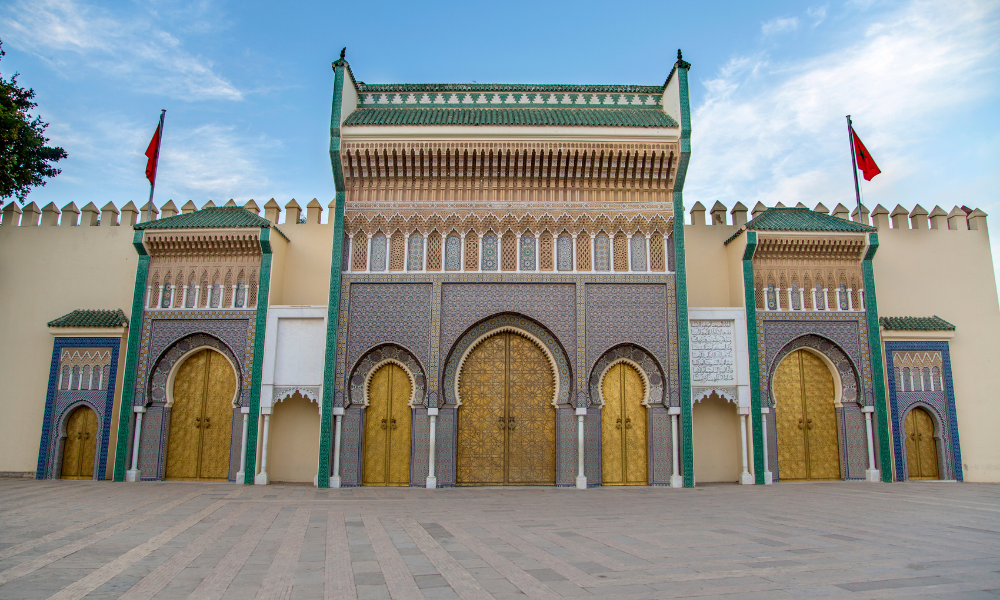
On your second day, head to Fes el‑Jdid. Start by admiring the golden gates of the Royal Palace; while visitors cannot enter, the monumental brass doors are worth photographing. Then explore the Mellah, once home to Fes’s Jewish community; stroll past the distinctive architecture and, if time allows, visit the nearby Jewish cemetery. Walk or taxi back to the medina to visit the Al‑Attarine Madrasa, whose exquisite tilework and carved plaster evoke the artistry of Fes’s golden age. Climb its rooftop for sweeping views over the market.
Spend your afternoon on a short excursion. If you enjoy history, take a half‑day trip to the Roman ruins of Volubilis, less than two hours away. The site’s well‑preserved mosaics and arches reveal Morocco’s ancient connection to the Roman Empire. Combine your visit with a stop in Meknes to see its grand gates and mausoleums. Alternatively, remain in Fes and head to Borj Nord, a hilltop fortress housing the arms museum; the adjacent Merenid Tombs offer panoramic sunset views. In the evening, relax at a hammam for a traditional scrub and massage before dinner.
Day 3 – The Blue City or Natural Escapes
Day three offers options depending on your interests. Many travellers choose to take a full‑day trip to Chefchaouen, the fabled “Blue City” nestled in the Rif Mountains. Wander its blue‑washed lanes, hike to the Spanish Mosque for panoramic vistas and browse shops selling woven blankets and goat cheese. Another possibility is to explore nature closer to Fes. Hike Mount Zalagh for views of the city and Middle Atlas or venture to Tazekka National Park, where cedar forests and caves await. If you prefer staying local, dedicate the day to immersive workshops—try your hand at making pottery in the artisans’ quarter or learn how to weave rugs from a cooperative. Conclude your journey with a final feast in the medina, reflecting on the sensory experiences that make Fes unforgettable.
Top Five Unusual Experiences in Fes
Part of Fes’s charm lies in its surprises. Beyond the classic sights, these unusual experiences will deepen your connection to the city and reveal facets that many tourists overlook.
- Explore the world’s largest car‑free urban zone. Fes el‑Bali’s 9 000 alleyways are a marvel of medieval urban planning. Wander aimlessly, follow the sounds of artisans at work and appreciate the way mules and handcarts maintain a rhythm unchanged for centuries. You’ll gain insight into how communities function in a space where human scale matters more than vehicles.
- Watch sunset from the Merenid Tombs. The ruins of these 14th‑century tombs sit on a hill north of the medina. Climb up in late afternoon with a picnic and watch the sun cast golden hues over the city and surrounding hills. The quiet, contemplative atmosphere contrasts sharply with the bustle below.
- See the Chouara tannery in action. While the tannery is a popular sight, few travellers linger long enough to observe all stages of leather production. Take your time to watch how hides are scraped, soaked, dyed and dried. Ask questions of the artisans if language allows and shop for products made with natural dyes.
- Visit the University of Al‑Karaouine. Considered the oldest continually operating university, this institution remains a centre of Islamic learning. You can’t enter the mosque, but you may arrange a visit to the library or admire the exterior and its tranquil courtyards. Reflect on how knowledge has been preserved here for over a millennium.
- Explore Dar Batha and the Andalusian garden. Once a royal palace, Dar Batha now houses a museum of Moroccan arts. Its courtyard garden, planted with orange and lemon trees, offers a serene escape from the medina. The museum’s displays of woodcarving, ceramics and textiles illustrate the region’s artistry.
Conclusion
Fes is a city that rewards patience and curiosity. Its walls shelter a world where the past and present co‑exist, where artisans still practice trades passed down through generations and where every corner holds a story. By following these Fes travel tips for guided medina tours, budget‑friendly travel tips for visiting Fes and recommendations tailored to solo travellers, food lovers and culture seekers, you’ll navigate this imperial city with confidence and respect. Remember to embrace the slow pace of the medina, to greet people with courtesy and to savour each sensory experience. Travel isn’t just about ticking off sights; it’s about connecting with the places and people you encounter along the way.
After three days in Fes, you’ll understand why so many travellers return. You’ll carry with you memories of colours and scents, echoes of the call to prayer and conversations shared over steaming tea. Perhaps you’ll feel inspired to learn more about Moroccan history or to master a dish you tasted in a humble café. Wherever your journey takes you next, Fes will linger in your imagination—inviting you to return and explore deeper. We hope this guide has illuminated the best ways to experience Morocco’s imperial city; may your travels be safe, enriching and unforgettable.
FAQs
Is Fes safe for tourists?
Fes is generally safe, especially in the main parts of the medina and around Bab Boujloud. Use the same city smarts you would anywhere—avoid poorly lit alleys late at night, keep valuables out of sight, and ignore pushy touts. Petty theft is the most common issue, so a crossbody bag and zipped pockets help.
How many days do you need in Fes?
Two full days cover the essentials, while three days lets you slow down: one for Fes el-Bali’s monuments, one for artisan quarters and tanneries, and one for day trips or workshops. If Fes is your base for Meknes–Volubilis–Moulay Idriss, plan an extra day.
What’s the best time to visit Fes?
Spring (March–May) and autumn (September–November) offer warm days, cooler nights, and fewer crowds. Summer can be very hot, and winter nights are chilly—pack layers if visiting December–February.
Where should I stay—inside the medina or in the Ville Nouvelle?
For an atmospheric stay, choose a riad in Fes el-Bali near Bab Boujloud or Tala’a Kebira for easy access on foot. If you prefer modern comforts, parking, and wider streets, Ville Nouvelle has international-style hotels and straightforward taxi access.
Do I need a guide to explore the medina?
Not strictly, but the medina is vast and maze-like—first-timers benefit from a licensed guide for context and efficient routing. If you go solo, download offline maps, pin your riad, and use major spines like Tala’a Kebira/Tala’a Sghira as anchors.
How do I recognize an official guide?
Licensed guides carry a visible badge and typically meet guests via riads, agencies, or pre-arranged points like Bab Boujloud. If someone approaches you unasked and won’t show ID, decline politely and keep walking.
Is Fes good for solo travelers (including solo female travelers)?
Yes—accommodation staff and guides are used to hosting solo visitors. Dress modestly, avoid empty lanes after dark, and trust your instincts; polite firmness goes a long way if you encounter unwanted attention.
What should I wear in Fes?
Think modest and breathable: shoulders and knees covered in sacred or conservative areas, and light layers for heat-to-cool transitions. Comfortable closed shoes are essential—cobbles, steps, and slopes are part of medina life.
Can non-Muslims enter mosques in Fes?
Prayer halls are generally closed to non-Muslims. You can admire historic institutions—like Al-Qarawiyyin—from doorways or nearby viewpoints and visit medersas (theological colleges) that are open to the public.
What is the etiquette for visiting the tanneries?
Go in the morning when light is best; bring a scarf or a sprig of mint for the smell. Expect to view from a shop terrace—there’s no standard ticket—and a small tip for the terrace host is customary if you don’t buy.
How do I navigate the medina like a local?
Use landmarks (Bab Boujloud, Bou Inania, Nejjarine) and stick to main arteries to avoid dead ends. When lost, ask a shopkeeper rather than a street “helper,” or duck into your riad/café to reorient on Wi-Fi.
Are taxis reliable, and how much should I pay?
Petit taxis are metered within city limits—ask the driver to turn on the meter before departing. For fixed-price trips (airport, intercity stands), confirm the fare beforehand; keep small change handy.
What’s the best way to get from Fes Airport (FEZ) to the medina?
Pre-book a riad transfer or use the official airport taxi rank with fixed pricing. Rideshare coverage is limited; petit taxis don’t pick up at the airport.
Can I drink the tap water?
Most travelers stick to bottled water and avoid ice in street drinks. Choose busy, reputable food stalls, and peel fruit or wash it with bottled water if you have a sensitive stomach.
What are the must-try foods in Fes?
Look for bessara (split-pea soup) at breakfast, fassi pastilla, slow-cooked tangia or tagines, and seasonal street grills. For sweets, try sellou and chebakia with mint tea.
How much should I tip?
Rounding up is fine at cafés; around 10% is appreciated in sit-down restaurants if service isn’t included. For guides and drivers, tip according to time and satisfaction; small coins (5–10 MAD) are handy for porters and photo stops.
Is bargaining expected?
Yes, in souks and with some services—start at 30–40% below the first price and work toward a fair middle. Keep it friendly; stepping away is part of the dance.
Which souvenirs is Fes known for?
Woodwork, brassware, zellige-inspired pieces, hand-woven textiles, blue pottery, and leather goods from the tanneries are signature buys. Ask about materials and origin; quality varies widely.
Are credit cards widely accepted?
Cash (MAD) is king in the medina; many small shops are cash-only. ATMs are plentiful around gates and in Ville Nouvelle; cards are more accepted at riads, upscale restaurants, and modern boutiques.
Can I use my phone easily in Morocco?
Buy a local SIM (Maroc Telecom, Orange, or Inwi) with your passport for cheap data—your riad can point you to the nearest shop. Coverage in the city is strong; keep maps offline for alleyway dead zones.
How does Ramadan affect travel in Fes?
Sites still open, but hours can shift; some cafés close during the day and evenings come alive after iftar. Dress modestly and avoid eating/drinking openly in conservative areas during daylight out of respect.
Are Fridays different?
Midday Friday prayers are busy, and some businesses pause briefly. Mornings and late afternoons remain great for sightseeing and shopping.
What about the Fes Festival of World Sacred Music?
It’s typically held once a year in late spring or early summer with concerts across historic venues. Book rooms early—riad availability tightens quickly around festival dates.
Is the medina accessible for travelers with mobility challenges?
The old city has many stairs, uneven stones, and narrow lanes; door-to-door vehicle access is limited. Choose a riad close to a main gate (e.g., Bab Boujloud or Bab Rcif) and plan for extra time.
Are drones allowed?
Consumer drone use in Morocco is restricted and often requires prior authorization. Leave it at home unless you’ve secured permits in advance.
What day trips can I take from Fes?
Top choices are Meknes–Volubilis–Moulay Idriss (Roman ruins + holy town), Chefchaouen (the blue city), and the Middle Atlas loop (Ifrane, Azrou cedar forest). Private drivers save time; public buses and trains are workable with early starts.
How do I visit a traditional hammam?
Bring flip-flops, a small towel, black soap, and a kessa (scrub glove), or buy on site. You can self-wash or book an attendant scrub; confirm prices up front.
Is alcohol available?
Alcohol is limited: you’ll find it in select restaurants, hotel bars, and licensed shops typically outside the medina’s core. Discretion is appreciated—don’t drink in public spaces.
What power plugs and voltage does Morocco use?
Morocco uses 220V with Type C and E sockets (European two-pin). Bring a universal adapter and check device voltage to avoid damage.
Can I take photos freely?
Yes in public spaces, but always ask before photographing people, especially artisans and shopkeepers. In religious spaces, follow posted rules and be discreet.
What’s the local language situation?
Darija (Moroccan Arabic) is most common; French is widely used in tourism and services. A few words—“salam” (hello), “shukran” (thank you), “afak” (please)—open doors and smiles.
What’s a respectful way to handle street “helpers”?
If you don’t need assistance, a firm, polite “la, shukran” (no, thank you) and steady walking usually suffice. If you do ask for directions, agree on a small tip in advance to avoid misunderstandings.
Are there scams I should watch for?
Common ones include “This street is closed” or “The site is shut—follow me.” Verify with your map or a shopkeeper, and only enter places you choose—don’t follow unsolicited “guides.”
How do I get train tickets to/from Fes?
Buy at the station on the day or a day prior; major routes (Rabat, Casablanca, Tangier) are frequent. First class is inexpensive by international standards and offers reserved seating.
Is Fes cheaper than Marrakech?
On average, yes—accommodation and meals often cost less, and bargaining can stretch your budget further. Quality options exist at every price point.
What should I pack for Fes?
Breathable layers, a scarf, sun protection, closed walking shoes, and a light rain jacket in winter. Add a daypack, universal adapter, and a small first-aid kit.
Can I visit the desert from Fes?
Yes—multi-day trips to Merzouga (Erg Chebbi) begin from Fes, typically two nights minimum with a dune camp. For a taste of desert scenery on a tight schedule, consider Middle Atlas day trips instead.
How late do shops and cafés stay open?
In the medina, many stalls open mid-morning and run into the evening, with a lull mid-afternoon. During summer and Ramadan, nights can be lively and late.
Are there quiet spots to escape the medina buzz?
Yes—Jnan Sbil gardens, Borj Nord viewpoints, and certain medersas offer calm interludes. Your riad’s courtyard is often the most peaceful retreat of all.
What’s the phone number for emergencies?
If you need help, ask nearby businesses or your riad to call—assistance is often faster through locals. Keep your accommodation’s number on your phone and a paper card in your pocket for quick reference.