
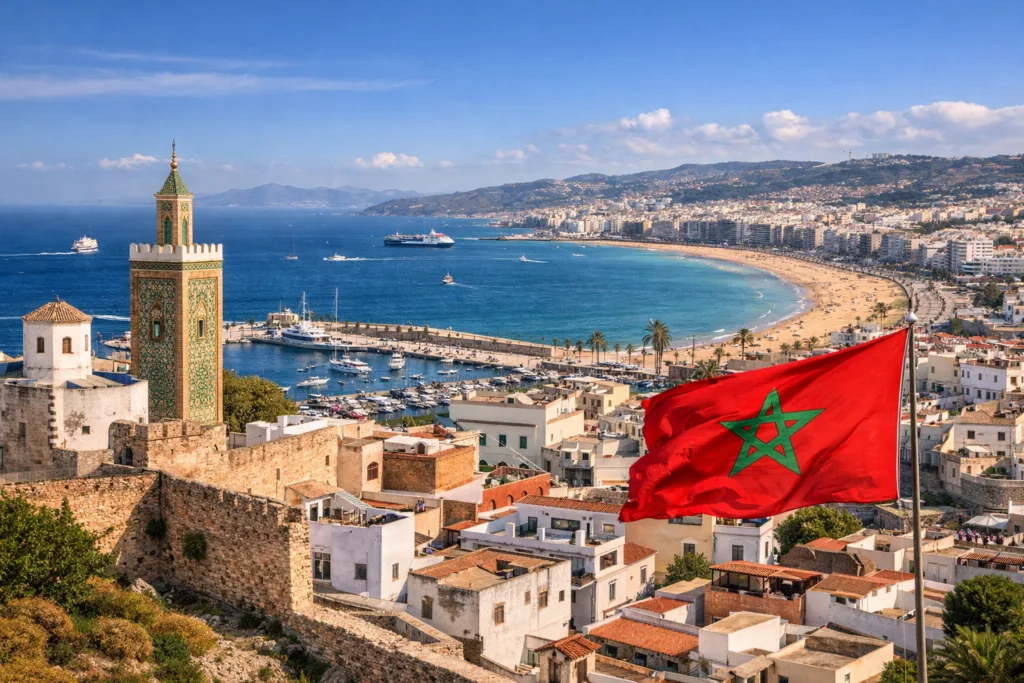
Tangier in summer 2026 is one of Morocco’s most rewarding coastal city breaks for international travelers. Set at the meeting point of Africa and Europe, and shaped by both the Mediterranean and the Atlantic, the city combines sea views, layered history, elegant architecture, and a creative spirit that feels especially vivid in the warmer months. For visitors who want culture without giving up breezy promenades, beaches, and easy transport connections, Tangier offers a smart and memorable base.
This updated guide focuses entirely on a summer stay in Tangier. It highlights the city’s essential attractions, the best coastal experiences, the atmosphere of its medina and modern districts, practical advice for getting around, day-trip ideas, and the main cultural events travelers should watch for during the season. Whether you are arriving from another Moroccan city or crossing from Spain, Tangier is a destination that rewards both first-time visitors and returning travelers.
| Quick Summary | What to Expect |
|---|---|
| Best for | Travelers who want a mix of medina culture, sea views, cafés, museums, and easy northern Morocco day trips this summer. |
| Top experiences | Wander the Kasbah and medina, watch sunset near Cape Spartel, visit the American Legation, stroll the Corniche, and take a day trip to Asilah or Chefchaouen. |
| Summer feel | Lively evenings, busy waterfront areas, a cosmopolitan atmosphere, and a stronger coastal breeze than in many inland Moroccan cities. |
| Ideal stay | 2 to 4 nights for the city itself, longer if you want beaches and northern excursions. |
| Good areas to stay | Kasbah and Medina for character, Malabata and the Corniche for sea views, central modern Tangier for convenience. |
| Transport advantages | Fast rail links, ferry access from Spain, and simple onward travel to Rabat, Casablanca, Tetouan, and Chefchaouen. |
| Summer 2026 event watch | Photo exhibitions, cultural programming, waterfront evenings, and recurring festivals that usually animate late June and July. |
Historical and Cultural Background of Tangier
Tangier has long stood apart from other Moroccan cities. Its position on the Strait of Gibraltar made it a gateway for trade, diplomacy, migration, and ideas. Phoenicians, Romans, Arab dynasties, European powers, and modern Moroccan institutions all left traces here. That long exchange explains why Tangier feels at once Moroccan, Mediterranean, Atlantic, and unmistakably international.
For travelers, this history is not hidden in textbooks. You feel it in the medina’s layered streets, in old consular buildings, in cafés that still carry echoes of the city’s literary era, and in the contrast between the fortified Kasbah and the broad seafront avenues of modern Tangier. It is one of the rare places in Morocco where a short walk can connect hilltop history, diplomatic heritage, and a beachside promenade.
From Strategic Port to Creative Northern Hub
Twentieth-century Tangier became famous as an international zone, attracting diplomats, writers, artists, and entrepreneurs. That reputation still shapes the city’s image today. Yet modern Tangier is not frozen in nostalgia. It is a functioning port city, a transport gateway, and a base for discovering northern Morocco. For summer travelers, that balance is part of its appeal: Tangier offers character and atmosphere, but it also feels easy to navigate and well connected.
Top Attractions in Tangier
Tangier’s major sights are close enough to combine culture, architecture, and coastal scenery in the same trip. Rather than rushing from landmark to landmark, the city is best enjoyed at a walking pace, with time for terrace stops, sea views, and unplanned detours.
Kasbah Museum and the Old Fortress Quarter
The Kasbah remains one of Tangier’s essential visits. Perched above the city, it offers a more elevated and atmospheric side of the old town, with white façades, quiet lanes, and broad views. The Kasbah Museum, housed in the former Dar el Makhzen palace, is ideal for travelers who want more than surface impressions. It adds historical context to the city through art, archaeology, decorative objects, and the architecture of the palace itself.
In practical terms, the Kasbah is also one of the best morning stops in Tangier. It tends to feel calmer earlier in the day, and the climb rewards you with some of the city’s most photogenic perspectives.
Medina of Tangier and Grand Socco
The medina is the city’s living heart. It is smaller and more approachable than the medinas of Fes or Marrakech, which makes it especially appealing for first-time visitors. You will find artisan shops, produce sellers, cafés, street life, and a constant sense of movement without necessarily needing an entire day to understand its layout.
Grand Socco acts as the hinge between old and new Tangier. It is an excellent place to begin an exploration because it introduces the city’s energy immediately: palms, traffic, locals crossing the square, visitors heading toward the gates of the medina, and cafés that invite you to pause before diving in.
Tangier American Legation Museum
This museum is one of Tangier’s most distinctive cultural stops. It tells the story of Morocco’s historic ties with the United States while also functioning as a museum, library, and cultural space. For travelers who enjoy museums with a strong narrative rather than only display cases, it adds an unexpected international dimension to the city.
It is also well placed for combining with a medina walk, so it works nicely on a half-day city route that includes Grand Socco, smaller lanes, and a late lunch nearby.
Cape Spartel and the Caves of Hercules
No Tangier guide feels complete without this coastal pairing. Cape Spartel delivers one of the area’s classic panoramas, with cliffs, open sea, and the symbolic meeting point of maritime worlds. Nearby, the Caves of Hercules add a more dramatic and legendary stop, combining geology, myth, and Atlantic views. Together they form one of the strongest half-day excursions from the city center.
During the summer season 2026, this is one of the best ways to trade the city’s bustle for open horizons. Go earlier or later in the day for softer light, better photos, and a more relaxed rhythm.
Tangier’s Beaches and Coastal Experiences
Tangier’s beaches and waterfront areas are a major part of the city’s summer identity. Unlike destinations that ask you to choose between culture and coastline, Tangier lets you combine both in one day. You can spend the morning in the Kasbah, lunch in the city, and end the day by the sea.
Malabata and the Corniche
The Corniche and Malabata side of Tangier offer the city’s most contemporary coastal atmosphere. This is where visitors often come for sea-facing hotels, cafés, evening walks, and wide views across the bay. It is less about discovering hidden corners and more about enjoying comfort, openness, and a polished seafront mood.
If you like urban beach settings with restaurants and long promenades, this is the most convenient coastal zone to prioritize. Sunset is especially rewarding here, when the waterfront starts to glow and the city feels social without becoming frantic.
Achakar Beach
Achakar Beach remains one of the strongest alternatives for travelers who want a more natural edge to their Tangier stay. It works well alongside Cape Spartel and the Caves of Hercules, and it is better suited to a slower coastal outing than a quick city-center beach stop. Families, couples, and photographers often appreciate the space, the light, and the sense of distance from the center.
Evening Walks and Sea Views
One of Tangier’s simplest pleasures is walking. Along the waterfront, near viewpoints, or between the medina and modern districts, the city rewards unstructured time. The sea is almost always part of the experience, even when you are not on the sand. For many travelers, Tangier’s greatest luxury is not a single attraction but this constant relationship with the coast.
Tangier’s Cultural Scene in Summer
Tangier has long attracted writers, painters, musicians, and filmmakers. That legacy still shapes how visitors experience the city. Rather than feeling like a place with only monuments, Tangier feels interpretive and atmospheric. It invites observation. Terraces, bookstores, galleries, restored venues, and cultural institutions help keep that mood alive.
This is also why Tangier works so well as a summer destination for travelers who want evenings with substance. After daytime visits, there is still room for music, conversations over mint tea, photography walks, and the kind of unhurried café time that makes a city stay memorable.
Art, Literature, and the City’s Rhythm
From Matisse to Paul Bowles and many others, Tangier’s reputation as a creative city did not appear by accident. The light, the port, the mix of languages, and the layered urban landscape all contribute to a place that feels visually and emotionally rich. Even if you are not visiting for “high culture,” that creative legacy still improves the travel experience. It is visible in the city’s confidence, its café life, and its ability to feel both historic and contemporary.
What Summer Travelers Say About Tangier
One of the best ways to judge a destination is to look at how recent visitors describe it after actually spending time there. Positive traveler feedback around Tangier repeatedly points to three strengths: the medina’s lively evening atmosphere, the value of knowledgeable local guides for first-time visits, and the visual appeal of the bay and promenade at sunset.
- Visitors often describe the medina as beautiful, energetic, and especially enjoyable in the evening, when cafés, shops, and late movement make the old city feel vibrant.
- Families and first-time travelers frequently praise guided tours for making Tangier feel more comfortable, informative, and easier to understand in a short stay.
- Summer guests regularly highlight the bay, promenade, and sunset views as memorable parts of the Tangier experience, even for travelers who are not planning a full beach holiday.
That kind of feedback matters because it reflects lived experience rather than only brochure language. Tangier tends to satisfy travelers who come with the right expectations: a layered port city, not a resort bubble; a place for walking, observing, tasting, and combining culture with sea air.
Summer 2026 Events in Tangier
If you are planning a trip around culture this summer, Tangier already has one major confirmed event on the calendar, alongside recurring festivals that are typically announced later in the season.
Photo Tanger – Festival International de l’Image
The standout confirmed event for the city is the first edition of Photo Tanger, which begins on June 17, 2026 and runs through late August 2026 across cultural venues and public spaces in Tangier. For summer visitors, this is a strong reason to build in extra time for exhibitions, visual culture, and city walks shaped by photography and urban storytelling.
Festival Twiza
Festival Twiza, one of Tangier’s most important cultural gatherings linked to Amazigh thought, literature, debate, and performance, is a key event to watch in July. At the time of writing, the exact 2026 dates had not yet been published, so travelers visiting late July should monitor local announcements in case their stay overlaps with the festival program.
Because Tangier’s cultural calendar can fill out closer to the season, it is wise to recheck event listings shortly before departure, especially if you want concerts, talks, exhibitions, or performances at the Palais des Arts et de la Culture or other city venues.
Day Trips and Excursions from Tangier
Tangier is not only a destination in its own right; it is also one of the best northern Moroccan bases for short excursions. This is one of the main reasons it works so well for a summer itinerary.
Asilah
Asilah offers a gentler coastal rhythm, whitewashed walls, murals, and a more intimate medina atmosphere. It suits travelers who want an artistic seaside contrast to Tangier’s larger urban energy.
Tetouan
Tetouan is ideal for travelers interested in history, architecture, and a medina with strong Andalusian character. It feels more traditional and less outward-looking than Tangier, which makes the contrast especially rewarding.
Chefchaouen
Chefchaouen remains the classic inland escape from Tangier. Its blue streets, mountain setting, and slower rhythm make it one of the most appealing day trips or overnight add-ons in northern Morocco.
Practical Information for Tourists
Transportation
Getting around Tangier is straightforward. Petit taxis are practical for short city trips, while walking works well in the Kasbah, medina, and much of the center. For longer arrivals and onward journeys, Tangier is one of Morocco’s strongest transport hubs. High-speed rail links make it easy to continue south, and the city also remains closely connected to Spain by ferry.
Where to Stay
Choose your neighborhood according to the experience you want. Stay in the Kasbah or medina if atmosphere, heritage, and rooftop views matter most. Stay near Malabata or the Corniche if you want sea-facing hotels, easy beach access, and modern comfort. Central modern Tangier works best for travelers who want transport convenience and a balanced location between old and new districts.
What to Pack and How to Plan Your Days
Pack light, breathable clothing for warm days, but bring a light layer for evening breezes near the coast. Comfortable walking shoes matter more than formal footwear, because Tangier rewards exploration on foot. If your stay falls in peak summer weeks, plan major sightseeing in the morning, rest during the brighter middle part of the day, and enjoy the city again in the late afternoon and evening.
Travel Tips
- Use the medina for atmosphere and discovery, but do not try to “complete” it too quickly.
- For the best light and broadest views, pair Cape Spartel with a coastal stop rather than visiting it in isolation.
- If beach quality matters more than proximity, compare city-beach time with a more natural coastal outing such as Achakar.
- Keep some unstructured evening time in your itinerary. Tangier often feels most memorable after the daytime rush softens.
Conclusion
For summer 2026, Tangier stands out as a destination that gives travelers more than one version of Morocco at once. It offers medina energy without overwhelming scale, coastal relaxation without becoming only a beach town, and cultural depth without sacrificing convenience. Few cities in the country combine history, sea, mobility, and atmosphere so effectively.
If you are planning a northern Morocco itinerary, Tangier deserves more than a quick stop. Give it enough time for its museums, viewpoints, beaches, cafés, and day trips to work together. And before you leave this page, subscribe to our newsletter by entering your email address in the designated field at the bottom of the page so you can receive more Morocco travel inspiration, seasonal guides, and practical tips for your next trip.
FAQ
Is Tangier worth visiting in summer 2026?
Yes. Tangier is one of the best Moroccan cities for a summer city break because it combines history, culture, sea views, and day-trip options. It is especially appealing for travelers who want a coastal atmosphere without giving up museums, medina walks, and easy transport links.
What are the must-see attractions in Tangier?
The main highlights include the Kasbah, the Kasbah Museum, the medina, Grand Socco, the Tangier American Legation Museum, Cape Spartel, and the Caves of Hercules. Together, they give a strong introduction to the city’s heritage and coastal identity.
Is Tangier too hot in summer?
Tangier is generally more comfortable in summer than many inland Moroccan cities because of its coastal location. Days can still be warm, but sea breezes and evening walks along the waterfront help keep the experience pleasant for many travelers.
Are there any events in Tangier during summer 2026?
Yes. Photo Tanger is the main confirmed cultural event already announced for the season, beginning on June 17, 2026 and continuing through late August 2026. Festival Twiza is also an important event to watch in July, though its exact 2026 dates had not yet been published at the time of writing.
Is Tangier good for beaches or mostly for sightseeing?
It works for both. Tangier is stronger as a cultural coastal city than as a pure resort destination, but the Corniche, Malabata, Achakar, and nearby viewpoints give visitors plenty of access to sea-based experiences.
What is the best area to stay in Tangier?
Stay in the Kasbah or medina for character and historic atmosphere, in Malabata or along the Corniche for waterfront comfort, or in modern central Tangier for practical access to transport, restaurants, and both the old and new parts of the city.
Can Tangier be used as a base for day trips?
Absolutely. Tangier is an excellent base for northern excursions to Asilah, Tetouan, and Chefchaouen. That makes it a smart option for travelers who want variety without changing hotels every night.
How do tourists get around Tangier?
Most visitors combine walking and petit taxis inside the city. For longer connections, Tangier is well served by high-speed rail and ferry routes, which makes arrival and onward travel especially easy.
What makes Tangier different from other Moroccan cities?
Tangier stands out for its position between the Mediterranean and the Atlantic, its long international history, and its blend of medina culture with a strong seafront identity. It feels both deeply Moroccan and unusually outward-looking.