
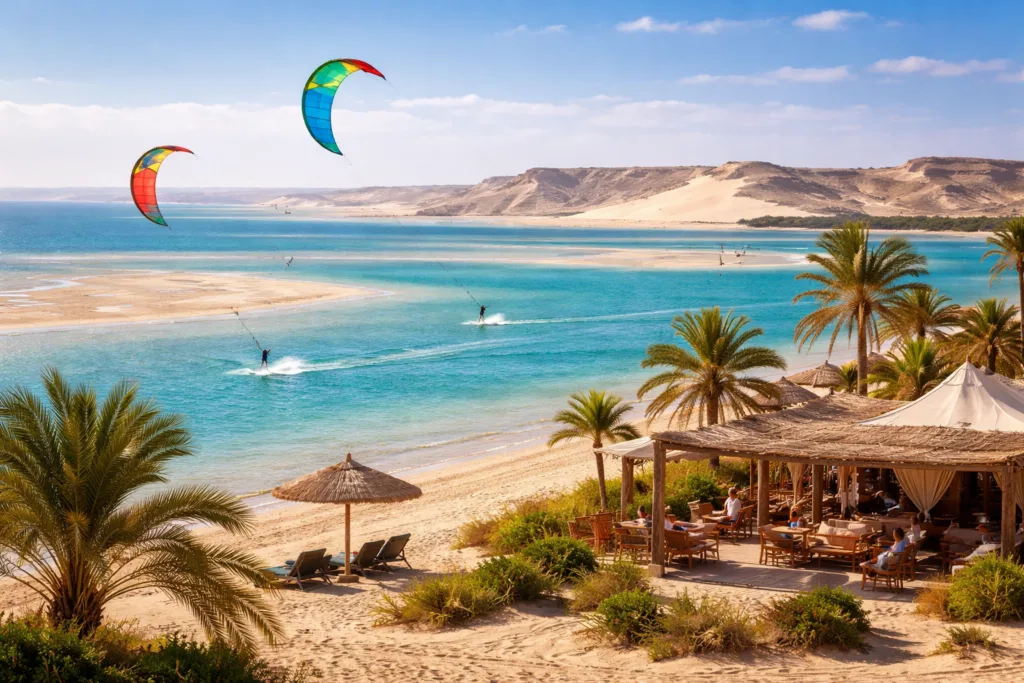
Dakhla feels made for travelers who want something different from Morocco’s classic city-and-medina route. Instead of rushing between monuments, you arrive here for space, light, wind, long shores, and a striking sense of contrast. For summer 2026, this southern Atlantic destination stands out as one of Morocco’s most refreshing warm-weather escapes, where the rhythm of the trip is shaped by the lagoon, the ocean, and the desert rather than by crowds and tight itineraries.
Set on a narrow peninsula in Morocco’s deep south, Dakhla gives you a rare meeting point between Saharan scenery and Atlantic energy. On one side, the lagoon feels calm, wide, and inviting for soft adventure and watersports. On the other, the ocean side is rawer, windier, and more dramatic. That dual identity is exactly what makes the destination special for international visitors planning a summer stay.
Dakhla also works well for different travel styles. Kitesurfers and wingfoilers come for the wind, but couples, photographers, food lovers, digital detox travelers, and anyone looking for a scenic break can enjoy it just as much. Even without a board, you can spend your days exploring the White Dune, taking a 4×4 desert outing, watching birds over the lagoon, tasting oysters and grilled fish, and ending each evening with one of the most atmospheric sunsets in Morocco.
| Key point | Quick takeaway |
|---|---|
| Best for | Travelers who want beaches, desert scenery, watersports, fresh seafood, and a slower coastal rhythm. |
| Why go now | The summer season 2026 is ideal for wind-based activities, long daylight, and scenic outdoor days. |
| Don’t miss | Dakhla Lagoon, White Dune, Dragon Island, Foum El Bouir, and a desert-lagoon excursion at sunset. |
| Ideal stay | 3 to 5 days for a first trip, longer if you are kitesurfing or want a true slow-travel reset. |
| Summer events | The International Film Festival of Dakhla in June and the Dakhla Downwind Challenge in August add extra atmosphere. |
| Good to know | Pack layers, sunglasses, and sun protection. Dakhla is sunny, but the breeze can make mornings and evenings feel cooler than expected. |
Why Dakhla Feels Different in Summer
Dakhla is not a typical beach city, and that is precisely its charm. It does not rely on busy promenades, dense nightlife districts, or classic resort-strip energy. Instead, it offers a landscape-driven experience. The scenery does most of the talking: a huge lagoon with changing colors through the day, bright sand, low desert horizons, Atlantic swell, and a sense of openness that makes even a short stay feel restorative.
Unlike inland Moroccan destinations where summer heat can dominate the day, Dakhla’s identity is shaped by the coast and the wind. The result is a destination that feels active rather than heavy. Mornings can be gentle and photogenic, afternoons are often full of motion on the water, and evenings settle into seafood dinners, tea, and soft desert light. Travelers who enjoy nature and atmosphere as much as “sightseeing” often end up finding Dakhla surprisingly memorable.
Another reason Dakhla stands out is the range of landscapes packed into one destination. The lagoon side is associated with flat-water sports, calm views, and iconic spots such as PK25. The ocean side, including places like Foum El Bouir, feels more rugged and surf-oriented. Around the peninsula, you also get access to the White Dune, Dragon Island, and wild stretches of sand that make the destination feel cinematic without trying too hard.
Top Experiences to Prioritize
1. Spend Real Time Around Dakhla Lagoon
The lagoon is the heart of a Dakhla stay. Even travelers who arrive for only a few nights usually find that most of their best moments happen around it: breakfast with a wide water view, a mid-morning walk on the sand, a boat outing, an afternoon lesson, or simply sitting still long enough to watch the light change. In summer 2026, this is still the experience that defines the destination most clearly.
The lagoon also gives Dakhla much of its visual identity. It is one of those places where you do not need a packed program to feel that the day was full. Water, sky, seabirds, soft sand, and low desert tones do a lot of the work. For photographers and travelers who love spacious coastal scenery, it is easily one of the strongest reasons to choose Dakhla over a more conventional Moroccan summer destination.
2. Try Kitesurfing, Wingfoiling, or a Beginner Session
Dakhla has built an international reputation around wind and watersports, and summer is one of the seasons when that reputation becomes immediately visible. You do not need to be an expert to take part. Many visitors come specifically because the destination offers lessons, beginner-friendly setups, and an atmosphere where spending time on or near the water feels natural. Even watching the action from shore can become one of the highlights of the trip.
For travelers who are curious but hesitant, Dakhla is a strong place to experiment. A short introductory lesson can turn the destination from “beautiful” into “personally memorable.” And for experienced riders, the appeal is obvious: long windy afternoons, a strong sports culture, and accommodation options that are built around getting on the water quickly and comfortably.
3. Explore the White Dune and Dragon Island
If you want Dakhla beyond the camps and lagoon edge, prioritize at least one guided excursion to the White Dune and the surrounding desert-and-water landscapes. This part of the experience shows why Dakhla feels so visually different from the rest of Morocco. The shapes are simple, the light is sharp, and the contrast between sand and sea is unforgettable.
This summer, these excursions remain one of the best ways to make the trip feel bigger than a single hotel stay. They break up the rhythm of the lagoon, offer stronger photo opportunities, and let first-time visitors understand the peninsula as a complete environment rather than just a kitesurfing base. If you only have a short stay, this is one of the smartest half-day or full-day additions you can make.
4. See the Ocean Side at Foum El Bouir
Many travelers understandably focus on the lagoon, but the ocean side deserves its own time slot. Foum El Bouir feels more exposed, more dramatic, and more Atlantic in mood. Even if you are not surfing, it is worth going for the scenery alone. The energy is different there: rougher water, wider horizons, and a stronger sense of Dakhla’s wild geography.
That contrast is part of the destination’s appeal. In the same trip, you can move from a calm lagoon atmosphere to a more powerful ocean setting, then back to a relaxed dinner by the water. Few places in Morocco give you such a clear feeling of multiple landscapes without requiring long internal transfers.
5. Slow Down for Food, Tea, and Sunset
Dakhla should not be treated only as a sports destination. It also rewards travelers who slow down. The region is associated with oysters, fresh fish, seafood lunches, and simple but memorable meals that feel right for the setting. Add Sahrawi tea culture, sea air, and late-day light, and you have a destination that can be deeply satisfying even for non-sporty visitors.
That is why Dakhla works well for couples and mixed-interest groups. One person can book a lesson, another can take a long walk, read, photograph the lagoon, or join a scenic excursion, and both can meet again at sunset feeling like they had a real day rather than a compromise.
Where to Stay in Dakhla This Summer
Choosing the right area matters in Dakhla because the feeling of the trip changes depending on where you sleep. Lagoon-side camps and resorts are best for travelers who want quick access to kitesurfing, wingfoiling, water views, and a self-contained stay. They are especially convenient if your main goal is to maximize time outdoors and minimize daily transport.
Staying in or near the city is often a better fit for shorter visits, travelers who want more flexibility with restaurants and errands, or visitors who plan to spend most of their days on excursions rather than on-site. It gives the trip a more urban base, while still allowing you to reach the lagoon and beaches by taxi or arranged transfer.
There is also a third option: more remote accommodation that leans into the “end of the world” feeling Dakhla can deliver so well. These places often suit honeymoon-style stays, quiet escapes, and travelers who want a digital-light trip with a strong sense of place. This summer, the smartest booking approach is to decide first whether you are coming primarily for sports, scenery, or a mix of both, then choose the base that matches that purpose.
What to Eat in Dakhla
Food in Dakhla is one of the easiest pleasures of the trip. The coastal setting naturally puts seafood at the center, and many visitors come away remembering oysters, grilled fish, and unfussy meals with very fresh ingredients. This is not the part of Morocco to expect heavy urban food scenes or endless restaurant hopping; instead, it is about enjoying what fits the landscape: seafood, simplicity, and relaxed meals with a view.
That said, Dakhla is not only about seafood. A good trip should also leave room for Sahrawi flavors, mint tea, and the slower social side of eating. Meals here often feel less like “going out” and more like extending the destination’s mood: open air, time to talk, and no need to rush. For many travelers, that quieter culinary identity becomes part of the reason Dakhla feels so distinct from Marrakech, Casablanca, or Agadir.
Summer 2026 Events in Dakhla
One of the best ways to make a Dakhla trip feel even more memorable is to time it around an event. Summer 2026 already gives travelers two particularly interesting windows: one cultural and one sports-driven.
- International Film Festival of Dakhla — June 6 to June 12, 2026: a strong option for travelers who want their coastal trip mixed with cinema, cultural programming, and a livelier city atmosphere.
- Dakhla Downwind Challenge — August 14 to August 20, 2026: a headline event for kitesurfing enthusiasts and for travelers who want to feel the destination’s outdoor identity at full intensity.
If your dates are flexible, these two moments can shape the tone of the trip in very different ways. June leans more cultural and eventful, while mid-August brings a more athletic, wind-focused energy. Either way, booking earlier than usual makes sense if you want the best choice of stays during event periods.
What Recent Summer Travelers Liked
To keep this guide grounded in real visitor experience, here is a short summary of what recent summer guests highlighted after staying in Dakhla during July and August. The recurring pattern is reassuring: visitors consistently mention the scenery, the warm welcome, the ease of accessing the kite spots, and the sense that Dakhla offers a genuine break from more crowded destinations.
A family traveler staying in July praised the relaxed atmosphere, professional staff, and easy access to the kite area, describing Dakhla as both restful and activity-friendly.
An August guest emphasized the unforgettable lagoon setting, the welcoming team, and the strong kitesurfing vibe, saying the whole stay felt warm, easy, and worth repeating.
Another July traveler highlighted beginner-friendly access to lessons, fresh food, comfortable rooms, and the feeling of being looked after rather than processed like a standard resort guest.
That kind of feedback matters because Dakhla is a destination people often choose for its atmosphere as much as for any single attraction. The combination of setting, hospitality, and simplicity comes up again and again, which is a strong sign for first-time visitors wondering whether the destination will feel worth the journey south.
Practical Information for Summer Travelers
How many days do you need?
For most first-time visitors, three to five days is the sweet spot. That gives you enough time to enjoy the lagoon properly, fit in a desert or dune excursion, experience the ocean side, and still leave room for the slower rhythm that makes Dakhla so appealing. If you are kitesurfing every day, a week or more makes even more sense.
What should you pack?
Pack for sun and wind rather than for heavy inland heat. Think light clothing for the day, but add a layer for breezy mornings, boat trips, and evenings. Sunglasses, a cap, reef-safe sunscreen, sandals, and a light jacket or overshirt all make sense. If watersports are on your plan, check with your camp or school before bringing gear, since many places offer rentals and lessons on site.
How do you get around?
Most visitors keep things simple in Dakhla: airport transfer, taxis, arranged excursions, and hotel shuttles when available. Because many of the most desirable stays are outside the city, it helps to think about transport before arrival. If your plan is mostly camp-based with a few excursions, you may not need a rental car at all.
Is summer the only good season?
No. Summer is excellent for travelers who like wind, outdoor movement, and long bright days, but Dakhla also appeals outside peak summer. If you want a broader seasonal comparison before booking, see our guide on the best time to visit Morocco.
Conclusion
Dakhla is one of those destinations that feels bigger once you arrive than it does on a map. It is not trying to compete with Morocco’s imperial cities or classic resort hubs. Its strength is different: space, contrast, wind, sea, desert light, and the rare feeling that a trip can be both active and peaceful at once. That is what makes it such a compelling choice for international travelers.
If Dakhla is on your radar for summer 2026, the best approach is simple: stay long enough to slow down, give the lagoon more than a quick glance, and leave room for both adventure and stillness. Then, before you go, enter your email address in the newsletter field at the bottom of this page to subscribe for more Morocco travel updates, seasonal guides, and trip-planning inspiration.
FAQ
Is Dakhla worth visiting in summer 2026?
Yes. Dakhla is one of Morocco’s strongest summer picks for travelers who want wind-based watersports, wide-open scenery, and a calmer atmosphere than the country’s busier urban destinations. It is especially appealing if you enjoy the idea of combining lagoon time, desert excursions, seafood, and a slower rhythm.
What are the top things to do in Dakhla during summer?
The best summer experiences include spending time around Dakhla Lagoon, trying kitesurfing or wingfoiling, visiting the White Dune and Dragon Island, seeing the ocean side at Foum El Bouir, and making time for seafood meals and sunset views. Even non-kitesurfers can build a very satisfying trip here.
How many days should I spend in Dakhla?
Three to five days is a very good first stay. That gives you enough time to experience the lagoon, fit in at least one major excursion, and enjoy the destination’s slower coastal mood. Travelers focused mainly on kitesurfing often stay longer.
Is Dakhla only for kitesurfers?
No. Kitesurfing is one of Dakhla’s signature draws, but the destination also suits couples, photographers, food lovers, and travelers who simply want a scenic break. The lagoon, dunes, beaches, wildlife, and sunset atmosphere make it enjoyable even if you never book a lesson.
What events are happening in Dakhla in summer 2026?
The two standout summer events already on the radar are the International Film Festival of Dakhla from June 6 to June 12, 2026, and the Dakhla Downwind Challenge from August 14 to August 20, 2026. If your dates match either event, expect a more animated atmosphere than usual.
What should I pack for a Dakhla summer trip?
Bring light daytime clothing, swimwear, sunglasses, sunscreen, and a light outer layer for windy mornings and evenings. Dakhla’s summer mood is sunny and beach-oriented, but the breeze can make the destination feel cooler than travelers expect, especially near the lagoon and ocean.
When is the best time to visit Dakhla if I am still comparing seasons?
Summer is great for outdoor travelers and wind lovers, but it is not the only option. If you want a broader overview before booking, read our guide on the best time to visit Morocco to compare Dakhla with other destinations and seasons.