
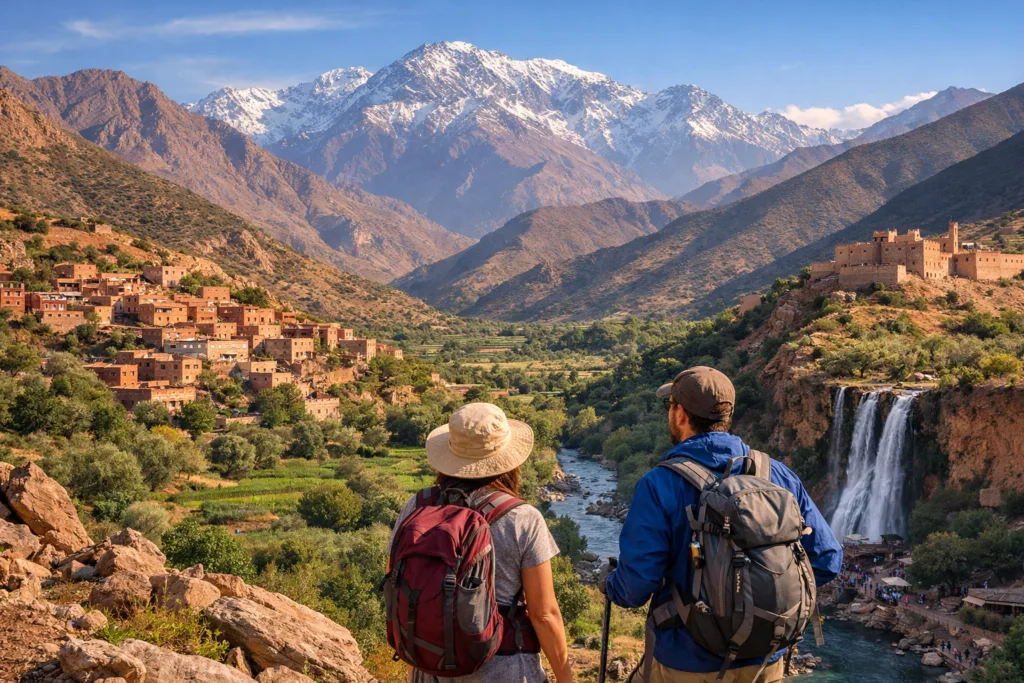
For international travelers looking beyond Morocco’s beaches and imperial cities, the Atlas Mountains offer one of the country’s most rewarding escapes in summer 2026. Rising south and east of Marrakech in a dramatic sweep of peaks, valleys, rivers, orchards, terraced fields, and Amazigh villages, this mountain world is where Morocco feels both grand and deeply human. In the hotter months, the Atlas becomes especially appealing because altitude brings fresher air, cooler mornings, and a slower rhythm than the lowland cities.
This is the season for scenic walks above walnut groves, riverside lunches in Ourika, high-mountain viewpoints around Oukaïmeden, and multi-day treks from Imlil toward Mount Toubkal. It is also an excellent time to combine nature with culture: village guesthouses, weekly souks, mountain food, artisan traditions, and road trips through kasbah country all feel vivid and memorable at this time of year.
If you want Morocco with more space, more stars, and more contact with local life, the Atlas Mountains deserve a prime place in your itinerary. Below, you will find the best places to visit, the top outdoor activities, practical planning advice, a summer-focused events section, and updated FAQs tailored to travelers preparing a 2026 mountain trip.
| Quick point | What to know |
|---|---|
| Why go now | The summer season 2026 is ideal for cooler high-altitude escapes, trekking, village stays, waterfalls, and road trips from Marrakech. |
| Best bases | Imlil for hiking, Ourika for easy day trips, Oukaïmeden for high-mountain scenery, and the Dades-Todra corridor for dramatic drives and canyon walks. |
| Top attractions | Mount Toubkal area, Berber villages, Aït Benhaddou, Ouzoud Falls, Ourika Valley, Dades Valley, and Todra Gorge. |
| Best activities | Day hikes, multi-day trekking, trail running, family walks, scenic drives, cultural visits, riverside lunches, and stargazing. |
| Good for | Couples, active travelers, families, photographers, road-trippers, and anyone wanting a quieter contrast to city sightseeing. |
| Plan ahead | Book guides and mountain stays early, pack layers, start hikes early, and keep some cash for villages and souks. |
Why the Atlas Mountains Are One of Morocco’s Smartest Summer Escapes
Many travelers first picture Morocco through the lens of medinas, deserts, and Atlantic beaches, yet the Atlas Mountains reveal another side of the country entirely. Here, the landscapes feel greener, the air often feels lighter, and the pace of travel becomes more immersive. Instead of rushing between monuments, you spend your days moving through valleys, stone villages, orchards, footpaths, and panoramic roads.
The Atlas also gives you flexibility. You can treat it as a half-day or full-day escape from Marrakech, or make it the central focus of a longer itinerary. Adventurous travelers can plan summit routes and demanding treks, while slower-paced visitors can stay in a guesthouse with mountain views, visit a local market, enjoy a tagine lunch, and return with a much deeper sense of Moroccan rural life.
The easiest gateway remains Marrakech, with many of the most accessible High Atlas routes reached after a 90-minute drive from Marrakesh. That makes the region especially attractive for first-time visitors who want a true mountain experience without complicated logistics.
Best Attractions in the Atlas Mountains for International Visitors
Imlil and the Mount Toubkal Area
Imlil is the classic base for exploring the High Atlas and one of the best places to feel the mountain atmosphere immediately. This village is surrounded by trails, terraces, walnut trees, mule paths, and viewpoints that open onto broad valleys and high ridges. It is also the main starting point for travelers who want to tackle Mount Toubkal or enjoy shorter scenic walks with a guide.
The area works well for both serious hikers and casual visitors. You can arrive for a day, walk to a nearby waterfall, share mint tea in a family-run house, and return to Marrakech by evening. Or you can stay longer and use Imlil as a base for village-to-village walks and higher mountain adventures. The region remains one of the best choices for hikers and trekkers who want scenery, culture, and manageable logistics in one destination.
Ourika Valley and Setti Fatma
For travelers who prefer softer adventure, the Ourika Valley is a classic choice. The drive itself is part of the pleasure: roadside stalls, mountain cafes, terraced slopes, and villages climbing the hillsides. In Setti Fatma, visitors can enjoy short hikes, riverside rest stops, and cool breaks that feel especially welcome this summer when city temperatures rise.
Ourika is especially good for families, first-time visitors, and travelers who want nature without committing to a strenuous trek. It also pairs beautifully with cultural stops, including women’s cooperatives, pottery workshops, and lunch terraces above the river.
Oukaïmeden
Known in winter for skiing, Oukaïmeden transforms in warm weather into an open high-altitude landscape of trails, plateaus, and wide views. In summer, it feels spacious and far from the bustle below. Even visitors who are not trail runners or dedicated trekkers appreciate the sense of altitude, the changing light, and the broad mountain horizons.
It is one of the most underrated mountain areas for travelers who want a different side of Morocco: less crowded, more elemental, and visually striking. Photographers, hikers, and road-trippers often find it one of the most memorable mountain stops of their journey.
Aït Benhaddou and the Kasbah Route
Although many visitors know Aït Benhaddou as a UNESCO-listed ksar and film location, it also belongs naturally in an Atlas-focused itinerary because the road there delivers some of Morocco’s most cinematic mountain scenery. The route across the Tizi n’Tichka corridor links mountain landscapes with fortified architecture, palm groves, and desert-edge atmosphere.
This stop is ideal for travelers who love history, architecture, and road trips as much as hiking. Pairing Aït Benhaddou with Telouet or an overnight kasbah stay creates a fuller mountain experience that blends nature and heritage beautifully.
Dades Valley and Todra Gorge
For dramatic geology, the Dades and Todra areas are among the Atlas region’s biggest visual rewards. Dades is famous for winding roads, layered rock formations, and kasbah scenery, while Todra Gorge impresses visitors with its vertical canyon walls and walking routes. These areas are excellent for travelers who want mountain grandeur without necessarily aiming for a summit.
They also appeal to independent travelers and photographers because the landscapes change constantly as you move: river valleys, cliffs, mountain villages, and desert-toned rock all in one route.
Ouzoud Waterfalls
Ouzoud is one of the easiest natural spectacles to recommend to a broad audience. The waterfalls, the red cliffs, the greenery, and the walking paths make it a visually rewarding day trip, especially for travelers who want a refreshing contrast to urban sightseeing. Cafes, viewpoints, and short boat rides make the area accessible to many types of visitors.
It is also one of the better options for visitors who are not strong hikers but still want a strong nature experience in the wider Atlas orbit.
Top Outdoor Activities to Plan in the Atlas Mountains
Day Hiking and Village Walks
The most accessible mountain activity is a guided day hike. Around Imlil, Ourika, and Oukaïmeden, routes can be adapted to your fitness level and interests. Some focus on views and waterfalls; others emphasize village life, food, and culture. For many international tourists, this is the sweet spot: active but not overwhelming, authentic without being logistically difficult.
Mount Toubkal Treks
Climbing Mount Toubkal remains the Atlas Mountains’ signature adventure. It is not a casual stroll, but for fit travelers with proper pacing, suitable gear, and a mountain guide, it can become the defining memory of a Morocco trip. The sense of achievement is matched by the scale of the views and the atmosphere of the refuge-and-summit rhythm. In summer 2026, expect strong demand for guided departures, especially from travelers building active itineraries around Marrakech.
Trail Running and Mountain Challenges
The Atlas is increasingly attractive to runners and endurance travelers. Oukaïmeden and nearby mountain zones provide terrain that is scenic, demanding, and very different from standard road-race experiences. Even if you are not entering a race, trail-running culture adds energy to the region and can shape your itinerary if you enjoy active travel communities.
Scenic Road Trips
Not every mountain experience has to happen on foot. Some of the Atlas’s greatest pleasures come from driving through passes, pausing at lookouts, stopping for tea, and discovering villages and kasbahs at your own pace. Travelers who prefer comfort, photography, and layered landscapes often find that the best Atlas itinerary mixes short walks with unforgettable road sections.
Stargazing and Slow Evenings
Once the day-trippers leave and evening settles over the mountains, the Atlas reveals another strength: stillness. A terrace dinner, a quiet village stay, and a dark sky full of stars can become the most luxurious part of the trip. This side of the mountains is especially appealing to couples and slow travelers who want atmosphere rather than a checklist.
Summer 2026 Events In and Around the Atlas Mountains
Because the Atlas Mountains cover a broad region rather than one single city, the most useful event planning combines mountain-based events with major summer happenings in Marrakech, the main gateway for Atlas excursions. Here are the most relevant dates and periods to keep on your radar.
- July 2 to July 6, 2026 – National Festival of Popular Arts in Marrakech: an excellent addition for travelers pairing city nights with mountain days, with folklore, music, dance, and a strong cultural atmosphere before or after an Atlas stay.
- July 4 to July 5, 2026 – Trail Atlas Oukaimeden: one of the clearest mountain events on the calendar, with multiple race formats in a high-altitude setting that showcases the Atlas at its most athletic and photogenic.
- July 30, 2026 – Feast of the Throne: a national holiday celebrated across Morocco, including mountain towns and access cities. Expect festive energy, local gatherings, and a more animated atmosphere in public spaces.
- August 2026 – village cultural celebrations and local summer gatherings: smaller mountain communities often host seasonal festivities, music, and communal events in August, though exact public dates for many of these local celebrations are typically announced later and vary by locality.
If you want your trip to balance outdoor activity with Moroccan culture, these dates are worth watching. They also make it easier to plan a hybrid itinerary: a few days in Marrakech, followed by a guesthouse stay in the Atlas, or the reverse.
What Summer Travelers Consistently Praise About the Atlas
One of the strongest signs of quality in any destination is what real visitors remember after they return home. Recent summer travelers consistently praise three things about the Atlas experience: the scenery, the warmth of local hospitality, and the value of going with a knowledgeable local guide rather than treating the mountains as a rushed photo stop.
Travelers repeatedly describe the views around Imlil and the High Atlas as stunning, breathtaking, and worth every minute of the journey from Marrakech.
Families visiting in early summer often highlight guides who explain village life, local customs, mountain agriculture, and Amazigh culture in a way that makes the day feel personal rather than packaged.
Visitors also remember the human details: mint tea in a family home, lunch with mountain views, friendly hosts, and the sense that the Atlas offers real contact with people as well as landscapes.
That feedback matters because it points to how to plan well. Choose a route that fits your level, leave early, and prioritize a guide or host with local roots. The Atlas is beautiful on its own, but it becomes far richer when someone helps you read the villages, the terraces, the food, and the history around you.
Practical Information for Planning an Atlas Mountains Trip
Best Time and Daily Rhythm
The mountains remain one of Morocco’s most pleasant warm-weather destinations, but timing still matters. Start hikes early, keep midday hours lighter, and reserve the afternoon for long lunches, scenic drives, or terrace rest. For broader seasonal comparisons, see these times to visit Morocco before finalizing your route.
What to Pack
- Breathable clothing for daytime and a warm extra layer for cool evenings.
- Good walking shoes or hiking boots with grip.
- Sun protection: hat, sunglasses, sunscreen, and refillable water bottle.
- Cash in dirhams for villages, tips, small cafes, and local purchases.
- A small daypack for water, snacks, camera, and extra layers.
How Long to Stay
A day trip works for a first taste, but the Atlas rewards at least one overnight stay. Two to three nights is ideal for most international tourists because it allows time for one active day, one cultural or scenic day, and one slower evening under the stars. Longer stays make sense for trekkers, photographers, and travelers combining several valleys.
Where to Stay
- Imlil: best for trekking, guided walks, and Toubkal access.
- Ourika: good for easier nature trips and day visitors from Marrakech.
- Oukaïmeden area: strong for altitude, views, and an offbeat mountain feel.
- Dades or Todra corridor: ideal for road trips and dramatic canyon landscapes.
Useful Travel Tips
- Book mountain guides and popular guesthouses in advance.
- Respect village privacy when photographing people or homes.
- Do not underestimate altitude and uphill walking, even on “easy” routes.
- Carry water, especially on exposed trails and scenic drives.
- Use Marrakech as your main gateway if you want the simplest logistics.
Conclusion
The Atlas Mountains are one of Morocco’s most complete travel experiences: dramatic but accessible, adventurous but welcoming, and rich in both nature and culture. You can come for a day hike, a waterfall, a race weekend, a kasbah road trip, or a serious summit goal, and still leave feeling that there is more to discover.
For travelers planning an escape in summer 2026, the Atlas offers exactly the kind of balance many people want from Morocco: cooler landscapes, meaningful encounters, memorable food, and scenery that feels far removed from ordinary travel routines.
And when you are ready to turn ideas into a real itinerary, do not leave without subscribing to our newsletter by entering your email address in the field at the bottom of the page. It is the easiest way to receive fresh Morocco travel inspiration, practical advice, and destination updates before your trip.
FAQ
Is summer 2026 a good time to visit the Atlas Mountains?
Yes. The Atlas Mountains are one of the smartest warm-weather escapes in Morocco because higher elevations are generally more comfortable than the lowland cities. Early starts and overnight stays make the experience even better.
What are the best places to see in the Atlas Mountains in summer?
Imlil, the Mount Toubkal area, Ourika Valley, Oukaïmeden, Aït Benhaddou, Dades Valley, Todra Gorge, and Ouzoud Waterfalls are among the strongest choices for international tourists.
Do I need a guide for the Atlas Mountains?
For casual visits, not always. But for longer hikes, mountain routes, and especially Mount Toubkal, hiring a local guide is strongly recommended for safety, logistics, and cultural insight.
Are there any summer 2026 events linked to the Atlas region?
Yes. Notable dates include the National Festival of Popular Arts in Marrakech from July 2 to July 6, 2026, Trail Atlas Oukaimeden from July 4 to July 5, 2026, and the nationwide Feast of the Throne on July 30, 2026. Smaller local mountain celebrations are often announced later.
How far are the Atlas Mountains from Marrakech?
Many of the most accessible High Atlas areas can be reached in about 90 minutes from Marrakech, which makes the region ideal for day trips as well as longer stays.
What should I pack for an Atlas Mountains trip in summer?
Pack light daytime clothing, a warmer layer for the evening, strong walking shoes, sun protection, water, and some cash in Moroccan dirhams for village purchases and small local services.