
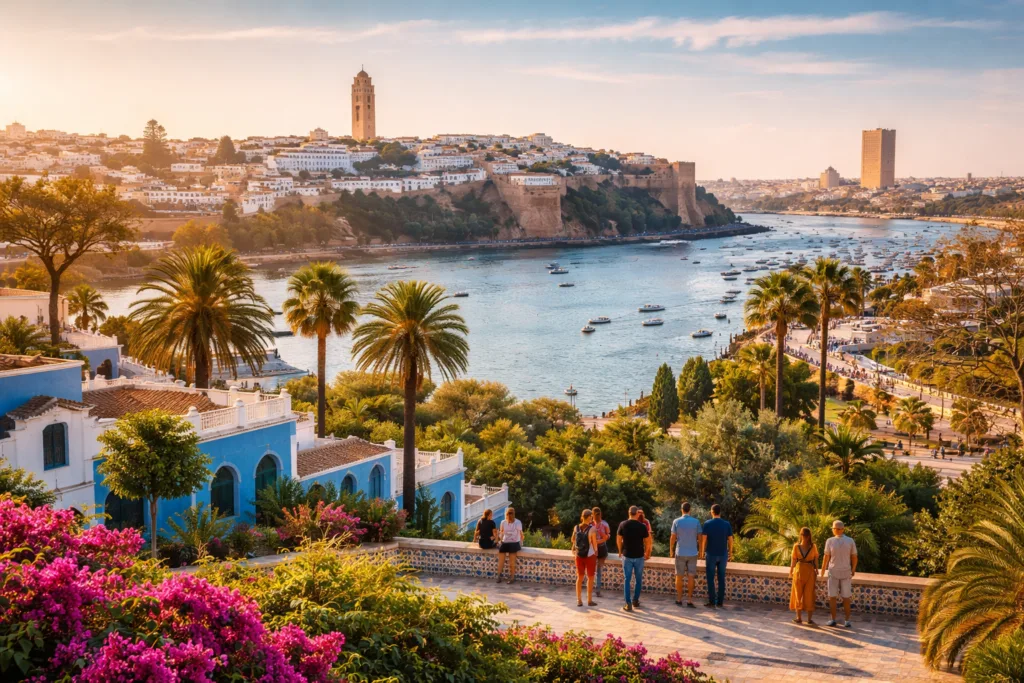
Rabat, Morocco’s capital, is one of the smartest choices you can make for summer 2026 if you want a Moroccan city break that blends heritage, elegance, and a gentler pace than some of the country’s busier tourist hubs. Set between the Atlantic and the Bouregreg River, Rabat gives you monumental history, walkable neighborhoods, breezy evenings, leafy gardens, and a cultural calendar that can turn an already memorable stay into something special.
What makes Rabat stand out is balance. You can spend the morning at the Hassan Tower, drift through the blue-and-white lanes of the Kasbah of the Udayas by lunch, relax in a garden café in the afternoon, and end the day with a riverside stroll, a museum visit, or a concert atmosphere if festival season is in full swing. For international travelers who want a polished, authentic, and highly manageable Moroccan destination, Rabat deserves far more than a quick stop.
| Quick point | Why it matters |
|---|---|
| Best for | Travelers looking for a calmer imperial-city experience in summer 2026, with history, culture, gardens, and easy urban mobility. |
| Top highlights | Hassan Tower, Mausoleum of Mohammed V, Kasbah of the Udayas, Rabat Medina, Chellah, Bouregreg waterfront, and the Mohammed VI Museum. |
| Summer vibe | Sea breeze, long daylight, lively evenings, and a city that feels cultured rather than chaotic. |
| Key event | Mawazine is currently listed for June 19–27, 2026, making early planning a smart move. |
| Ideal stay | 2 to 3 nights for the essentials, 4 nights if you want museums, festivals, cafés, and easy side trips. |
| Good to know | Rabat is highly walkable in central areas and also easy to navigate by tram, petit taxi, and train. |
Why Rabat Feels Different from Other Moroccan Cities
Rabat is a capital, but it rarely feels overwhelming. That is part of its charm. The city combines political importance and everyday local life with wide avenues, protected heritage zones, and a coastal rhythm that softens the pace of sightseeing. It is not trying to dazzle you every second. Instead, it wins you over gradually with atmosphere, detail, and comfort.
Its identity is also unusually layered. Rabat is famous for the way its Arabo-Muslim heritage and 20th-century urban planning coexist, which is one reason the city was recognized by UNESCO. You feel that blend everywhere: in monumental gates, formal avenues, gardens, civic buildings, ocean viewpoints, and neighborhoods where old walls and modern life meet naturally.
For travelers planning this summer, that balance is a real advantage. Rabat can deliver history and beauty without the same sensory intensity you may encounter in Morocco’s busiest medinas. It suits couples, solo travelers, families, culture lovers, and first-time visitors who want a softer landing in Morocco before continuing to cities like Fes, Chefchaouen, or Marrakech.
Top Attractions to Prioritize in Rabat
Hassan Tower and Mausoleum of Mohammed V
No Rabat itinerary feels complete without the Hassan Tower complex. The tower itself is one of Morocco’s most recognizable landmarks, and the open esplanade around it gives the site a sense of space that works especially well in warm weather. Nearby, the Mausoleum of Mohammed V adds refinement and symbolism, with its immaculate craftsmanship and ceremonial atmosphere. Together, they create one of the capital’s most photogenic and historically meaningful stops.
Come in the morning for softer light and a quieter visit, or near sunset when the site takes on a warmer tone. This is one of the clearest examples of why Rabat works so well in the summer season 2026: even a major monument can still feel breathable and pleasant when you plan your hours well.
Kasbah of the Udayas and Andalusian Gardens
The Kasbah of the Udayas is Rabat at its most romantic. White walls, blue accents, stone gates, viewpoints over the Atlantic, and calm lanes make it one of the easiest places in the city to fall into a slower rhythm. It is the kind of place where you do not need a strict checklist. You wander, pause, look, and enjoy the shift in mood.
Within or beside the kasbah area, the Andalusian Gardens provide one of the most pleasant breaks in the city center. They are not huge, but that is part of the appeal. You can enjoy shade, greenery, and a quieter interlude between larger monuments. For many visitors, this pocket of calm becomes one of the most memorable parts of Rabat rather than just a secondary stop.
Rabat Medina and Rue des Consuls
Rabat’s medina does not feel identical to the medinas of Marrakech or Fes. It is more approachable for many international travelers, especially those who want shopping, street life, and traditional character without constant intensity. That does not mean it lacks soul. You still get narrow lanes, local commerce, artisan items, and a strong sense of place. It simply tends to feel more navigable.
Rue des Consuls is particularly worth your time if you enjoy traditional crafts and a historic commercial atmosphere. It is a good area to browse without rushing, and it helps explain why Rabat can work so well for visitors who want culture without pressure.
Chellah Necropolis
Chellah is one of Rabat’s most atmospheric sites. Part archaeological ruin, part garden, part sanctuary of memory, it feels very different from the formal grandeur of Hassan Tower. Storks, old walls, layered history, and a more contemplative setting make this a strong stop for travelers who want depth rather than just postcard views.
If you enjoy places that feel slightly removed from the surrounding city, Chellah can be a highlight. It also pairs beautifully with Rabat’s broader identity as a capital where heritage is not sealed away from daily life but woven into it.
The Modern Side: Museum, Avenues, and Urban Comfort
Rabat is not only about monuments. The Museum of Modern and Contemporary Art adds a different dimension to the city and is a smart inclusion if you want to mix heritage with present-day Moroccan creativity. The broader Ville Nouvelle also reveals a more spacious, modern capital, where cafés, bookshops, institutions, and wide streets make the city easy to enjoy between major sightseeing stops.
The Royal Palace district is worth seeing from the outside for its ceremonial setting and scale, even though it is not a traditional interior visit for tourists. Add in the Bouregreg waterfront and tram network, and you start to understand why Rabat often feels smoother to navigate than visitors expect from a capital city.
Green Spaces, River Walks, and the Atlantic Edge
One of Rabat’s underappreciated strengths is how much breathing room it offers. Official tourism materials regularly highlight the city’s gardens, coastline, and festival life, and that combination is exactly what makes the destination attractive in the warmer months. You are not boxed into monuments all day. You can alternate between history and open-air downtime.
The Bouregreg riverfront is especially good in late afternoon and evening, when the light improves and temperatures begin to drop. A walk here gives you bridges, boats, views toward Salé, and a more contemporary side of the capital. The Atlantic edge of Rabat is also part of the city’s appeal, though many visitors use the coast more for sea views, promenades, and breeze-filled pauses than for a full resort-style beach day.
If your ideal urban trip includes gardens, occasional shade, outdoor cafés, and sunset walks rather than nonstop sightseeing, Rabat feels particularly well suited to summer 2026.
Events to Watch in Rabat During Summer 2026
Rabat’s summer calendar often becomes one of the biggest reasons to visit the city rather than simply pass through it. Some dates are already appearing publicly, while other programs are usually finalized closer to the season. Here are the key events and cultural rhythms to keep on your radar.
| Event | Timing | Why it matters |
|---|---|---|
| Mawazine – Rhythms of the World | June 19–27, 2026 | The city’s flagship festival and one of Morocco’s biggest cultural draws, with performances across major Rabat venues and a citywide energy boost. |
| Open-air cultural programming across Rabat venues | July 2026 | Public summer listings point to outdoor concerts, performances, and cultural evenings across the capital, with detailed schedules usually announced closer to the month. |
| Summer concerts at Théâtre Mohammed V and Bouregreg venues | July and August 2026 | Rabat usually keeps its cultural rhythm going after the major June festival window, so travelers staying flexible may catch live music or stage performances. |
| Football atmosphere and public screenings | June and July 2026 | With the World Cup running in that period, Rabat is likely to have an especially animated sporting mood even when match venues are abroad. |
If you want Rabat at its most animated, planning around Mawazine is the clearest strategy. If you prefer a quieter cultural city break, come after the festival rush and keep an eye on theatre, museum, and waterfront programming as summer listings continue to appear.
What Other Summer Visitors Say About Rabat
A destination page becomes more trustworthy when it reflects not only guidebook highlights but also the lived impressions of recent travelers. Summer feedback from visitors to Rabat is notably consistent in a few areas, and that matters if you are deciding whether the capital deserves space in your Morocco itinerary.
- The Kasbah of the Udayas keeps showing up as a must-do. Recent summer visitors describe it as the kind of place that is easy to enjoy at a slow pace, especially for a scenic walk with ocean views and a relaxed atmosphere.
- Hassan Tower feels both monumental and accessible. Travelers often praise the openness of the site, the beauty of the columned esplanade, and the fact that it remains enjoyable even when other visitors are around.
- Rabat’s historic core is often seen as easier to handle than busier Moroccan medinas. Visitors regularly mention that strolling and browsing here can feel calmer, more comfortable, and more approachable for first-time travelers.
- The Andalusian Gardens get strong praise for peace and beauty. Several visitors highlight them as a quiet, photogenic break in the middle of the city and a good place to reset between more historic stops.
That combination tells you something important: Rabat is not only impressive on paper. It tends to work well in real travel conditions too. The city consistently earns praise for being scenic, manageable, and rewarding without feeling exhausting. That is a major reason to consider it for a summer stay instead of treating it as a quick transit stop.
Practical Information for Visiting Rabat in Summer
How Many Days Should You Stay?
Two full days is enough for a satisfying first introduction to Rabat. Three days is better if you want to include museums, longer café breaks, Chellah, and a slower pace. Add a fourth day if you want to combine the city with Salé, nearby coastal time, or festival evenings.
Getting Around Rabat
Rabat has one of the easiest urban transport setups in Morocco for travelers. The tram is practical, petit taxis are widely available, and central sightseeing areas are reasonably walkable if you break up your day. The train connection is also useful if you are arriving from Casablanca, Tangier, or Kenitra. In the hottest part of the day, mixing short taxi rides with walking is often the smartest approach.
Where to Stay in Rabat
Rabat offers everything from traditional riads to modern hotels, and your best base depends on the kind of trip you want. Stay near the medina or kasbah area if atmosphere matters most. Choose the newer districts if you prefer wider streets, business-class comfort, and easier access by car. If you are visiting during a festival week, book early and expect more competition for well-located rooms.
What to Wear and How to Plan Your Days
Light, breathable clothing works best, but Rabat is still Morocco’s capital, so modest and respectful outfits are the safest choice in heritage areas and public institutions. Comfortable walking shoes are essential, sunglasses are useful, and evening layers can still help when the Atlantic breeze picks up. Plan monuments and exposed areas earlier in the day, then leave riverfront walks, gardens, or cultural evenings for later hours.
Easy Add-Ons from Rabat
Salé is the obvious short extension and gives you a quick contrast across the river. Casablanca is also simple to reach by train if you want a larger Atlantic-city comparison. Travelers who want more coast can look beyond central Rabat for a more dedicated beach outing, while those focused on culture can keep the capital as a polished base before heading inland.
Why Rabat Deserves a Place in Your Morocco Itinerary
Some Moroccan cities impress immediately with intensity. Rabat impresses with confidence, balance, and refinement. It gives you major monuments without sensory overload, heritage without stiffness, and a modern capital feel without losing Moroccan identity. That mix is rare, and it is exactly why the city can surprise travelers who arrive with modest expectations.
For couples, Rabat offers romance in its gardens, viewpoints, and evening walks. For first-time visitors, it offers structure and ease. For repeat travelers, it offers a more lived-in and cultured side of Morocco that becomes more rewarding the longer you stay. And for anyone looking at this summer with festival energy in mind, Rabat can turn into one of the smartest bases in the country.
Conclusion
Rabat is one of Morocco’s most complete city destinations, and for summer 2026 it makes a particularly strong case for itself. You get UNESCO-recognized heritage, landmark architecture, a manageable medina, gardens, waterfront atmosphere, and the possibility of timing your stay around major cultural programming. Whether you stay for two nights or build a longer capital-city break, Rabat offers a polished introduction to Morocco that feels both authentic and refreshingly balanced.
Before you leave this page, enter your email address in the newsletter field at the bottom so you can receive more Morocco travel tips, destination updates, and practical ideas for planning your trip with confidence.
FAQ
Is Rabat worth visiting in summer 2026?
Yes. Rabat is one of the best Moroccan city breaks for summer 2026 if you want culture, history, gardens, and Atlantic air without the intensity of a more crowded medina destination.
How many days do you need in Rabat in summer 2026?
Two full days cover the essentials well, but three days is ideal if you want to add museums, riverfront time, Chellah, and a slower café-and-garden rhythm.
What are the top attractions in Rabat for a summer visit?
The main priorities are Hassan Tower, the Mausoleum of Mohammed V, the Kasbah of the Udayas, the Andalusian Gardens, Rabat Medina, Chellah, and the Mohammed VI Museum of Modern and Contemporary Art.
What event should travelers watch for in Rabat in summer 2026?
Mawazine is the standout event and is currently listed for June 19 to June 27, 2026. July and August cultural schedules are usually announced more gradually, so check closer to your travel dates for concerts and performances.
Is Rabat easy to walk around for tourists?
Yes, many of Rabat’s main areas are easy to explore on foot, especially around the historic center and major monuments. The tram and petit taxis make it even easier to move between districts.
What should you wear in Rabat during summer?
Light and breathable clothes are best, but respectful and modest outfits are still recommended, especially in religious, formal, or heritage settings. Comfortable shoes, sun protection, and a light evening layer are also useful.