
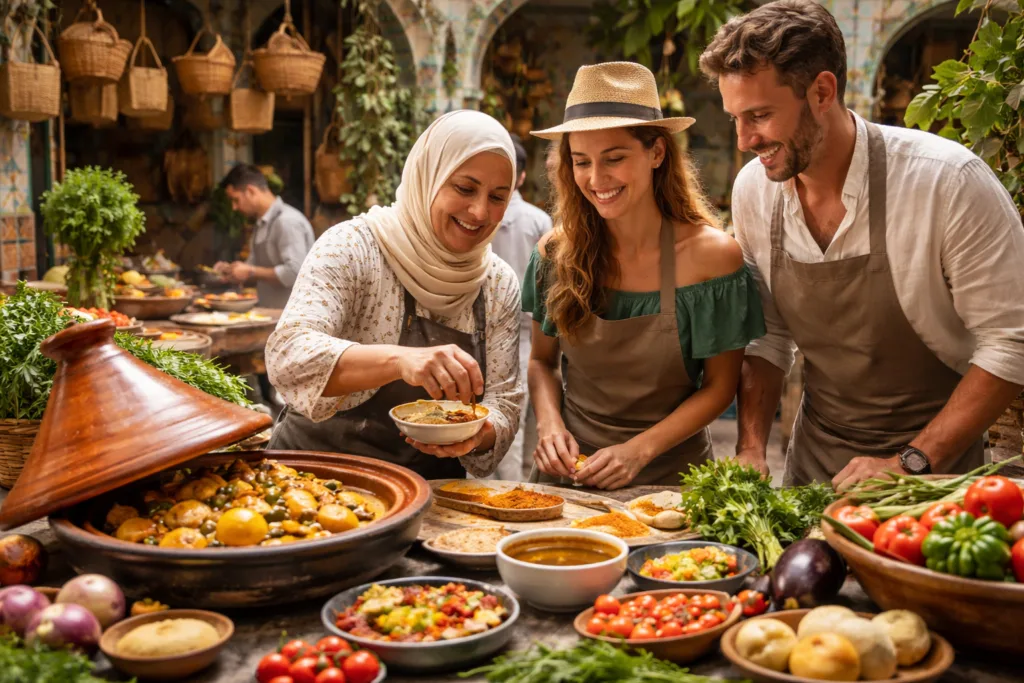
There are many ways to discover Morocco, but few feel as vivid, generous, and memorable as learning to cook its food. In summer 2026, a Moroccan cooking class is more than a pleasant activity between sightseeing stops: it is a hands-on way to understand the country’s hospitality, ingredients, rhythms, and traditions through the people who keep them alive every day. Instead of simply ordering a tagine in a restaurant, you can walk through a market, choose the produce yourself, learn how spices are balanced, and sit down to enjoy a meal you helped prepare.
For international travelers, this kind of experience offers the best of both worlds. It feels immersive without being intimidating, practical without losing its sense of wonder, and social without requiring advanced cooking skills. Many classes are designed for beginners and combine food, storytelling, cultural context, and warm interaction with local hosts. Whether you join a workshop in a riad kitchen in Marrakech, a family home in Fez, or a rural setting near the Atlas Mountains, you are not just following a recipe. You are entering a living tradition shaped by Amazigh, Arab-Andalusian, Jewish, and Mediterranean influences.
That is what makes a Moroccan cooking experience so rewarding: every step carries meaning. The preserved lemons are not just a flavoring; they represent patience and preservation. Mint tea is not just a drink; it is part of welcome and ritual, as anyone curious about mint tea quickly discovers. A single class can teach you how to prepare a comforting tagine, shape msemen by hand, and understand why meals in Morocco are often shared, unhurried, and deeply tied to place. For travelers who want their itinerary to include more than monuments and photos, this culinary journey adds depth, pleasure, and a memory you can recreate long after the trip ends.
| Key Point | What to Know |
|---|---|
| Why it matters | A cooking class in summer 2026 combines food, culture, storytelling, and a shared meal in one memorable activity. |
| Best places | Marrakech, Fez, Essaouira, and Atlas villages are among the most rewarding settings. |
| Typical format | Many classes include a souk visit, ingredient selection, a step-by-step workshop, tea, and a sit-down meal. |
| Dishes you may learn | Tagine, couscous, salads, briouats, msemen, harira, and mint tea are common favorites. |
| Who it suits | Couples, families, solo travelers, food lovers, and complete beginners. |
| Smart booking tip | Choose a class that includes a market visit, accommodates dietary needs, and keeps group size small enough for hands-on learning. |
Why a Moroccan Cooking Class Deserves a Place on Your Itinerary
Morocco is already one of the most flavorful destinations in North Africa, but tasting its cuisine and understanding it are not the same thing. A cooking class closes that gap. It allows you to move from passive enjoyment to active discovery. You begin to notice how spice is layered rather than made overpowering, why texture matters so much in pastries and salads, and how hospitality is built into the meal itself from the welcome tea to the final shared table.
This kind of activity also fits naturally into a travel schedule. Unlike some excursions that require long transfers or a full day of logistics, cooking classes are usually easy to combine with a medina walk, a cultural visit, or a relaxed evening in town. They are especially valuable for travelers who want to slow down for a few hours and experience Morocco in a more personal way. You are not looking at tradition from the outside; you are kneading, stirring, tasting, listening, and asking questions while it happens around you.
For many visitors, the most memorable part is not even the finished dish. It is the human exchange. A host explains why a certain spice blend changes from family to family. Someone shows you how to fold pastry without tearing it. A grandmother-style technique appears in the middle of the lesson and suddenly the class feels less like a workshop and more like an invitation into a home. That intimacy is what makes Moroccan cooking classes stand out from standard tourist activities.
What Makes Moroccan Cooking So Distinctive
Moroccan cuisine is known for harmony. Sweet notes and savory depth often meet in the same dish. Spices add warmth and fragrance rather than simple heat. Fresh herbs brighten rich preparations. Slow cooking gives time for ingredients to absorb one another. The result is food that feels generous, layered, and deeply comforting.
Among the ingredients travelers quickly come to recognize are cumin, paprika, turmeric, ginger, cinnamon, saffron, preserved lemons, olives, parsley, cilantro, orange blossom water, almonds, and dried fruits. The famous Ras el Hanout blend often draws attention, but Moroccan cooking is not defined by a single seasoning. It is defined by balance. A good host will explain not only what goes into a dish, but why those ingredients are added in a certain order and how small adjustments create regional or family variations.
Technique matters just as much as flavor. Slow braising in a tagine builds tenderness and depth. Couscous requires patience and steam rather than haste. Salads are often cooked and seasoned with as much care as a main course. Pastries rely on texture, folding, and timing. Even tea has its own choreography, which is why many travelers pair a cooking workshop with learning more about the ritual of mint tea and the way it reflects welcome, ceremony, and everyday hospitality.
Classic Dishes You May Learn to Prepare
Not every class teaches the same menu, but several dishes appear again and again because they are approachable, delicious, and strongly rooted in Moroccan culinary identity.
Tagine
Tagine is often the first dish travelers hope to master. Depending on the class, you may learn chicken with preserved lemons and olives, lamb with prunes and almonds, kefta with eggs and tomato sauce, or a vegetable-based version. What makes tagine especially satisfying in a class setting is that it teaches several essential ideas at once: browning, seasoning, moisture control, and the slow building of flavor.
Couscous
Couscous may look simple on the plate, but learning how it is traditionally prepared gives you a new respect for the dish. In a good class, you will understand why steaming matters, how broth and garnish interact, and how vegetables, chickpeas, and meat are brought together without turning the result heavy.
Moroccan Salads
One of the great surprises for many tourists is the variety and richness of Moroccan salads. Zaalouk, taktouka, carrot salad, cucumber and tomato mixes, and seasonal cooked vegetable dishes often become favorites because they are vibrant, shareable, and easier to recreate at home than elaborate pastries.
Pastries, Briouats, and Msemen
Some workshops add a sweet or bakery element to the menu. Folding briouats, stretching dough for msemen, or preparing a simplified pastilla-style filling introduces a more tactile side of Moroccan cooking. These steps are often the most fun for families and groups because everyone can participate directly.
- Great for first-timers: chicken tagine, zaalouk, mint tea, and briouats.
- Great for returning visitors: couscous, rfissa, fish preparations, or region-specific recipes.
- Great for vegetarians: vegetable tagine, taktouka, lentil dishes, and herb-rich salads.
What a Typical Class Looks Like, From Market to Meal
Most well-designed classes follow a rhythm that feels both relaxed and purposeful. The experience often begins in a local market, where the guide or host introduces seasonal produce, herbs, preserved ingredients, bread, and spices. This part of the activity is valuable because it gives context to the food before you ever pick up a knife. You see how locals shop, which ingredients are chosen fresh, and how everyday cooking begins in the souk.
Back in the kitchen, the class usually starts with tea and introductions. Then comes preparation: peeling, chopping, grinding spices, mixing marinades, shaping dough, or assembling a tagine. Good hosts do more than give instructions. They explain substitutions, family habits, regional differences, and the small signs that tell you whether a dish is on the right track. During the summer season 2026, morning sessions and late-afternoon workshops are often the most comfortable choices, especially in hotter inland cities.
Once cooking begins, the pace often slows in a pleasant way. Tagines simmer. Salads are finished and plated. Bread may be warmed. Tea is poured again. Then everyone sits down together to eat, which is where the class becomes more than instruction. Sharing the finished meal is part of the experience, and for many travelers it becomes one of the warmest memories of their trip because it feels unforced, generous, and deeply local.
Where to Take a Moroccan Cooking Class
Morocco offers different culinary atmospheres depending on where you travel, and that variety makes choosing a class part of the fun. The country’s regional culinary expertise is one reason a cooking experience can feel completely different from one city to another.
Marrakech
Marrakech is the most accessible choice for many first-time visitors. Classes are plentiful, the market atmosphere is lively, and many experiences are designed specifically for international travelers. If you want a polished introduction with strong storytelling, a riad-based class in Marrakech is often an excellent fit.
Fez
Fez often appeals to travelers who want a deeper sense of culinary heritage. The city’s food culture feels particularly layered, refined, and rooted in tradition. A class here can be ideal if you are interested in older techniques, heritage recipes, and the close link between cooking and the city’s intellectual and artisanal history.
Essaouira and the Coast
On the coast, classes may focus more on fish, fresh herbs, grilled preparations, and lighter plates that reflect the Atlantic environment. Essaouira is especially appealing for travelers who enjoy a calmer pace and want their culinary experience to feel breezy, creative, and tied to the sea.
Atlas Villages and Rural Homes
For travelers who want a more intimate and rural setting, workshops near the Atlas Mountains can be especially rewarding. These often include bread baking, garden produce, family-style hospitality, and a slower rhythm that reveals another side of Moroccan life. They are perfect if you value authenticity over polish.
Sahara Desert Extensions
While the desert is better known for overnight camps and camel treks than formal cooking classes, food still plays an important role in the experience. Shared meals, bread, tea, grilled dishes, and simple but satisfying camp cooking can add a memorable culinary dimension to a desert itinerary.
Seasonal Flavors and Why Warm-Weather Classes Feel So Rewarding
One of the pleasures of taking a cooking class during the warmer months is the freshness of the ingredients. Tomatoes, peppers, zucchini, cucumbers, herbs, onions, melons, peaches, apricots, and other produce bring color and brightness to the table. Even when the main dish is rich and slow-cooked, the meal often feels balanced because it is paired with fresh salads, fruit, and tea rather than heaviness alone.
This is also why a Moroccan cooking class can feel especially well suited to travelers visiting this summer. You can enjoy the sensory richness of the cuisine while still choosing menus and class schedules that feel comfortable in warm weather. A late-afternoon workshop followed by a leisurely dinner is often more enjoyable than the busiest midday slot, particularly in inland destinations.
Traveler Feedback Highlights From Warm-Weather Cooking Experiences
International visitors who join Moroccan cooking workshops during the warmer months often come away praising the same things, even when they take classes in different cities. The patterns in their feedback are revealing and helpful if you are deciding whether this activity is worth your time.
- The market visit made the food easier to understand. Travelers often love seeing the ingredients before they are cooked because it turns the class into a cultural experience rather than a simple recipe lesson.
- The hosts felt genuinely welcoming. Again and again, visitors value the warmth of local families, chefs, and guides who turn a workshop into a personal encounter.
- The class was enjoyable even for non-cooks. Beginners frequently say the steps were easy to follow and that they left feeling more confident than expected.
- Eating together was one of the best parts. Many people remember the shared meal as much as the cooking itself because it creates a relaxed moment of conversation and connection.
- The recipes remained useful after the trip. One of the strongest compliments travelers give is that they actually recreate the dishes at home, which means the experience continues long after the holiday ends.
How to Choose the Right Cooking Class for Your Trip
Not all cooking classes are the same, and choosing the right one can make a big difference. Start by deciding what kind of atmosphere you want. A stylish riad workshop may suit travelers who want convenience and elegance, while a rural family setting may be better for those seeking intimacy and a more home-based experience.
- Check the menu: Make sure the dishes interest you and are genuinely hands-on.
- Look for market inclusion: A souk visit adds context and often becomes a highlight.
- Ask about dietary needs: Vegetarian, vegan, gluten-free, and allergy-friendly options are often possible when requested early.
- Prefer smaller groups: They usually provide more participation and more time to ask questions.
- Think about location and timing: Choose a schedule that fits comfortably with the rest of your day.
- See whether recipes are shared afterward: This makes the experience much more useful once you return home.
A good class should leave you with more than a full stomach. It should leave you with a better understanding of Morocco, a few techniques you can actually remember, and the feeling that the activity added something meaningful to your journey.
Conclusion
A Moroccan cooking class brings together flavor, hospitality, learning, and pleasure in a way few travel experiences can match. For visitors planning a trip in summer 2026, it offers a memorable opportunity to connect with local culture through markets, stories, traditional techniques, and the joy of sharing a meal. Whether you prepare tagine in a medina kitchen, discover salads and spices in a family home, or explore regional specialties from city to coast, this activity turns Moroccan cuisine from something you admire into something you truly understand.
If you want your trip to Morocco to feel more personal, more flavorful, and more connected to everyday life, this culinary journey is one of the smartest additions you can make to your itinerary. It is immersive without being demanding, cultural without being formal, and delicious from the first cup of tea to the last bite on the plate.
Before you leave this page, consider subscribing to my newsletter by entering your email address in the designated field at the bottom of the page. You’ll receive more ideas, practical travel tips, and inspiration for planning unforgettable experiences across Morocco.
FAQs
Are Moroccan cooking classes worth booking for summer 2026?
Yes. They are one of the best ways to combine culture, food, and genuine local interaction in a single activity. They also fit well into most itineraries because many classes are half-day experiences and can be scheduled in the morning or late afternoon.
What dishes do tourists usually learn to make?
Many workshops teach tagine, Moroccan salads, mint tea, briouats, or couscous. During the summer season 2026, you may also find menus that highlight lighter vegetable dishes, herb-forward preparations, and fresh produce that suits warm-weather travel.
Is a Moroccan cooking class suitable for beginners?
Absolutely. Most classes are designed for travelers rather than trained cooks, so hosts usually explain each step clearly. That makes this activity a strong choice for couples, families, solo visitors, and anyone looking for a relaxed cultural experience this summer.
Which cities are best for a cooking class in Morocco?
Marrakech is often the easiest place to find polished, visitor-friendly classes. Fez is excellent for deeper culinary heritage, while Essaouira offers a coastal perspective. Atlas villages can be especially rewarding if you want a more intimate and home-based setting.
Do classes usually include a market visit?
Many of the most enjoyable workshops do. A market visit helps you understand ingredients, see everyday shopping habits, and connect the finished meal to the place where it begins. It often becomes one of the most memorable parts of the whole experience.
Can vegetarians or travelers with dietary restrictions join?
In many cases, yes. Moroccan cuisine includes plenty of vegetables, legumes, herbs, and salad-based dishes, so hosts can often adapt the menu when they know your needs in advance. It is always best to mention restrictions before booking.
What should I wear to a cooking class in Morocco?
Wear light, comfortable clothing that allows you to move easily, plus shoes suitable for walking through medina streets or markets. In hotter cities, breathable fabrics are especially helpful, and some travelers prefer to bring a light layer for air-conditioned interiors.
Should I book a cooking class before arriving in Morocco?
Booking ahead is a smart idea, especially if you want a small-group class, a family-hosted experience, or a specific menu during summer 2026. Advance booking also gives you more time to check what is included and confirm any dietary preferences.